Attacking China for blocking the listing of Pakistan-based terrorists in the relevant United Nations (UN) sanctions committee, external affairs minister S Jaishankar used India’s perch at the Security Council to call out the international community for its lack of consistency on matters related to impunity on Thursday.
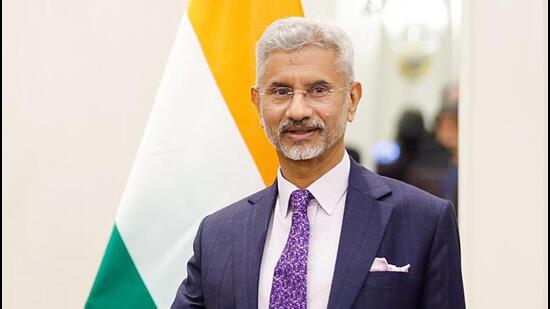
On Ukraine, a day after the Russian President Vladimir Putin announced additional mobilisation and unveiled a not-so-subtle nuclear threat, India expressed its deep concern about what awaited the world, reiterated its traditional position calling for a return to dialogue and diplomacy and cessation of hostilities and said that the “nuclear issue was of particular anxiety”. Jaishankar said, “Clearly, as Prime Minister Narendra Modi has emphasised, this cannot be an era of war.”
The minister was speaking at a high-level meeting on “The fight against impunity in Ukraine”, a signature event of the French presidency of the Council this month.
Jaishankar said that the fight against impunity was critical to the larger pursuit of securing peace and justice and said the UNSC must send an unambiguous and unequivocal message on this count.
“Politics should never ever provide cover to evade accountability. Nor indeed to facilitate impunity. Regrettably, we have seen this of late in this very Chamber, when it comes to sanctioning some of the world’s most dreaded terrorists. If egregious attacks committed in broad daylight are left unpunished, this Council must reflect on the signals we are sending on impunity. There must be consistency if we are to ensure credibility.”
{{/usCountry}}“Politics should never ever provide cover to evade accountability. Nor indeed to facilitate impunity. Regrettably, we have seen this of late in this very Chamber, when it comes to sanctioning some of the world’s most dreaded terrorists. If egregious attacks committed in broad daylight are left unpunished, this Council must reflect on the signals we are sending on impunity. There must be consistency if we are to ensure credibility.”
{{/usCountry}}Just last week, China, a permanent member of the Council, blocked a joint American-Indian proposal to designate Lashkar-e-Taiba’s chief architect of the 26/11 attacks, Sajid Mir, as a specially designated global terrorist by the 1267 Al Qaida Sanctions committee of the UNSC. This was the third such move by China in four months. The listings would subject the terrorists to assets freeze, travel ban and arms embargo besides sending a strong symbolic message. Mir was convicted in a Pakistani anti-terror court this June.
On Ukraine, India termed the trajectory of the conflict as a “matter of profound concern for the international community”, called the future outlook “even more disturbing”, and pointed to the war’s impact on the global south.
Jaishankar said, “In a globalised world, the impact of the conflict is being felt even in distant regions. We have all experienced its consequences in terms of surging costs and actual shortages of food grains, fertilisers and fuel. On this score too, there are good grounds to be worried about what awaits us. The global south, especially, is feeling the pain very acutely. We must therefore not initiate measures that further complicate the struggling global economy.”
And that is why, the minister said, India strongly reiterates the need for “an immediate cessation of all hostilities and a return to diplomacy and dialogue”. Jaishankar added that India, for its part, was providing humanitarian assistance to Ukraine and economic support to neighbours under economic distress.
The minister’s word of caution came even as many members sought greater action against Russia for its alleged war crimes in Ukraine.
While pointing out that India was not a signatory to the Rome Statute nor a member of the International Criminal Court — binding frameworks on international crimes that New Delhi has often seen as geopolitical instruments — Jaishankar emphasised there can be no justification for violations of human rights and international law even during conflict situations.
“Where any such acts occur, it is imperative that they are investigated in an objective and independent manner. This was the position that we took with regard to the killings in Bucha and this is the position we take even today. The Council will also recall that we had then supported calls for an independent investigation into the Bucha incident.”
India said that the need of the hour was to end this conflict in Ukraine and return to the negotiating table. “This Council is the most powerful symbol of diplomacy. It must continue to live up to its purpose,” Jaishankar said. He concluded by saying that the global order was based on international law, the UN charter and respect for principles of territorial integrity and sovereignty of all states. “These principles must be upheld, without exception.”