Australia supports India’s call for the reform of the World Health Organization (WHO) once the world has overcome the Coronavirus crisis as part of efforts to shape the post Covid-19 global order, Australian high commissioner-designate Barry O’Farrell said on Friday.
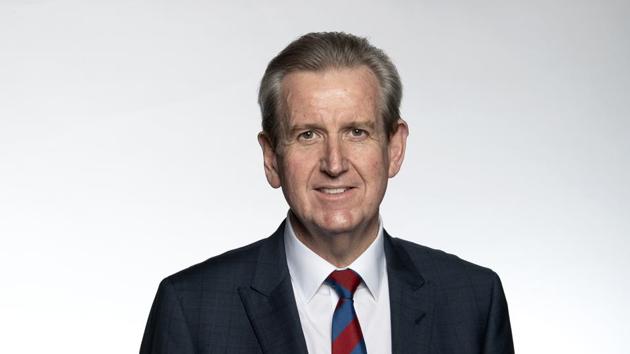
O’Farrell acknowledged Covid-19-related lockdowns and travel restrictions across the region had impacted the repatriation of Australian citizens stranded in India, but said more than 2,000 of them had already been flown back on five flights, and more would return on four flights next week.
Also read: India is poised for deep structural health reforms
In an interview with Hindustan Times, he also spoke of the measures put in place by Australian authorities to help the hundreds of thousands of Indians stranded in that country, especially students who have been provided an emergency grant of Australian $500 each (about Rs 25,000).
“There have been regular discussions about how best we can shape the post-Covid world order. For instance, Prime Minister [Narendra] Modi’s call at the G20 for reform of the WHO, which is something that our government has also been supportive of,” said O’Farrell, who has so far been unable to present his credentials because of the pandemic.
“The Australian government has talked about the need to have an independent review of the way that the [WHO] has handled this pandemic, but only once the worst of Covid has passed. We think that could be a natural area of future collaboration between the two governments.”
{{/usCountry}}“The Australian government has talked about the need to have an independent review of the way that the [WHO] has handled this pandemic, but only once the worst of Covid has passed. We think that could be a natural area of future collaboration between the two governments.”
{{/usCountry}}During a virtual meeting of G20 leaders on March 26, Modi had called for the reform of inter-governmental organisations such as WHO, saying they were based on the last century’s model and haven’t adapted to deal with new challenges.
Also read: PM Modi asks G20 for an effective global response to coronavirus: Reports
Australia, O’Farrell said, has been a long-standing supporter of India “taking a leadership role in the multilateral system, including as a permanent member of the UN Security Council”. He added: “Our belief is that stepping up in that way will also be critically important in the post-Covid world.”
Of the 6,500 Australian nationals who registered with the high commission here, more than 2,000 returned in five flights so far and more will be repatriated by four flights next week, O’Farrell said. The evacuation has been complicated by travel restrictions in places such as Singapore, via which flights have to transit.
“Has it been easy? No. The people here at the high commission have been working flat out exploring options and…not every company that we’ve approached was either able or willing to provide services,” he said.
While praising the “incredible assistance” from the Central and state governments, the Directorate General of Civil Aviation and police forces for facilitating the movement of Australian citizens, O’Farrell said not everyone who had registered intended to leave India.
Also read: Six coronavirus vaccines in human trials bring hope of early success
“It’s clear to me…that India’s policy settings have averted some of the alarmist predictions and projections made back in February-March,” he said, adding such factors were influencing decisions by Australian citizens whether to return or stay on in India.
O’Farrell said he is in close contact with India’s envoy in Canberra, A Gitesh Sarma, to ensure the welfare of Indians stranded in Australia. The Australian government and universities have announced measures to support Indian students, “who are our friends, colleagues, classmates and temporary members of the Australian community to ensure they have the support needed to get through this difficult time”, he said.
The Australian federal government put Australian $100 million into the university sector, which in turn put “almost as much into funds and food banks for assisting international students”, he said. This included an emergency grant of Australian $500, fee reductions and food pantries for students, he added.
There are about 600,000 Indians, including some 90,000 students, currently in Australia and as with stranded citizens in other parts of the world, they have been asked to “stay put” in view of travel restrictions, people familiar with developments said.
Modi and his Australian counterpart Scott Morrison, who spoke on phone on April 6, have scheduled a “virtual summit” very soon and the foreign ministers and foreign secretaries of the two sides are also in touch on cooperating in the fight against Covid-19.
“We’ve also noted India’s generosity in providing free medical supplies to its friends in need, not just in the immediate region but also in relation to Australia.
We look forward to further positive support from India on our request for PPE (personal protective equipment) and other key medical supplies,” O’Farrell said, adding Australia too had recently sought hydroxychloroquine from India.