
Belgium court weighs Mehul Choksi's extradition
A Belgian court heard the arguments for the extradition of Mehul Choksi adding that evidence against the fugitive diamantaire was discussed.
A Belgian court on Tuesday heard the arguments for the extradition of Mehul Choksi, people familiar with the matter said, adding that evidence against the fugitive diamantaire was discussed by the Indian side and Choksi’s defence team.
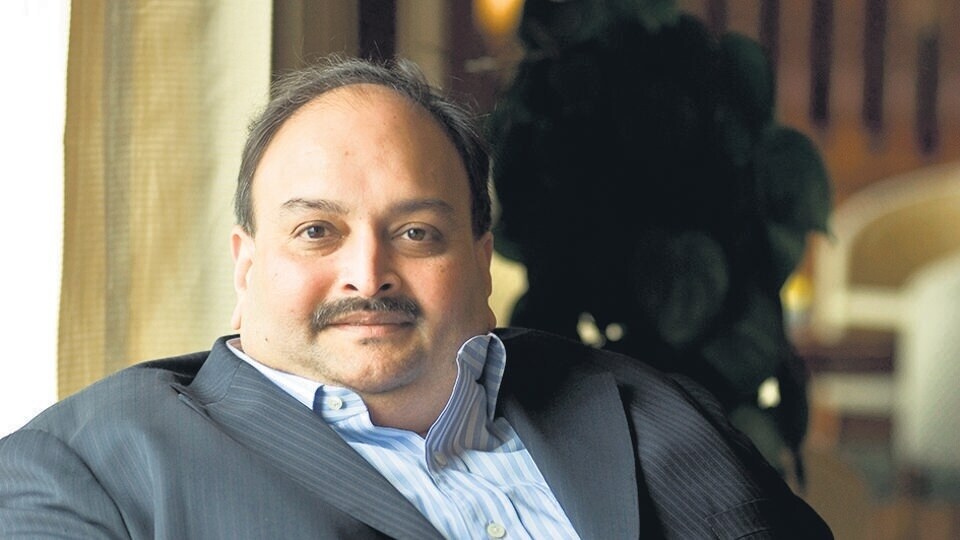
An officer said that the outcome of Tuesday’s extradition hearing, which took place from 2 pm to 4 pm (Belgium time), “will be marked to the ministry of security and interior which will have the final say on whether to approve the court’s decision and send Choksi back to India.”
The interior ministry, this person said, may take at least a month to decide on the extradition. The decision of the court was not known till late evening as the legal team present in the court in Antwerp were yet to brief officials in Delhi.
“We are hoping for a positive decision as there was robust evidence against Choksi and all the courts in Belgium had earlier rejected all his appeals,” said an officer who asked not to be named.
The legal team of Choksi has urged the Antwerp court to not extradite Choksi.
In December last year, Belgium’s Supreme Court had rejected Choksi’s appeal against his arrest in Antwerp on New Delhi’s request, and had ruled that his claims of being a subject of a political trial in India, or that he was abducted in 2021 in Antigua and Barbuda at the behest of India and runs risk of torture, are not “factual”.
Choksi, 65, is held in a prison in Antwerp following his arrest on April 11 last year at India’s request. Indian investigators have accused Choksi of six bank frauds, between 2018 and 2022, involving amounts totalling nearly ₹13,000 crore.
Choksi’s extradition has been sought under relevant sections of the Indian Penal Code (IPC) the Prevention of Corruption Act; which are crimes in Belgium as well under the dual criminality clause of the extradition treaty.
ABOUT THE AUTHORNeeraj ChauhanNeeraj Chauhan is a senior journalist with Hindustan Times and an investigative reporter specialising in national security, terrorism, organised crime, narcotics, corruption, financial crime and complex investigations. With over 21 years of experience across Hindustan Times, The Times of India, The Indian Express and The Pioneer, he has built deep expertise in India’s internal security and law-enforcement landscape. Neeraj has extensively covered India’s principal investigative, intelligence and security agencies, including the NIA, CBI, ED, IB, R&AW, MHA and other central security forces. His work has included deeply reported investigations into terrorism, terror financing, cross-border crime, narcotics trafficking, cybercrime, financial fraud and political and corporate corruption. He has reported on some of the most significant terror attacks and security developments in India over the past two decades, including the Delhi serial blasts, the 26/11 Mumbai attacks, the 2019 Pulwama terror attack and the recent Pahalgam attack. His reporting has also chronicled the rise and decline of the Indian Mujahideen, the activities and subsequent crackdown on the Popular Front of India (PFI), Islamist extremist networks, the conflict in Jammu and Kashmir, insurgencies in the Northeast and Maoist violence. Some of Neeraj’s major breaking stories are in Aryan Khan drug case, Sushant Singh Rajput suicide, interception of a 3,000-kg Afghan heroin consignment worth about ₹21,000 crore at Mundra port, Sri Lanka easter bombings, Aarushi-Hemraj murders in Noida, 2G scam, coal block allocation scam, AgustWestland VVIP chopper deal and major bank frauds and extradition cases involving Mehul Choksi, Nirav Modi and Vijay Mallya. His reporting is marked by an ability to cultivate sources, analyse confidential and complex documents, and follow investigations over several years—from the initial breakthrough to chargesheets, trials and international legal proceedings. He specialises in making complicated security and investigative developments accessible while examining their wider implications for governance and public policy. A Chevening South Asia Journalism Programme Fellow at the University of Westminster, Neeraj also spent time at the Financial Times as part of the fellowship. He was also a Robert Bosch Media Ambassadors India-Germany Fellow, studying at the University of Tübingen and working with Der Tagesspiegel in Berlin. He has previously taught investigative journalism and crime reporting as a guest faculty member at the Times School of Journalism. Over more than two decades, Neeraj has established himself as an authoritative voice on India’s national security and investigative landscape, with his reporting closely followed by officials, investigators, lawyers, policymakers and readers seeking insight into some of the country’s most complex and consequential developments.Read More

E-Paper


