
 E-Paper



Bengal's Falta election: How Jahangir Khan of Trinamool, who backed out before repoll, got 3.7% of the votes
The TMC's Jahangir Khan was at over 3% of the vote share in Falta despite his political exit from the contest, as per EC's vote-count update

 Prefer HTon Google


As the Election Commission of India (ECI) counted the votes for the Falta assembly constituency repoll in West Bengal, Trinamool Congress (TMC) candidate Jahangir Khan also accumulated votes on the official results portal. And that's despite Jahangir Khan publicly announcing withdrawal from the election contest earlier this week.
The BJP's Debangshu Panda won by a large margin of over 1 lakh in the May 24 results. Panda got over 70% of the total votes. Sambhu Nath Kurmi of the Communist Party of India (Marxist) was in second place with less than 20% votes. Then came Abdur Razzak Molla of the Congress at around 4.8%.
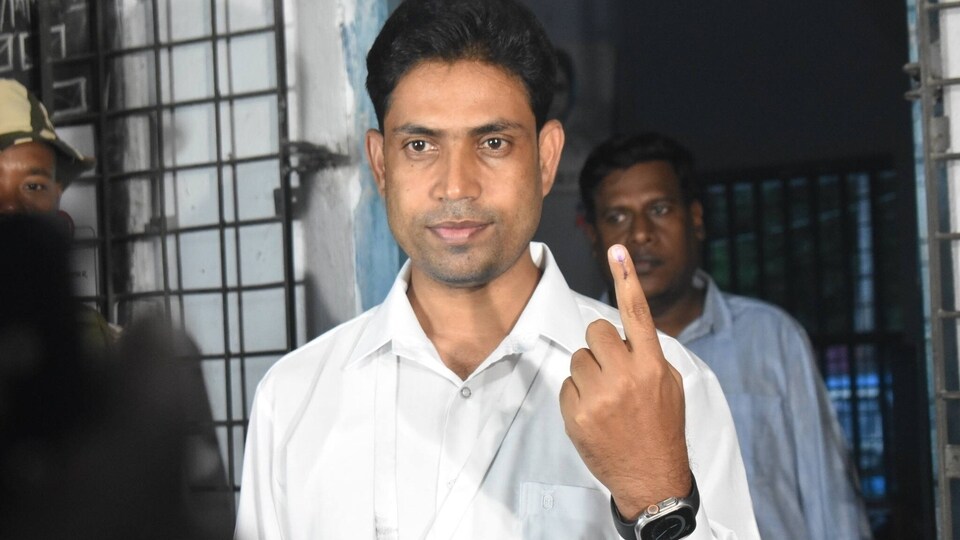
The TMC's Jahangir Khan, who did not even cast his own vote in the repoll on may 21, was at 3.7% despite his political exit from the contest.
Why Jahangir opted out
Jahangir Khan had announced his withdrawal from the election on May 19, just two days prior to the re-voting. He cited among his reasons the developmental promises made by Suvendu Adhikari, the new chief minister, Bengal's first from the BJP after the party defeated an entrenched TMC.
“The CM has announced a special package for the development of Falta, which is why I have decided to move away from the re-polling process in the constituency,” said Khan, 41, a prominent Muslim businessman and political face in a Hindu-majority state where about third of the population is Muslim.
Not seeking to confront the Centre's ruling BJP that had finally wrested power in Bengal, he explained at a press briefing, “I am the son of Falta, and I want the area to be at peace and grow… I dreamt that Falta should become ‘sonar’ (golden) Falta. I am stepping aside to ensure peace and prosperity for Falta and for its people.”
After Khan described his exit as “a step toward the region's growth”, the TMC issued a clarification stating that the withdrawal was his personal decision and not authorised by the party.
Bengal has seen poll-related violence as the 15-year rule of Mamata Banerjee-led TMC ended with the results of 293 of the 294 assembly seats announced on May 4.
Falta was marked for repolling after reports of widespread pre-poll and voting-day violence, mainly by BJP supporters. Khan and IPS officer Ajay Pal Sharma, deputed as a police observer by the EC, had a face-off too as voters alleged the TMC cadres were putting black tape on other names on the EVM.
Why he remained on EVM
But Khan’s public exit from the contest, after the May 4 results showed the BJP was anyway in power, was essentially a political announcement.
According to Section 37 of the Representation of the People Act, 1951, a candidate is legally permitted to withdraw their nomination only up to a strictly specified deadline following the initial scrutiny of papers. Once that timeline expires, the final list of contesting candidates is legally locked.
For Phase 2 of the West Bengal assembly elections, which included the Falta constituency, the last date for the withdrawal of candidatures was April 13. Because Jahangir Khan announced his decision to step away on May 19, weeks after this statutory deadline, his name and symbol could not legally be removed from the ballot.
After the EC ordered the May 21 fresh election across all 285 booths in Falta following reports of "severe electoral offences and subversion of the democratic process" during the original April 29 phase, the rules remained that such a repoll must be conducted with the same candidate roster and machine configuration as the initial polling.
Jahangir Khan wielded significant control over the grassroots party cadre in the South 24 Parganas district, making him the party's choice as a new candidate after it won the last three elections here plus a bypoll.
Because his name and the two-flower symbol of the TMC remained on the EVM, voters who went to the polls still had the option to press it. Whether done by loyal party supporters who chose to vote for the TMC anyway, or by those unaware of his political announcement, or some indifferent people, every press of that button is a legally valid vote and has to be counted.
A fourth of his votes came from postal ballots, which were probably sent in before he made his withdrawal announcement.


