In a big day for India’s second mission to moon, the lander-rover on board Chandrayaan-2 separated from the composite module on Monday afternoon. Now, the lander and the orbiter will be controlled separately.
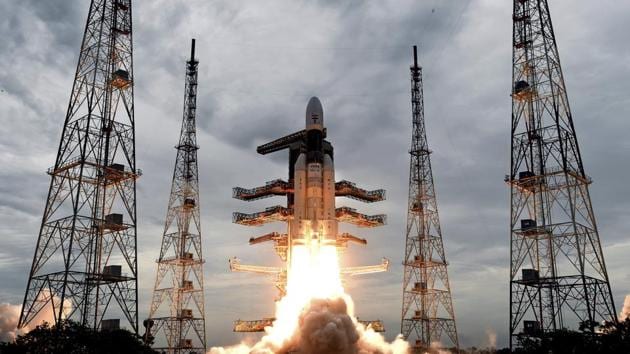
“The Vikram Lander successfully separated from Chandrayaan-2 Orbiter at 1315 hrs IST today. All systems of the Chandrayaan 2 orbiter and lander are healthy,” said a statement from the Indian Space Research Organisation.
The lander and the orbiter are being monitored from the Mission Operations Complex (MOX) at ISRO Telemetry, Tracking and Command Network (ISTRAC) in Bengaluru with support from Indian Deep Space Network (IDSN) antennas at Bylalu, near Bengaluru.
The scientists from ISRO will perform the first of the two deboosting manoeuvres tomorrow between 09:00 and 10:00 am. Both the manoeuvres together will bring the lander-rover to down to a 36x 100 km orbit.
Today’s separation is crucial as this will be the first time that the systems on-board the indigenously developed lander will operate on its own.
“Till the landing is complete, it will be terrifying. Till now, we have not operated the systems on-board the lander, especially the propulsion system. This is the phase, including the powered descent, that we will be doing for the first time. That is why it is critical,” ISRO chairperson K Sivan had said after the spacecraft entered the lunar orbit.
{{/usCountry}}“Till the landing is complete, it will be terrifying. Till now, we have not operated the systems on-board the lander, especially the propulsion system. This is the phase, including the powered descent, that we will be doing for the first time. That is why it is critical,” ISRO chairperson K Sivan had said after the spacecraft entered the lunar orbit.
{{/usCountry}}Watch| Chandrayaan 2 about to create history: The journey so far
The Chandrayaan 2 mission comes 11 years after India’s previous moon mission and one of the major reasons for the delay was that Russia, who was supposed to make the lander for the mission, could not deliver on time and then backed out after its own mission to a Martian moon failed.
After this, the Indian Space Research Organisation decided to develop its own lander. The launch was further pushed to 2019 when the scientists had to go back to the drawing board to add another central engine to the lander. Initially, it was supposed to have just four engines on four corners but the design was changed on suggestion of a group of eminent scientists.
After the lower orbit is achieved by the lander-rover, the powered descent will begin at about 01:40 am on September 7.