The Biju Janata Dal (BJD) on Wednesday questioned the credibility of the Special Intensive Revision (SIR) of electoral rolls in Odisha, alleging that residents of villages along the Odisha-Andhra Pradesh border continued to hold voter ID cards issued by both states even after the exercise. The party also sought an explanation from the state’s election authorities over the alleged duplication.
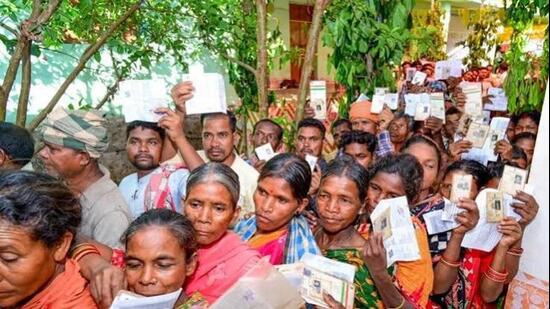
Raising the issue at a press conference, senior BJD leaders Devi Prasad Mishra and Bijay Nayak questioned how residents of Kotia in Koraput district and Jumdang village in Malkangiri district could remain registered as voters in two states despite the completion of the SIR exercise.
Mishra said the law did not permit an individual to be registered as a voter in two places and demanded that the chief electoral officer (CEO) of Odisha seek details from the Andhra Pradesh government on the number of Odisha residents who had voted in the neighbouring state’s elections.
He also questioned why Andhra Pradesh had not removed duplicate and allegedly ineligible voters from its electoral rolls despite the alleged violation of electoral rules.
Meanwhile, Koraput Collector Manoj Satyawan Mahajan said that some residents of Kotia had crossed into Andhra Pradesh to vote in the neighbouring state’s panchayat elections last week.
Around 10% of voters from Kotia had exercised their franchise in the Andhra Pradesh rural elections, he said, adding that the 40% polling figure cited by Andhra Pradesh officials was based on the combined turnout at a polling booth catering to several villages, including those in the neighbouring state.
{{/usCountry}}Around 10% of voters from Kotia had exercised their franchise in the Andhra Pradesh rural elections, he said, adding that the 40% polling figure cited by Andhra Pradesh officials was based on the combined turnout at a polling booth catering to several villages, including those in the neighbouring state.
{{/usCountry}}“We have information that people from four to five villages went to cast their votes in Andhra Pradesh. The population of these villages is smaller than what the voting percentage claimed by Andhra Pradesh officials would suggest,” he said.
The district administration had two objectives — preventing Andhra Pradesh from setting up a polling booth inside Kotia and discouraging residents from participating in elections in the neighbouring state, the collector said.
“We were completely successful in preventing the setting up of a polling booth inside Kotia. However, a few villagers still went to vote. The booth also catered to several villages in Andhra Pradesh. Therefore, the claim of 40% polling cannot be attributed to Kotia residents alone,” he added.
Odisha law minister Prithiviraj Harichandan said the state government would look into the matter.
“The Revenue Department needs to identify people who have dual voter identity cards and initiate legal action against them. Our government prevented Andhra Pradesh from setting up polling booths on Odisha soil. Despite that, some people crossed over to Andhra Pradesh and cast their votes,” Harichandan said.