
 E-Paper



BJP hasn’t fulfilled any promise, failed to take state forward: Himachal Congress chief
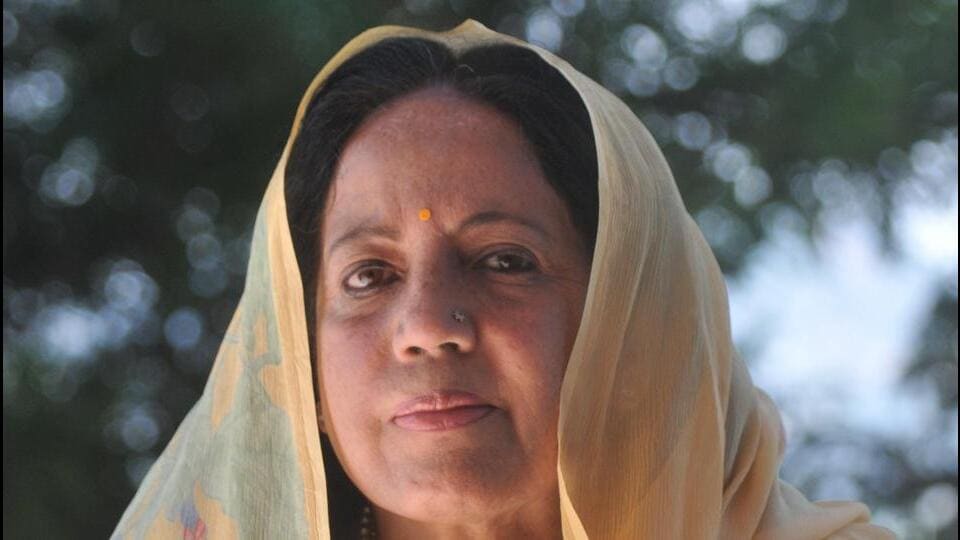
Pratibha Singh, the Himachal Congress chief says the Congress will return to power in the state which goes to polls on November 12 ( results will be declared on December 8)

 Prefer HTon Google


Pratibha Singh, the Himachal Congress chief says the Congress will return to power in the state which goes to polls on November 12 ( results will be declared on December 8). The incumbent BJP, Singh adds, failed to deliver on its promises . In an interview, she spoke about political legacy of her late husband and former state chief minister, Virbhadra Singh, and why the Congress’ campaign is low-key. Edited excerpts:
What are the important factors in the Himachal elections?
Development, mostly under Congress governments. The BJP was given a chance to form the government and I think this government has been a huge failure; they were not able to do much. Opening a sub-division office here and there is not development work. Development work is opening new educational and health institutes, which Raja Virbhadra Singh did in every corner of the state. Apple orchard owners and farmers were totally neglected by this government. The Centre (also governed by the BJP) did not impose import duty on apples coming from abroad resulting in prices crashing and farmers losing a huge amount of money. Roads, which allow market access to farmers, are in a bad state. Now, people have to decide whether they want government which has done nothing or one which in the past did lot of development
What is the election plank of the Congress ?
We are contesting elections on developmental issues and how Raja Virbhadra Singh transformed the state . We have come with 10 guarantees -- including a monthly payment to women and cheaper educational loans. We have promised restoration of the old pension scheme which will provide social security to government employees. We have promised minimum sale price for all crops. We will restart the subsidy for pesticides, which was stopped by the BJP, to farmers to protect them from inflation.
There is talk that some legislators elected on a Congress ticket could join the BJP if the party is short of numbers; that the BJP could do what it did in Goa, for instance?
That is just a misconception. Why would those who have contested on Congress ticket will go away when we are forming the government.
How big an issue is inflation?
Inflation is a major issue. People who are well off are feeling the pinch of the price rise. The government has imposed GST on ration and even school stationery and it is becoming difficult for families to run homes.
Virbhadra Singh was the tallest figure in Himachal Pradesh. Is his absence felt?
He managed elections for the party. We are trying to follow his footsteps in our own capacity. I promise to take his legacy of development forward. Indira Gandhi gave Himachal statehood in 1971 and my late husband played an important role in this. At that time, Jan Sangh, now the BJP, opposed statehood and wanted Himachal to be merged with Punjab . Indira ji at that time gave Himachal huge funds, which ensured the state got quality education and medical facilities.
What is your view of the incumbent government?
The BJP has not fulfilled any of its promises and has failed to take the state forward. They have not dealt with state problems, about increasing financial debt, rising input costs for farmers, and huge unemployment. Corruption is a major concern. I believe the police recruitment paper leak was a big corruption scam in which BJP leaders were involved.
Will Rahul Gandhi’s Bharat Jodo Yatra will have impact on Himachal elections?
Although the Yatra is not passing through Himachal, people are seeing it on social media. I think that it will have positive impact as he has been able to raise issues concerning the country.
The Congress is riddled with infighting and there are 3-4 contestants for CM
There is no in-fighting. This is all the BJP’s creation. There can be some differences of opinion, but these can be sorted out through discussion. The CM issue is yet to be decided. Let us first win and then the party high command will decide based on feedback from the MLAs. We all are contesting the elections united. The main motive is to bringing Congress back to power.
The Congress campaigndoes not appear to have taken off. Why?
We don’t have resources like BJP and cannot match them. We have decided to have a low-key campaign where our workers meet people in villages and towns, informing them about the BJP’s failures and our developmental agenda. We are trying our best and some Congress well-wishers are helping (financially) also. People are with us and they will ensure our party’s victory.
What will be impact of Prime Minister Narendra Modi in Himachal elections?
Not much. Modi ji has gone to every district of Himachal but people are not happy with him as he has not kept his promises. In his rallies, he has not spoken about giving financial help to Himachal, which is in debt of ₹77000 crore. He has not promised jobs and said nothing about the price rise People have realized that Modi ji has not done anything for them .
What will be the impact of the Aam Aadmi Party (AAP) in the election?
In Himachal, the fight is between the BJP and the Congress. AAP is nowhere.


