Dear Reader,
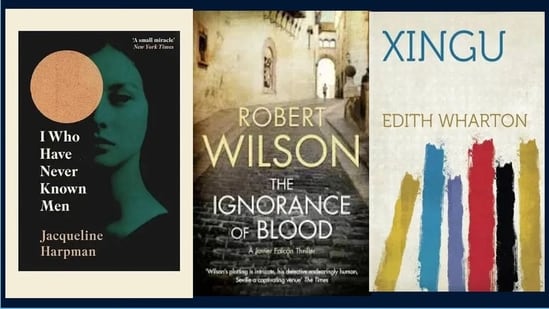
My reading week has been all over the place. On the flight from Mumbai to Delhi, I read I Who Have Never Known Men, a dystopian novel that reminded me of The Road.
It’s the kind of book you’re desperate to discuss the moment you finish it. When this happens to me, it’s midnight at my parents’ house in Vasant Vihar. The two people who recommended it live on different continents, and I don’t know them well enough
Dear Reader,
My reading week has been all over the place. On the flight from Mumbai to Delhi, I read I Who Have Never Known Men, a dystopian novel that reminded me of The Road.
It’s the kind of book you’re desperate to discuss the moment you finish it. When this happens to me, it’s midnight at my parents’ house in Vasant Vihar. The two people who recommended it live on different continents, and I don’t know them well enough to ping them.
So I turn to Reddit. There, I spend an hour reading a glorious thread on what the book might mean—“I thought the theme changed over the course of the book. At first I took the title very literally…” says bri-ella.
“I wonder whether the whole thrust of the book is to show humanity’s need for meaning,” responds Deep_Dragonfruit2716. There is lots more fascinating analysis, but I’ll save that for when you read the book—no spoilers here from me.
I find myself returning to I Who Have Never Known Men throughout the week, at the strangest moments. As we drive from Delhi to Manali, along dusty, bumpy village roads and past vast plains of growing grain, the book's questions about purpose keep resurfacing.
It's a hot, sunny day, but people are out everywhere protesting the murder of an anti-drugs activist. The highway to Manali is blocked, and we have to turn off. Men wave saffron flags, shout slogans, and sit across the roads. At one point, three young boys sit on tractors parked across a village road. Every route we try is blocked, and being repeatedly turned back is exhausting. Yet I can’t help sympathizing with people who feel that street protest is their only recourse against corruption and the abuse of power.
My attempts to get through the bandh-blocked roads of Punjab have nothing to do with I Who Have Never Known Men. And yet, this is the magic of the book: it makes you think about what you do, what you choose not to do, and the meaning you assign to both.
Entirely by serendipity, I turn next to Edith Wharton’s Xingu. If you know The Age of Innocence and The House of Mirth, here’s another Wharton to enjoy. If you don’t, Xingu is a good place to begin. It’s a novella, and reading it, I laugh out loud. A group of snobbish ladies appoint themselves high priestesses of culture and host soirees for famous guests. It’s a delicious spoof of the sort of people you might encounter at lit fests. The satire is so deft and light that I’m completely absorbed. By the time I finish the book, I realise we've been driving back and forth for hours and still haven't crossed into Himachal Pradesh.
We come to a toll gate blocked by protesters milling around in front of it. I wonder how many of them belong to political parties and how many are ordinary citizens. There is no easy way to tell.
A policeman walks past, drinking chai from a paper glass. Then a white sedan pulls up to the toll gate, and the protesters move the barricades to let it through. Suddenly hopeful, I walk up to the protesters and request them to let us through too. “We have been on the road since 4 am,” I add. They are polite but firm. The car they’ve let through is on its way to the hospital.
The rest of us will have to wait.
Their sense of purpose reminds me of the youth-led protests in Delhi. These last few days, the news has been full of visuals of young people risking detention to speak out against the alleged manipulation of electoral rolls. As someone who reads more and acts less, I’ve found it chastening. Today my irritation at being stranded by the roadside feels petulant.
I return quietly to the car. It might be hours before we move. Sitting on the roadside while people protest corruption, I turn to a writer who explores institutional decay in Spain. Now I open The Ignorance of Blood by Robert Wilson.
Wilson is English, but knows Spain well. I love how he uses murder investigations in his Javier Falcón series, set in Seville, to explore the country's history, its religious tensions and how Spain’s colonization of other countries comes back to haunt it. Wilson also exposes Spain’s fault lines: corruption and collusion between politicians and the mafia, the arrival of Russian criminal networks and religious radicalization.
The first book, The Blind Man of Seville, touches on these themes lightly. As the series progresses, the examination becomes deeper and more complex, often slowing the action. By now, however, I’m so hooked that I don’t mind. I’m rooting for Javier Falcón, the brilliant, complicated, half-Spanish, half-Moroccan homicide detective. Plus, I am totally invested in his personal life, particularly his will-they-won't-they romance with restaurateur diva Consuelo Jiménez.
Eventually, the roads open. We drive through the night and reach our new house. The house is still being built. The next morning, the carpenters are hammering, a wood-cutting machine shrills, and I'm still reading Javier Falcón.
And yet, I am still thinking about I Who Have Never Known Men. Maybe my reading week isn’t so disconnected after all. Whether it is dystopian fiction, sharp turn-of-the-century satire, or a Spanish murder mystery, the books I read help me make sense of the world I’m traveling through.
This week, I Who Have Never Known Men has raised existential questions for me, Xingu has exposed social pretension, and The Ignorance of Blood shows me how alliances compound corrupt political structures.
What about you, dear reader? What book have you read recently that helped you make sense of the world?
Sonya Dutta Choudhury is a Mumbai-based journalist, Founder of Sonya’s Book Box, and a teacher of Storytelling in Business. Got a knot in your life, a dilemma at work, or a reading slump you can’t shake? Send your questions and book requests to sonyasbookbox@gmail.com, and she promises to give each one her most earnest consideration.
One Subscription.
Get 360° coverage—from daily headlines
to 100 year archives.
Archives
HT App & Website