The ministry of external affairs on Tuesday said that the state of border affairs has ramifications for overall India-China ties, adding that the two sides have agreed to use existing diplomatic and military mechanisms to “avoid misunderstanding and miscalculation” along the border.
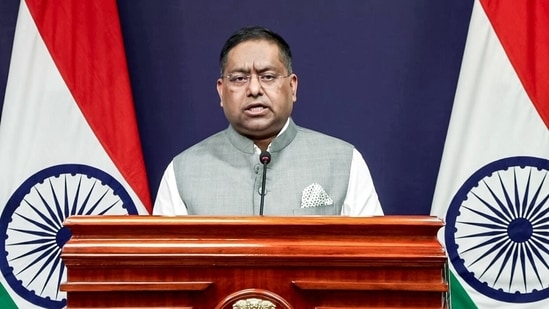
External affairs ministry spokesperson Randhir Jaiswal made the remarks at a regular media briefing while responding to a question on the military situation between India and China in the Arunachal Pradesh sector and whether recent reports of a standoff had been taken up diplomatically with China.
India-China ties linked to border situation
The two countries are engaged in the painstaking process of rebuilding their relations, which plummeted to a six-decade low in 2020 following a military face-off in Ladakh sector of the LAC and a violent clash at Galwan Valley in June that year that left 20 Indian soldiers and at least four Chinese troops dead.
Also read | For India's economic superpower goal, retaining homegrown talent China, US style
Jaiswal offered no details about the new standoff itself but underscored the importance of peace and tranquility along the LAC on forward movement in the wider bilateral relationship. He said the Indian side had emphasised this position at the 36th meeting of the Working Mechanism for Consultation and Coordination (WMCC) on India-China Border Affairs in New Delhi on August 6.
{{/usCountry}}Jaiswal offered no details about the new standoff itself but underscored the importance of peace and tranquility along the LAC on forward movement in the wider bilateral relationship. He said the Indian side had emphasised this position at the 36th meeting of the Working Mechanism for Consultation and Coordination (WMCC) on India-China Border Affairs in New Delhi on August 6.
{{/usCountry}}“In matters relating to border areas between India and China, we have always emphasised in discussions with the Chinese side that we consider these issues as most serious and that the maintenance of peace and tranquillity in these areas is of the utmost importance,” Jaiswal said , responding to the question on the standoff in Arunachal Pradesh.
Also read | India, China to use diplomatic, military channels to resolve outstanding border issues: MEA
“We have also stated that the state of the border affairs will reflect on the state of our larger bilateral ties. This was also reiterated at the recently held 36th WMCC meeting on India-China border affairs, which was held on August 6,” he said.
The two sides “engaged in frank discussions” at the WMCC meeting and reviewed the situation along the LAC. “The Indian side again underlined that maintaining peace and tranquillity in the border areas is essential for the overall development of bilateral relations,” Jaiswal said.
India, China agree to use diplomatic, military channels
The two sides further agreed to continue using existing diplomatic and military channels, including the WMCC, local military commander-level meetings and other agreed mechanisms to “resolve outstanding issues and avoid misunderstanding and miscalculation” along the LAC, he said.
There was no clarity on the current status of the standoff in Arunachal Pradesh sector, though people familiar with the situation said on condition of anonymity that the problems first emerged in the remote Taksin area of Upper Subansiri district in early July. There were a few face-offs between Indian and Chinese troops in July and matters took a more serious turn towards the end of last month, the people said.
An Army spokesperson refused to comment on the matter.
There was no response from the Chinese embassy till late on Tuesday evening to a query from HT about a face-off involving Chinese troops in the Arunachal Pradesh sector.
Jaiswal responded to a separate question on China dismissing India’s recent move to issue standard names for 27 locations in Arunachal Pradesh, including some places illegally occupied by China, by saying that Beijing’s position wouldn’t change the “indisputable reality” of the northeastern state being a part of the country.
“Let me reiterate this yet again — that Arunachal Pradesh is an inalienable and integral part of India, and this is a fact which is self-evident. At the same time, let me also underline that nothing can change this indisputable reality,” he said.
On August 7, India’s home ministry issued standard names for 27 places and geographical features in Arunachal Pradesh located along the Line of Actual Control (LAC), a move described as a riposte to China’s efforts to rename dozens of locations in the state since 2017.
Chinese foreign ministry spokesperson Guo Jiakun on Monday described the Indian side’s action of “attempting to replace names long been used by China with its so-called standard names is illegal, null and void”.
He referred to Arunachal Pradesh as “Zangnan region”, the name used by the Chinese side for the territory and claimed the state is “China’s territory”. Gul also said China “does not recognise the so-called Arunachal Pradesh illegally set up by India”.
The standoff in Ladakh sector of the LAC lasted more than four years and ended when both sides reached an understanding in October 2024 on pulling back frontline forces from friction points along the LAC.
Prime Minister Narendra Modi and President Xi Jinping met two days after that understanding in Russia and agreed on steps aimed at normalising bilateral ties and addressing the border dispute.
Senior leaders of the two sides have held a series of meetings since then and the two sides have taken steps such as resuming direct flights and reviving the Kailash Mansarovar Yatra to the Tibet region. India has also eased restrictions on visas for Chinese nationals.
However, the process of de-escalation and withdrawal of troops further away from the LAC is yet to be completed. While the Indian side has maintained that peace and tranquillity on the LAC is central to the overall development of bilateral relations, China has been insisting that the border issue should be put in an “appropriate place” while the two sides take forward ties in areas such as trade and investment.