E-Paper



Budget 2026: Panel proposed to strengthen link between edu, jobs, enterprise
Finance Minister Nirmala Sitharaman proposed a new committee to enhance education-job links, focusing on AI and services sector growth for India's 2047 goals.

 Prefer HTon Google


Finance minister Nirmala Sitharaman on Sunday proposed the creation of a high-powered “Education to Employment and Enterprise” Standing Committee to strengthen the link between education, jobs and enterprise creation, with a special focus on the services sector.
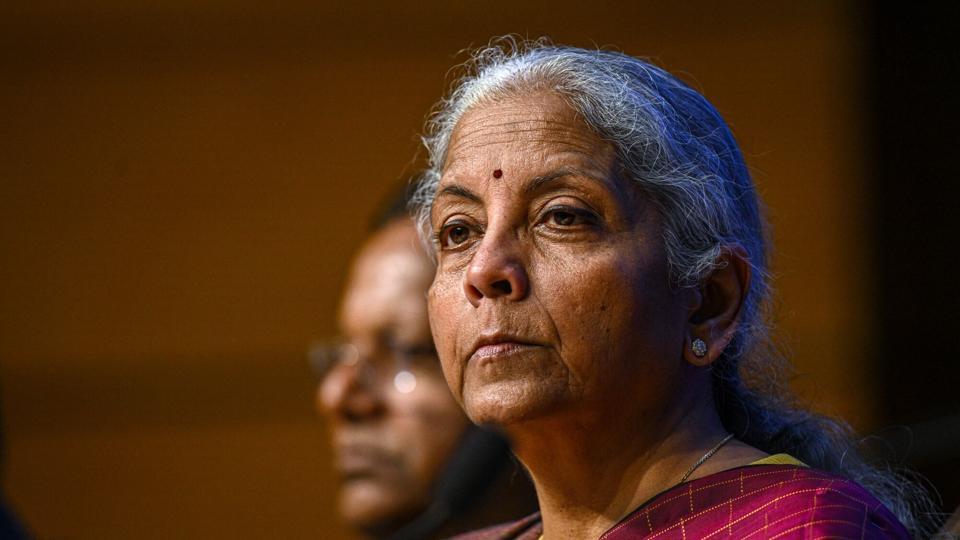
“The 21st century is technology-driven. Adoption of technology is for the benefit of all people – farmers in the field, women in STEM, youth keen to upskill and Divyangjan to access newer opportunities. The Government has taken several steps to support new technologies through the AI Mission, the National Quantum Mission, the Anusandhan National Research Fund, and the Research, Development and Innovation Fund,” Sitharaman said, ahead of announcing the proposed committee.
The panel is expected to recommend measures to expand India’s footprint in global services markets, with the government targeting a 10% share of the world’s services trade by 2047. It will identify service sub-sectors with the highest potential for growth, employment and exports, and suggest ways to address sector-specific gaps limiting job creation.
According to the indicative terms of reference, the committee will examine cross-sector policy and regulatory issues, including standards-setting and accreditation, and explore areas where India can increase services exports. A key part of its mandate will be assessing how emerging technologies, particularly artificial intelligence (AI), could affect jobs and skill requirements in the coming years.
To respond to these shifts, the panel is expected to propose measures to introduce AI-related learning in school curricula and strengthen teacher training institutions, including State Councils of Educational Research and Training. It will also recommend upskilling and reskilling programmes for technology professionals and engineers to keep pace with emerging technologies.
The committee may suggest AI-based mechanisms to better match workers with jobs and training opportunities. It has also been tasked with proposing ways to make informal work arrangements more visible and verifiable, with the aim of improving access to opportunities and upward mobility in the labour market. In addition, it will consider steps to attract skilled members of the Indian diaspora and foreign professionals to work in India. The government said the overall objective is to better align education and training systems with industry needs and support employment and enterprise creation in the services economy.
Industry participants said the move reflects recognition of the widening gap between AI adoption and workforce readiness. “By formally assessing AI’s impact on jobs and skills—targeting a 10% global services market share by 2047—the government is acknowledging what industry has known for months: the execution gap between AI ambition and workforce readiness is now our primary bottleneck,” said Dhruv Garg, partner at policy and business advisory Indian Governance & Policy Project (IGAP).
“The question isn’t whether AI will reshape India’s services sector, but whether our policy mechanisms can translate committee recommendations into curricula and certifications fast enough to match the pace at which AI is already reshaping the work itself,” Garg added.
The proposal comes as the government prepares to expand the India AI Mission, launched in 2024 to build a domestic AI ecosystem by supporting foundational model development, expanding access to compute infrastructure, and funding startups and research institutions. IT minister Ashwini Vaishnaw recently said the next phase of the mission will be launched in the next five to six months. Startups selected under the mission are expected to launch large language and small models at the AI summit this month, while the common compute stack will be expanded from the current 38,000 GPUs.
Ganesh Gopalan, co-founder and chief executive officer of Gnani.ai, said, “AI Mission 2.0 is expected to focus on scaling systems to global standards. Access to government projects and public datasets would be critical to improving AI models and expanding real-world use cases,” he added.
Policy experts, however, cautioned that deeper structural challenges remain. Rohit Kumar, founder of The Quantum Hub, said India’s R&D spending remains below 0.7% of GDP, limiting the country’s ability to sustain frontier AI research. He added that universities and research institutions need greater autonomy and stronger private-sector incentives to support long-term, high-risk research.