The Union Cabinet on Tuesday adopted a resolution congratulating Prime Minister Narendra Modi on completing 25 years as the head of a government, first as Gujarat chief minister and later as prime minister, highlighting his leadership in welfare, reforms, infrastructure, technology, national security and foreign policy.
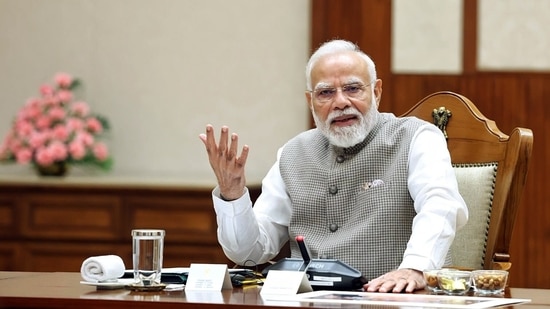
The Cabinet also gave Modi a standing ovation, Information and Broadcasting Minister Ashwini Vaishnaw said at the cabinet briefing.
Also read: 25 years of Narendra Modi: A journey of service and solutions
Modi created unique history: Vaishnaw
“PM Modi has created a history which is unique to any democratic country. There are few countries where people have voted for the same person again and again,” Vaishnaw said. “From October 7, 2001 to October 7, 2026, the PM completes 25 years as the head of government - as chief minister of Gujarat and then the Prime Minister of India.”
A statement listing the highlights of the resolution said Modi’s “extraordinary journey” was guided by the principle of “Nation First and Citizen First”. It cited three mandates in Gujarat and three successive Lok Sabha victories as reflecting the public’s “enduring trust”.
{{/usCountry}}A statement listing the highlights of the resolution said Modi’s “extraordinary journey” was guided by the principle of “Nation First and Citizen First”. It cited three mandates in Gujarat and three successive Lok Sabha victories as reflecting the public’s “enduring trust”.
{{/usCountry}}Also read: 25 years of Narendra Modi as head of state: From Gujarat to the Centre and the global stage
SWAGAT experience later inspired PRAGATI
The resolution lauded how PM Modi carried Gujarat’s successful initiatives to the national stage. It cited the example of SWAGAT through which he personally heard citizens’ grievances.
The grievance tracking portal, which received the United Nations Public Service Award in 2010, later inspired PRAGATI, bringing governments together to review stalled projects, resolve obstacles and accelerate completion. Jyotigram scheme’s separate agricultural electricity feeders similarly extended Gujarat’s experience across India, Vaishnaw said.
The resolution listed GST, welfare delivery reforms and replacement of several colonial-era laws among major reforms. It said public capital expenditure rose from around ₹2 lakh crore to more than ₹12 lakh crore, while highway expansion, railway electrification and electronics production also increased.
Also read: India Mobile Congress begins on Wednesday, PM Modi to inaugurate on October 8
Cabinet resolution highlights major economic reforms
On national security, it cited the 2016 surgical strikes, 2019 Balakot air strikes and 2025 Operation Sindoor, besides the abrogation of Article 370, One Rank One Pension and creation of the Chief of Defence Staff post.
PM-KISAN transfers exceeded ₹4 lakh crore, while PM-JANMAN brought focused support to particularly vulnerable tribal communities, extending development to those historically left behind, Vaishnaw said.
The resolution also highlighted UPI, Jan Dhan, Aadhaar, India’s Covid-19 vaccine programme and Chandrayaan-3, along with India’s role in the G20, BRICS and the Global South. It said these initiatives formed part of Modi’s vision of a prosperous, self-reliant and developed India by 2047.