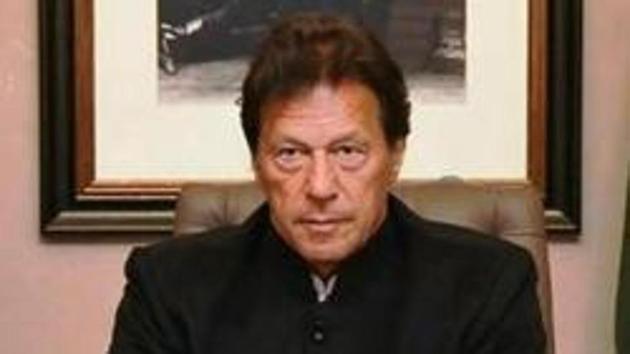
The decision by Pakistan Prime Minister Imran Khan’s government to delete nearly 4,000 names from its terror watch list was part of a well-orchestrated effort to scrub its terror record clean not just at home, but also at the United Nations Security Council (UNSC), people familiar with the developments told Hindustan Times.
Islamabad has told a visiting team of a UNSC monitoring committee that it had been unable to act against numerous individuals listed in its sanctions list because the UN panel had given “insufficient information”.
The UNSC 1267 Sanctions List has 130 names from Pakistan.
Islamabad, however, acknowledges the presence of only 19 of them including Lashkar-e-Taiba founder Hafiz Saeed. It has already moved the UNSC to delist 6 terrorists including Matiur Rehman, described in UN records of 2013 as the chief operational commander of terror group Lashkar-i-Jhangvi, a top official in North Block that houses India’s internal security establishment said.
The UN analytical support and sanctions monitoring team, which was on a five-day visit to Pakistan in March, was told that the UN Sanctions List did not have the accurate date of birth, nationality, national ID number, passport number or a specific address of the men sanctioned for their terror links.
Pakistan had put out a similar set of explanations when it was asked about the deletion of 3,800 names from its domestic terror watch list.
{{/usCountry}}Pakistan had put out a similar set of explanations when it was asked about the deletion of 3,800 names from its domestic terror watch list.
{{/usCountry}}In October 2018, Islamabad showed off this list to the counterterror financing watchdog Financial Action Task Force to demonstrate that it was coming down heavily on terrorists. This terror watch list, according to FATF records, then had 7,600 names of terrorists.
Indian counterterror officials suggested that the effort to prune Pakistan’s terror watch list is a more recent development.
The deletions were first spotted by Castellum AI, a New York-headquartered tech firm that tracks watch lists globally. In a statement in April, the tech firm started by a former US treasury department official said many of the names were removed sometime after October 2018. But there were about 1,069 names in the watch list that were deleted between March 9-27. Another 800 names were removed after March 27.
“This means the process to delete the names started the day the UNSC monitoring team landed in Pakistan,” a counterterror operative told Hindustan Times. The UNSC monitoring team was in Pakistan from March 9-13.
Indian officials said they had not been able to access the details of the UNSC panel’s visit but had learnt that the UNSC panel did convey, on March 18, that Pakistan could file requests for delisting “inappropriate” names from the UNSC sanctions list.
Pakistan hopes to get the support of the Chinese in this endeavour given how Beijing had blocked an international effort to designate Jaish-e-Mohammad chief Masood Azhar as a global terrorist for years. Beijing eventually had to give in last year but started backing Islamabad’s attempts to include Indian professionals working in Afghanistan in the UNSC 1267 list.
Also Read : ‘Brief the boss’: The backstory of Masood Azhar’s global terror tag
The exercise to get names of terrorists deleted, a top source in the internal security establishment said, appears to be driven by the desperation to stay out of the FATF’s black list. Pakistan has been on the terror financing watchdog’s grey list since June 2018 and faces the risk of being placed in the black list if it does not demonstrate that it was really acting against terrorists.
“By getting rid of half of the proscribed entities, Pakistan authorities attempted to reduce its obligation to freeze the assets of such entities,” the source said.
The FATF, which was due to review the status of steps taken by Pakistan, has pushed the meeting by four months in view of the Covid-19 pandemic.
In any case, officials said, Pakistan had always kept out the most prominent of the terrorists that it supports out of the watch list.
Top terrorist leaders who had been designated by the UNSC such as the Lashkar-e-Taiba’s chief operations commander and 26/11 Mumbai attacks mastermind Zaki ur Rehmani Lakhvi have always stayed out of Pakistan’s terror list. So did Dawood Ibrahim and others such as Mohammed Yahya Mujahid, head of LeT’s media department (sanctioned in 2009) and LeT co-founder and Hafiz Saeed’s deputy Hafiz Abdul Salam Bhuttavi.