The Supreme Court on Thursday asked the Union government to produce comprehensive data on the issuance of notices and arrests under the Goods and Services Tax (GST) Act, saying it might lay down appropriate guidelines to avert harassment of people and deprivation of their liberty.
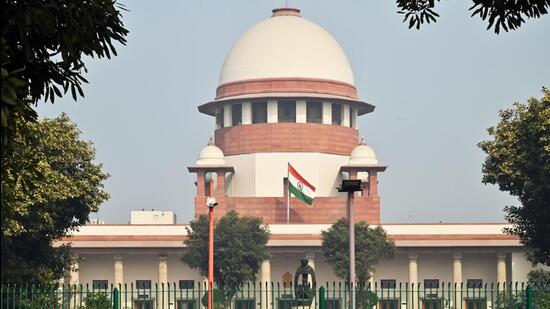
“There can be harassment of people and we won’t permit that. If we find there’s ambiguity in the provision, we will set it right. Second, people may not be sent behind bars in all cases, but it opens up several other issues for them,” a bench led by justice Sanjiv Khanna remarked.
The bench, which also included justices MM Sundresh and Bela M Trivedi, expressed its willingness to analyse the data thoroughly and consider framing guidelines to ensure that the provisions of the GST Act are not misused to intimidate or harass taxpayers.
“You give us the data in notices issued and arrests made under the GST Act for alleged defaults to the tune of ₹1 crore and ₹5 crore respectively...Can you give us data for the last three years,” the bench asked additional solicitor general SV Raju, who appeared for the Centre and the department concerned.
The court’s query came in response to concerns raised by senior advocate Sidharth Luthra regarding the misuse of powers by authorities under the GST regime, potentially leading to the curtailment of individuals’ liberties.
{{/usCountry}}The court’s query came in response to concerns raised by senior advocate Sidharth Luthra regarding the misuse of powers by authorities under the GST regime, potentially leading to the curtailment of individuals’ liberties.
{{/usCountry}}Raju said that he should be able to gather data regarding notices and arrests made under the central GST Act but such information relating to states would be difficult to collate. But Luthra, who appears in the matter for some of the petitioners, pointed out that the central GST Council must have such data.
“We want all data. GST Council will have those data. If the data is available, we want them before us,” the bench told the ASG.
The court observed that there has to be a distinction between cases of fraud and inadvertent or innocuous lapses.
During the hearing, the bench also pondered over the issue of supplying grounds of arrest to a person in writing, noting that mere informing the reasons may not be sufficient compliance with the principles of natural justice.
“This court has made it mandatory under the PMLA to give grounds of arrest in writing. A similar arrangement should be done under the GST as well. How does an arrested person challenge his detention or a plea for remand unless he has grounds of arrest in writing? If the department wants to oppose the bail of an arrested person, the least is expected of it is to give him the grounds of arrest,” the bench told Raju. The ASG said that he would be satisfying the court’s queries on May 9 when the matter will be heard next.
Notices and arrests under the GST Act have increasingly become a source of concern and apprehension among taxpayers, who often find themselves navigating a complex and ambiguous regulatory landscape where the interpretation and implementation of the law vary from one jurisdiction to another and even among different tax authorities.
The CGST Act encompasses various provisions aimed at addressing tax evasion, fraudulent utilization of Input Tax Credit (ITC), creation of fictitious identities for GST registration, and other unlawful activities. Notably, Section 67(1) empowers inspection, search, and seizure, while Section 69 grants authority for arrest. Section 70(1) pertains to summoning individuals to provide testimony and evidence. Section 132 delineates punishments, including imprisonment, while Section 135 addresses presumptions of culpable mental state, and Section 170 defines offenses by companies.
These sections have faced legal challenges in the top court through a clutch of petitions. The petitioner primarily contends that Sections 69 and 70 of the CGST Act are unconstitutional, alleging that they exceed the scope of powers granted under Article 246A of the Indian Constitution. Additionally, it’s argued that powers of arrest and prosecution are not incidental to GST enforcement and that CGST officers lack the authority of police officers.
The petitions have further argued that summoned individuals are not afforded protection under Article 20(3) of the Constitution, which states that no person accused of any offence shall be compelled to be a witness against himself.