The Centre on Thursday notified the Central Armed Police Forces (General Administration) Act, 2026, bringing it into force from October 8, a week before a Supreme Court special bench is scheduled to hear petitions challenging the law filed by serving CAPF cadre officers.
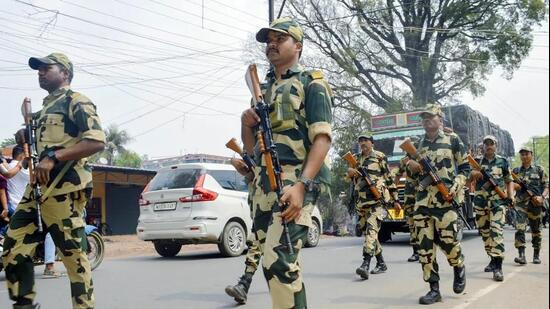
On October 15, the special bench is scheduled to hear two petitions — one filed last year over the Centre’s alleged failure to implement the Supreme Court’s May 2025 order on cadre review, promotions and deputation of IPS officers to the CAPFs, and another filed this year challenging the new law. The officers, who won the case in May 2025 after a decade-long legal battle, have argued that the law seeks to circumvent the apex court’s order and continues the structural disadvantage faced by cadre officers.
The Act governs the functioning and administration of all Central Armed Police Forces (CAPFs).
A gazette notification issued by the Union home ministry said, “In exercise of the powers conferred by sub-section (2) of section 1 of the Central Armed Police Forces (General Administration) Act, 2026 (9 of 2026), the Central Government hereby appoints the 08th day of October, 2026, as the date on which the provisions of the said Act shall come into force.”
Serving cadre officers, including recipients of Shaurya Chakra and other gallantry awards, have challenged the law in the Supreme Court, arguing that it is discriminatory, was enacted to override the court’s judgment and that the directions issued last year were never implemented by the home ministry.
{{/usCountry}}Serving cadre officers, including recipients of Shaurya Chakra and other gallantry awards, have challenged the law in the Supreme Court, arguing that it is discriminatory, was enacted to override the court’s judgment and that the directions issued last year were never implemented by the home ministry.
{{/usCountry}}While the Supreme Court had directed the government to progressively reduce the deputation of IPS officers, the new law fixes the number of posts for IPS and cadre officers at different ranks. The petitioners have argued that this would hurt the career prospects of cadre officers by limiting their chances of reaching senior leadership positions. For instance, the Act provides that the posts of director general (DG) and special DG will be filled only by IPS officers.
The Centre introduced the CAPF General Administration Bill, 2026, in the Rajya Sabha on March 27. The bill was passed by the Rajya Sabha on April 1 and the Lok Sabha on April 2, amid protests by opposition leaders who said it would affect the morale of cadre officers.
The law comes nearly a year after the Supreme Court ruled in favour of CAPF cadre officers following a decade-long legal battle over cadre review, timely promotions and leadership roles, including reducing the deputation of IPS officers to the forces.
The officers had told the top court that despite being members of Group A services and serving in senior ranks throughout their careers, they could not rise to leadership positions because IPS officers were brought in from outside on deputation.
The Supreme Court ruled in their favour on May 23, 2025, directing the Centre to progressively reduce IPS deputation, among other measures. It also directed a cadre review to enable timely promotions for cadre officers. The Centre’s review petition was dismissed on October 28, 2025. The bill was introduced in March 2026 even though the judgment had not been implemented.
While introducing the new law, the home ministry said IPS officers were essential for the effective functioning of the CAPFs and Centre-state coordination.
“Under Article 312 of the Constitution, the Indian Police Service is an All India Service, and the officers of the Service are posted in the Union and the States. Historically, IPS officers are an integral and important part of the CAPFs, who have been serving on deputation along with officers and members of these Forces. The CAPFs perform functions relating to national security and anti-insurgency in close coordination with the State authorities. Therefore, in the interest of maintaining Centre-State relations by ensuring close coordination between the Union and the States for effective operational functioning, it is essential to maintain the existing system of deputation of the IPS Officers in the CAPFs,” the statement of objects and reasons in the bill said.
While fixing the sanctioned strength of IPS and cadre officers in the CAPFs, the government also said the absence of an umbrella law had led to regulatory provisions evolving in a fragmented manner, resulting in several service-related litigations and functional and administrative difficulties.