For decades, Madhepura in Bihar has been known for two interconnected identities. The first is that it is the home district of BP Mandal, the former Chief Minister of Bihar, and the head of the Mandal Commission report that brought caste to the forefront of Indian politics more than three decades ago.
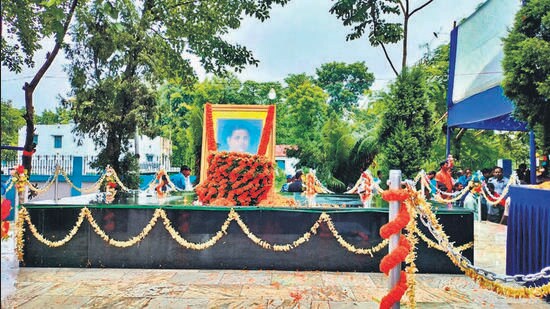
The second is that it has always been a Yadav stronghold, with its representatives to the Lok Sabha ranging from Lalu Prasad Yadav and Sharad Yadav to most recently, Dinesh Chandra Yadav of the JD(U). On Monday, caste was at the centre of political conversation in Madhepura again, with the Yadav community saying that this would lead to a renewed assertion of their identity, even as villages with EBC populations said that they hoped the results would mean material change, and upper caste villages across Bihar expressed a sense of worry.
Also Read: Bihar caste survey: A new strand to India’s identity politics
In Madhepura, 55-year-old farmer Kishor Yadav said that the caste survey would help counter “Rajput politics” more effectively. “Yadavs constitute 14.26% of the population, against Rajputs that are just 3.45%. As far as Madhepura is concerned, from BP Mandal to Lalu Yadav, this has been a Yadav stronghold, and by itself, the caste survey will have no effect on the politics here.”
{{/usCountry}}In Madhepura, 55-year-old farmer Kishor Yadav said that the caste survey would help counter “Rajput politics” more effectively. “Yadavs constitute 14.26% of the population, against Rajputs that are just 3.45%. As far as Madhepura is concerned, from BP Mandal to Lalu Yadav, this has been a Yadav stronghold, and by itself, the caste survey will have no effect on the politics here.”
{{/usCountry}}Akhilesh Yadav, state general secretary of the Janata Dal(United) said that the caste survey meant that government policies could now be framed in a targeted manner. “The government can focus on marginalized castes on the basis of their economic condition,” Yadav said.
Nityanand Yadav, the former headman of Sahugarh village in Madhepura said, “We can now understand our own people and can mount pressure on the government for their upliftment.”
East of Purnea, in the extremely backward castes (EBC) village of Sahkol, there was some hope that their numbers, 36.01% of Bihar’s population, would mean greater attention from the government. 45-year-old Chandra Shekhar Vidyarthi said, “We hope that the report will not only be used as a political tool but we get something better from it.”
Next to him, Rajkumar Mandal, a migrant labourer who returned from Punjab two days ago was less enthused about the possibility of change. “We are what we are, and will continue to be. No report will change that,” he said.
In the upper caste village of Akrohi in Bhabua in south-west Bihar however, there was some consternation. The village has 750 Brahmins, and Lalit Kishor Upadhyaya said that they were against the caste census because it created “tension and disputes” in society. “But if your young generation continues to follow our legacy of education and morality, then even our low numbers will mean very little,” Upadhyaya said.
In Aurangabad, colloquially called the Chittorgarh of Bihar because of the heavy Rajput population, Hemant Kumar Singh said that he did not trust the data, but said that the Rajput community would not be affected. “Rajputs have never survived on their numerical superiority but on our strength and ability. People from all castes have faith in us and nobody can be in power in Aurangabad, or Bihar, by ignoring us.”