E-Paper



Centre exempts highways in border areas from environmental clearance
A draft notification was released in April but despite opposition from environmentalists, environment ministry officials said they had not received any major objections to these changes

 Prefer HTon Google


The Union environment ministry notified on July 14, amendments that exempt highways in border areas, power plants using biomass, enhancement in the fish handling capacity of ports, and expansion of airport terminals from obtaining prior environment clearances, changing the environmental impact assessment policy in place since 2006.
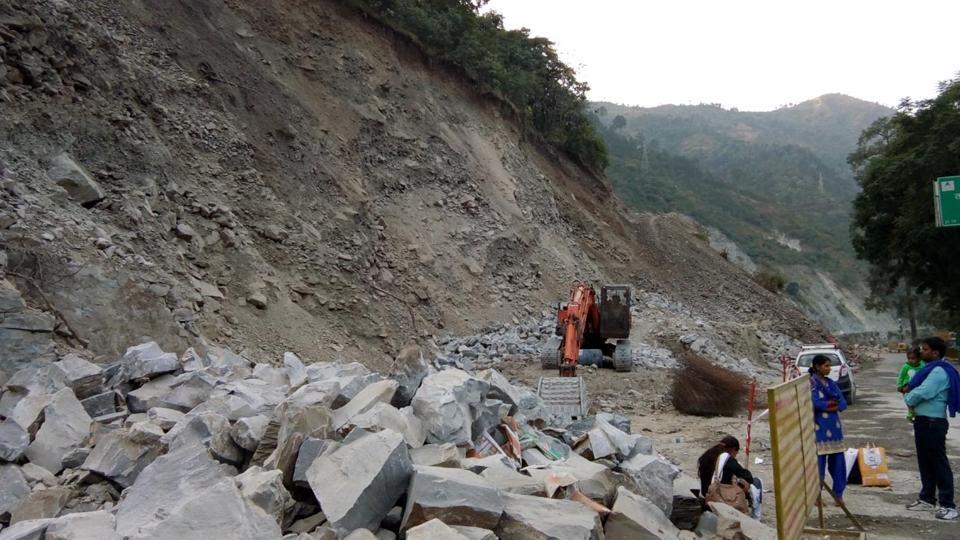
A draft notification was released in April but despite opposition from environmentalists, environment ministry officials said they had not received any major objections to these changes.
“We received hardly any objections to these amendments. People had ample time to read every amendment because the draft notification was issued in April. After scrutinising the comments, we have issued the final notification ,” said a senior environment ministry official who asked not to be named. A period of 60 days was given for people to submit their objections and comments to the draft.
Under the new policy, developers of highways in border areas will only have to ensure self-compliance of a Standard Operating Procedure (SOP) notified by the Centre from time to time.
With the new policy coming into effect, some high-altitude stretches of the Char Dham road project in Uttarakhand and other highway projects in the western and eastern Himalayas and several parts of northeast India will no longer need environmental appraisal because they fall within 100km of a border or line of control.
“The highway projects related to defence and strategic importance in border states are sensitive in nature and in many cases need to be executed on priority keeping in view strategic, defence and security considerations and in this regard, the Central Government deems it necessary to exempt such projects from the requirement of Environmental Clearance in the border areas,” the final notification issued on July 14 said.
The high-powered committee (HPC) that looked into the Char Dham project, in its final report submitted in July 2020 unanimously recommended that an environment impact assessment be conducted before road widening in the Bhagirathi eco-sensitive zone stretch was taken up.
With the final notification on exempting border roads from prior environmental clearance being issued, environmentalists are concerned that the environmental impact assessment for the Bhagirathi zone may also be skipped now.
“ If the government skips this , then we stand to lose the only pristine stretch of the Ganga left in the country. The Bhagirathi watershed just like Alaknanda, Mandakini and Yamuna basins will be irreparably destroyed by muck and debris from this project. Nobody is or has been against road widening of feeder roads but oblivious to the growing impact of climate change and the precarious nature of Himalayas, building an excessively wide 12mtr feeder road, even when the border road is only 7m, is irrational and suicidal,” said Mallika Bhanot, member of Uttarakhand based Ganga Ahvaan, an environmental group.
In December 2012, the environment ministry notified 4179.59 sq. km covering the entire watershed of about 100 km from Gaumukh to Uttarkashi as the Bhagirathi Eco Sensitive Zone (BESZ) . Over 98 % of the entire BESZ area is reserved forest . Almost 59% of the total BESZ area is glacier or snow covered according to the high powered committee report.
On December 14 last year, the Supreme Court permitted the Union government to construct all-weather roads with 10m width as part of its Char Dham project in Uttarakhand, underlining that “the recent past has thrown up serious challenges to national security”, and that wide strategic feeder roads to Indo-China border areas were required for the infrastructural needs of the armed forces.
In its report to the top court submitted in July 2020, the HPC was divided, with a majority in favour of wider roads.
Several ecologists and geologists have, however, raised concerns about the impact of hill cutting, muck disposal and instability that will be caused by a double lane paved shoulder category road.
The chairman of the HPC set up by the Supreme court to oversee widening of roads under the Char Dham Pariyojana, Ravi Chopra resigned from his post in January.
In his letter dated January 27 , Ravi Chopra, said the union ministry of road transport (MoRTH) ignored the panel’s recommendations regarding the road width. Chopra highlighted the importance of protecting the Bhagirathi Eco-sensitive zone several times.
Following his resignation from the panel, Chopra said: “A very important aspect of the judgment given by the honourable court is that it is conditional upon ministry of road transport and highways (MoRTH) and ministry of defence (MoD), both observing the unanimous decisions of the HPC. The HPC has unanimously recommended that any work that is to be done in the Bhagirathi eco-sensitive zone should be preceded by an honest environment impact assessment.”
“The acceptance of these proposals is to bring environment regulation to relinquish its oversight for specific infrastructure projects that have been prioritised by the central government’s towards infrastructure expansion. Given that there growing instances of climate induced disasters and these projects will need to transform already vulnerable ecologies, it would be more prudent to have a cautious approach. Instead, the systematic dismantling of environment clearance procedures are neither being backed by scientific knowledge nor do they factor in the huge costs that may be transferred on to tax payers when there are delays in completing these projects as necessary impact assessment procedures are officially side stepped,” said Kanchi Kohli, legal researcher at Centre for Policy Research.