
 E-Paper



Chhattisgarh: Additional SP killed in IED blast days before daughter’s birthday
A commerce graduate from a government college in 2004, Girepunje had aspired to become a government officer since childhood.

 Prefer HTon Google


Raipur : Akash Rao Girepunje, additional superintendent of police Akash Rao Girepunje was killed in a Naxal-planted IED blast in Chhattisgarh’s Sukma district on Monday, just two days before his daughter’s sixth birthday.
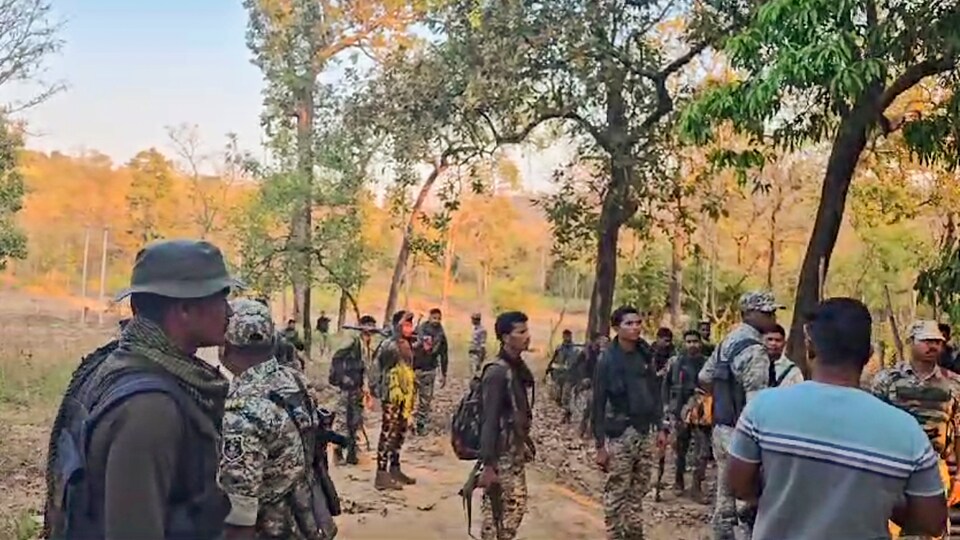
The 42-year-old officer, posted in the insurgency-hit Konta division of Sukma since March 2024, was critically injured when a pressure-IED exploded during a patrol in the Konta area. He succumbed at a hospital shortly after. Two other police personnel were also injured in the explosion.
Girepunje, a native of Raipur, had planned to visit his in-laws' house in Bhandara, Maharashtra, for his daughter’s birthday on June 11. “He had promised his daughter he would be there, no matter what,” said his younger brother, Adarsh Girepunje. “We never imagined that his recent visit home on May 20 for his son’s birthday would be our last meeting.”
Adarsh, an MBBS graduate preparing for post-graduation, recalled receiving a call at around 9:30 AM on Monday from his brother’s security staff informing him about the blast. “At first, I was told he was injured. But just half an hour later, I got the devastating news that he was no more,” he said.
Girepunje is survived by his wife Sneha, their two children—a 7-year-old son and a 6-year-old daughter—and his elderly parents. His father, Govind Rao Girepunje, runs a small garage in Raipur. Akash was the second among five siblings.
A commerce graduate from a government college in 2004, Girepunje had aspired to become a government officer since childhood. He prepared for the UPSC in Delhi, clearing the preliminary exam four times but failing to crack the mains. He cleared the Chhattisgarh Public Service Commission exam in 2008 and was appointed Deputy Superintendent of Police in 2013. He also cleared public service exams in multiple states and briefly worked in a nationalised bank before joining the police.
“Bhaiya had a passion for teaching and mentoring UPSC aspirants. He inspired two of our cousins to take up civil services preparation,” Adarsh said.
Known for his fearless service in Naxal-hit regions like Mohla-Manpur and Konta, Girepunje was instrumental in establishing new police camps and strengthening security infrastructure. “Fighting Naxalites was not just a job for him, it was a mission. He never flinched in the face of danger,” Adarsh added.
Girepunje’s mortal remains were brought to Raipur and taken to Dr. B.R. Ambedkar Memorial Hospital for post-mortem. A large crowd gathered at his Kushalpur residence to pay their final respects.
Chief Minister Vishnu Deo Sai, who postponed his scheduled visit to Rajnandgaon, visited Girepunje’s family and paid tributes. “He showed unmatched courage and dedication to his duty. His sacrifice will not go in vain,” the CM said in an official statement.
The CM later chaired a high-level meeting to review anti-Naxal operations and also visited a private hospital to check on the condition of the two injured officers. He was accompanied by senior state officials including Forest Minister Kedar Kashyap, Additional Chief Secretary (Home) Manoj Pingua, DGP Arun Dev Gautam, and ADG (Anti-Naxal Operations) Vivekanand Sinha.
-kW0H-U20214218012MgB-250x250%40HT-Web.jpg)


