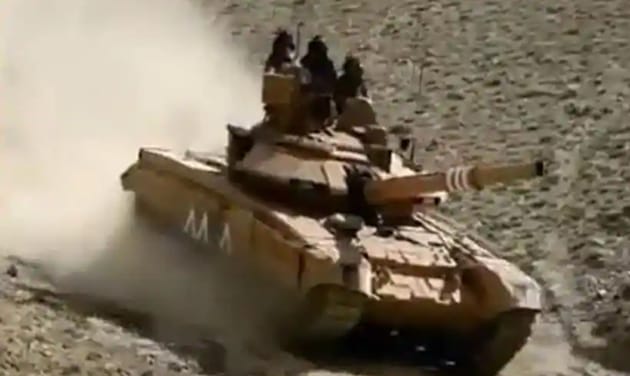
The India-China military and diplomatic talks over resolving the Ladakh stand-off remain confidential, but HT learns that the People’s Liberation Army (PLA) has turned the dis-engagement, then de-escalation formulation on its head by proposing that tanks and artillery support should be mutually withdrawn first so that vertical escalation is averted in case of an accident.
The Indian position on the other hand is that there should be comprehensive disengagement of troops through a phased withdrawal, a verification process, and then a de-escalation. The disengagement, New Delhi has maintained, should involve troops going back to their pre-April 2020 positions along the 1597 km Line of Actual Control (LAC) in Ladakh. Once this happens, de-escalation can follow.
Experts say that in pure military terms, thinning out of artillery and tank support from the friction points does not work in favour of the Indian Army as the PLA has built roads right up to Beijing’s perception of LAC and has the capacity and capability to deploy much faster than Indian armour.
According to senior officials, the Indian Army will have to remain deployed in the heights of East Ladakh through the winter, till the PLA decides in favour of disengagement and restoring status quo ante. “ The Indian Army has been trained in high altitude deployments and will be on guard till the situation is mutually resolved. The Indian position is comfortable and well-defended,” a senior official said on condition of anonymity.
While the PLA has come up to its perception of the LAC on the north banks of Pangong Tso and Gogra-Hot Springs, the Indian Army has come up to its perception of the LAC on the south bank of the high altitude salt lake with troops sitting on the Rezang La-Rechin La ridgeline.
{{/usCountry}}While the PLA has come up to its perception of the LAC on the north banks of Pangong Tso and Gogra-Hot Springs, the Indian Army has come up to its perception of the LAC on the south bank of the high altitude salt lake with troops sitting on the Rezang La-Rechin La ridgeline.
{{/usCountry}}India’s national security planners are debating how the tense situation will play out in the future. One school of thought is that the PLA will try and placate India though talks till the November 3 US presidential election but then increase hostilities all along the 3488 km LAC if President Trump does not return to White House. Essentially this means that right now, China is focused on US moves vis-a-vis Taiwan and will focus on India after the result in the US Presidential elections.
The other school of thought among is that the PLA aggression on LAC has nothing to do with the US Presidential elections as the friction started in Galwan-Gogra-Hot Springs in April, when the American elections were not even on the horizon. People believe that the PLA move on LAC is aimed at restoring the November 7, 1959 line and punishing India for publishing the Ladakh map on November 2, 2019. The aggression has partly to do with the internal situation in China with the spread of coronavirus from Wuhan, the resulting impact on the economy, and the ensuing political ferment. While China’s internal political situation is expected to ease rather than exacerbate, the pressure on LAC will continue for time to come.