The Supreme Court registry on Wednesday released a new work roster which says the top five judges will now be given public interest litigation (PIL) cases, effectively reversing a year-old protocol by which such cases were restricted only to the Chief Justice’s court.
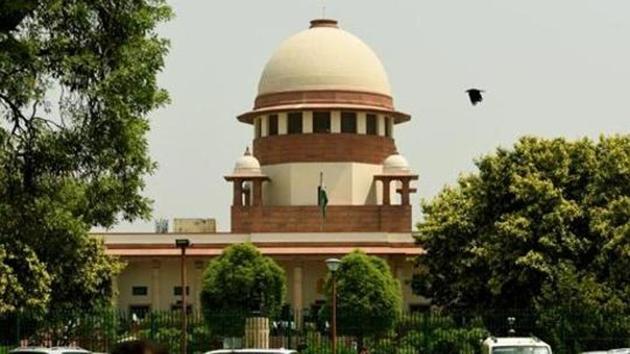
According to experts, the change is significant since it undoes a move by former chief justice Dipak Misra, whose tenure was marked by a controversy related to assignment of cases. After an unprecedented press conference by the next four top judges, Misra had in 2018 set in place the procedure of the Chief Justice hearing all PILs.
Three of the four judges — justices J Chelameswar, Madan Lokur and KM Joseph, who, in January 2018, questioned the manner in which cases were being allocated during justice Misra’s tenure — have since retired. The fourth, justice Ranjan Gogoi, is the incumbent Chief Justice of India (CJI).
As per the latest roster system, PIL matters will now be heard by the benches headed by CJI Gogoi and justices SA Bobde, NV Ramana, Arun Mishra and Rohinton Fali Nariman. The four justices will hear PILs assigned to them by the CJI.
Election matters, which were vested exclusively with the bench headed by the CJI, will now be shared with the bench headed by justice Bobde, said the new roster that comes into force from July 1.
{{/usCountry}}Election matters, which were vested exclusively with the bench headed by the CJI, will now be shared with the bench headed by justice Bobde, said the new roster that comes into force from July 1.
{{/usCountry}}CJI Gogoi’s term ends in four months.
Even though he retained much of the same protocol laid down by his predecessor till now, current CJI Gogoi had slightly tweaked the procedure and said PIL matters were also to be assigned to the court of second senior-most judge in the Supreme Court.
According to experts, the Supreme Court roster was not public and the procedure for hearing PILs varied with chief justices, the Master of the roster.
“Traditionally, in the Supreme Court and high courts, PILs are heard by the courts of the chief justices. This was so because the number of PILs filed were small in numbers. But with time, the number of PILs in the apex court increased and Chief Justices decided how to deal with them. Some gave PIL matters to other judges while some held it in the court of the CJI. There were no clear criteria governing PILs,” said former CJI KG Balakrishanan. “It’s a practical decision and recognition of the fact that there are too many PILs that are being filed in the apex court and they need to be heard by other judges too as the PILs filed deal with a wide variety of subjects,” said senior advocate Jaideep Gupta. “We have seen that concentration of PILs in the court of CJI has also clogged his work board,” he said, adding that PILs were at one point heard by any judge of the Supreme Court.