
CoBRA deputy commandant wounded in Bastar IED blast dies
Officials said the IED was planted by Maoists. It exploded when Vikas Kumar, along with a team, was out for anti-Maoist operations on Sunday
A deputy commandant of the Central Reserve Police Force (CRPF)’s elite Commando Battalion for Resolute Action (CoBRA) unit , who was injured in an IED blast in Sukma district of Bastar region on Sunday, died due to his injuries in Raipur on Monday.
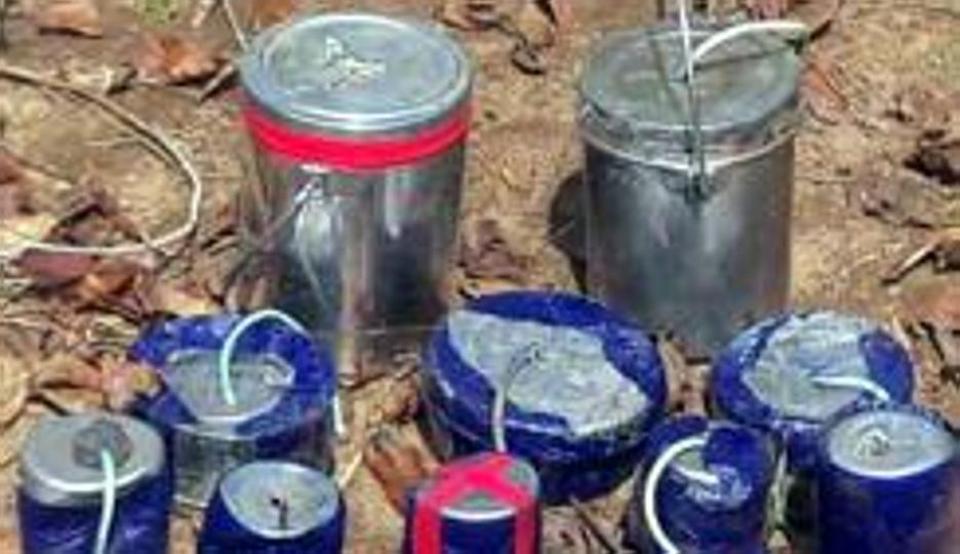
Sunderaj P, inspector general of police ( IG), Bastar range ,told Hindustan Times that the deputy commandant, Vikas Kumar, who was with CoBRA’ 208th battalion, sustained serious injuries in the explosion. The improvised explosive device (IED) was planted by Maoists. It exploded when he, along with a team, was out for anti-Maoist operations on Sunday.
“The incident took place at around 10 am on Sunday at Kasaram Nala under Kishtaram Police station area . Vikas was airlifted and was admitted to private hospital in Raipur. At around 1am on Monday, Vikas died in the hospital during treatment,” the IG said.
Police said that the body of the deceased officer will be sent to Delhi in the afternoon.
On November 29, an Assistant Commandant of CoBRA was killed and eight others were injured in an IED blast triggered by Maoists in Talmetala area of Sukma district.
ABOUT THE AUTHORRitesh MishraRitesh Mishra is the State Correspondent for Chhattisgarh with Hindustan Times. He reports on Maoism, internal security, politics, mining, governance, and major developments shaping the state. Based in Raipur, he has covered Chhattisgarh since 2016, reporting extensively from the Bastar region and other conflict-affected areas. With nearly two decades of experience in journalism, Ritesh has built a reputation for ground reporting from some of India's most challenging terrains. His coverage spans Left-Wing Extremism, counter-insurgency operations, elections, tribal affairs, environmental issues, infrastructure, mining, and socio-economic developments. He has reported on major security operations, policy initiatives, wildlife crime, and the changing dynamics of conflict and development in Central India. Before moving to Chhattisgarh, Ritesh spent eight years reporting from Madhya Pradesh, covering politics, administration, crime, development, and social issues. Throughout his career, he has reported on various forms of extremism in Central India, combining field reporting with in-depth analysis to produce accurate, balanced, and impactful journalism. Prior to joining Hindustan Times, Ritesh worked with The Pioneer and The Free Press Journal, where he covered a wide range of beats and honed his skills in political, investigative, and field reporting. His reporting is marked by exclusive stories, extensive fieldwork, and a commitment to factual, on-the-ground journalism that brings complex issues to a wider audience.Read More

E-Paper


-kW0H-U20214218012MgB-250x250%40HT-Web.jpg)