The Defence Research and Development Organisation (DRDO)'s primary task is to develop state of the art weapons, strategic missiles and ballistic missiles submarines, but the raging pandemic in India has forced the organisation to change its focus from missile test firing to deter adversaries to saving lives of Covid-hit Indians.
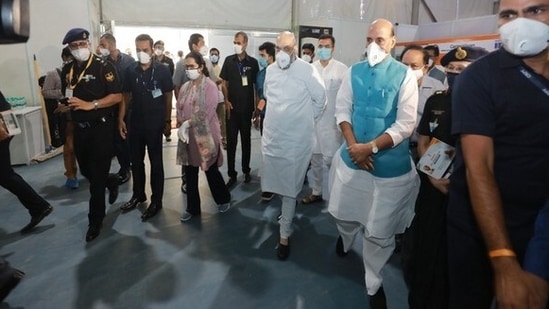
The organisation has made makeshift hospitals with negative pressure tents to help those need specialised medical care due to Covid-19. The specifications of the hospital infrastructure on the ICU beds, oxygen beds and normal beds was worked out in consultation with the state health authorities.
The equipment for Covid-19 care is provided as per specified standards, the DRDO said. The maintenance and upkeep of the equipment is round-the-clock at a time when the spread of Covid-19 has led to lockdown-like conditions in several states, it added.
Nine hospitals for Covid-19 have been set up by the DRDO in cities like Delhi, Ahmedabad, Lucknow, Varanasi, Gandhi Nagar, Haldwani, Rishikesh, Jammu and Srinagar. The biggest among them is the Dhanvantri Covid Care Hospital in Gandhi Nagar which has 700 oxygen beds and 200 ICU beds. In Delhi, Sardar Patel Covid Care Centre has 500 ICU beds.
Also Read: From Himvir to Corona warrriors, ITBP shows the way
{{/usCountry}}Also Read: From Himvir to Corona warrriors, ITBP shows the way
{{/usCountry}}The DRDO has also ordered the installation of oxygen generation plants at various hospitals across the country. The organisation said that these oxygen plants can generate up to 1,000 litres of oxygen per minute which can cater up to 190 patients. These plants can also charge up to 195 cylinders per day.
The research organisation said that first two oxygen plants arrived in Delhi and were operationalised at AIIMS and Ram Manohar Lohia (RML) hospitals in the city on May 6. The next three plants arriving in Delhi will be installed at Lady Hardinge Medical College, Safdarjung hospital and AIIMS in Jhajjar.
The DRDO has also taken an initiative to rope in more industry partners for ramping up the production of lower capacity medical oxygen plants for smaller hospitals.
To give further boost to oxygen production, DRDO also developed its own oxygen supply system based on SpO2 (oxygen saturation) level. The system - called Oxycare - consists of two variants - manual and automatic. It was developed by the DRDO's Bengaluru-based Defence Bio-Engineering and Electro Medical Laboratory (DEBEL) for soldiers posted at extreme high-altitude areas.
The government on Wednesday approved the procurement of 1,50,000 units of the 'Oxycare' system. The DRDO has already transferred the technology to multiple industries in India for large-scale production of the system.
Apart from this, the DRDO's laboratory working on safety research has given more than 100, large cylinders of 1,200 litres to hospitals made by the government agency. One of the DRDO's labs has developed an anti-Covid-19 therapeutic application of the drug 2-deoxy-D-glucose (2-DG). Clinical trial results have shown that this molecule helps in faster recovery of hospitalised patients and reduces supplemental oxygen dependence.
On May 1, the Drugs Controller General of India’s (DCGI) granted permission for emergency use of the drug as adjunct therapy in moderate to severe Covid-19 patients after successful phase 3 trials. The drug comes in powder form in sachet, which is taken orally by dissolving it in water.