New Delhi: For farmers and vegetable sellers in east Delhi’s Chilla village, selling their crop in this heat has not been as difficult as it used to be last year, when most fresh produce would only last a week in summer before getting spoilt. Since June 2021, the farmers have had places to store their vegetables to prevent them from getting spoilt due to extreme temperatures in the form of cold storages that have been provided by students part of Enactus at the Delhi College of Arts and Commerce (DCAC).
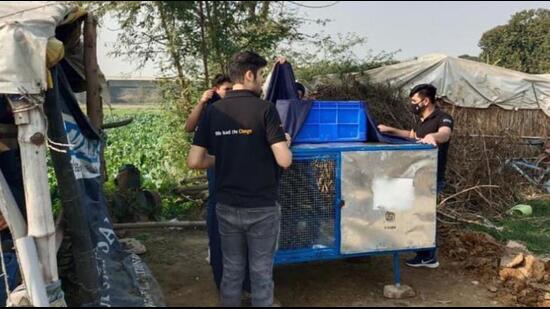
Part of their project ‘Zaraat’, the students have been trying to minimise post-harvest loss by providing affordable cold storage solutions, which include portable tent-like storages and cold storage boxes, among others.
The group has been providing these options at a minimal charge, interacting with local farmers and vegetable sellers in finding a solution to the problems associated with climate change and post-harvest loss, with plans to scale these solutions to other villages across Delhi-NCR as well.
“While researching in the early part of 2020, we realised there was over ₹93,000 crore in post-harvest losses across the country and a majority of these farmers relied on selling their produce at mandis. If they are unable to sell these vegetables on time or are unable to get the right price, their produce can get spoilt, especially in extreme weather conditions and therefore storage is an essential aspect,” said Sanyam Jain, President, Enactus DCAC.
Sanya Vij, another Enactus member said the storage options provided include microclimate-based tents which can maintain the freshness of vegetables till up to 30 days, with the entire set up operating on wheels so that it can be carried to nearby markets too. Portable boxes that act as cold storage units without the risk of cold shock or thawing have also have been provided, which can sustain freshness for up to 45 days. “These are at a minimal cost which the farmers can afford and even that is being collected for maintenance purposes,” she said.
{{/usCountry}}Sanya Vij, another Enactus member said the storage options provided include microclimate-based tents which can maintain the freshness of vegetables till up to 30 days, with the entire set up operating on wheels so that it can be carried to nearby markets too. Portable boxes that act as cold storage units without the risk of cold shock or thawing have also have been provided, which can sustain freshness for up to 45 days. “These are at a minimal cost which the farmers can afford and even that is being collected for maintenance purposes,” she said.
{{/usCountry}}Amongst those who have benefitted from the initiative, is 48-year-old Jagan Lal, who has been involved in growing vegetables such as lady fingers, spinach and cauliflowers.
“As soon as the crop is harvested, we are using these storage facilities to keep them fresh until we have to take them to a nearby mandi to sell them. There has been a considerable reduction in vegetables getting spoilt over the last one year,” he said.
The village has also been storing crops such as coriander, fenugreek and radishes at these facilities. Enactus students say they plan to reach out next to farming communities in Faridabad and Greater Noida ahead of the end of summer, while more facilities will be provided to the village in collaboration with an NGO, the Rise Foundation.