The Indian Railways will shorten the travel time between New Delhi and Kolkata by at least two and a half hours by increasing the highest speed of trains to 160 kmph, officials said.
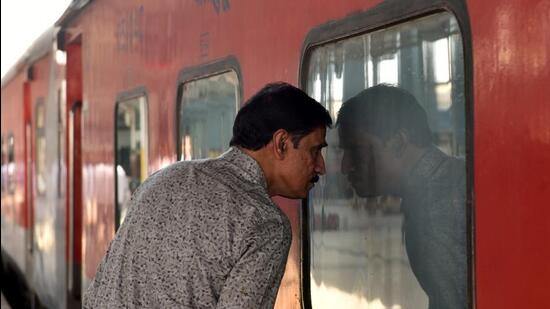
The plan along the 1,525-km route will be carried out under project Mission Raftar, which aims to reduce travel time along busy stretches by running passenger trains at a speed of 160 kmph. A similar plan under the project is already being implemented along the 1,483-km long New Delhi-Mumbai route.
Currently, the Rajdhani Express is the fastest train between New Delhi and Howrah. It takes 17.05 hours to complete the journey via Gaya in Bihar.
“Passengers travelling along the New Delhi and Howrah route will be able to reach their destination at least two and a half hours to three hours earlier as the speed of the train will be increased from the current 85 kmph to maximum of 160 kmph,” an officer of the national transporter said on condition of anonymity. “With the implementation of Mission Raftar, the Rajdhani Express running along this route will reach its destination in less than 15 hours.”
The highest speed on this route was raised to 130 kmph in July 2020.
{{/usCountry}}The highest speed on this route was raised to 130 kmph in July 2020.
{{/usCountry}}“Work for raising the sectional speed to 160 kmph along New Delhi-Howrah (including Kanpur-Lucknow) has been sanctioned and efforts to improve the tracks through fencing, overhead equipment modification and automatic train protection are in various stages of progress,” another railway official said, seeking anonymity.
The overhead equipment will use latest technology set to global standards and used by countries like France, Germany, South Africa and China, the official added.
Travel time between stations depends on several factors like sectional speed, train stoppages, maximum permissible speed of rolling stock and permanent speed restrictions, among others, the second official said.
The Rajdhani Express between Howrah and New Delhi runs at an average speed of 85 kmph, which is likely to increased to 160 kmph.
“While over two hours is expected to be saved, the exact reduced travel time will be known only when an increase in speed is implemented and the timetable of trains is revised keeping in mind these factors,” the official said.
The travel time taken by Rajdhani between New Delhi and Mumbai will also be reduced by over an hour, officials said. At least 35% of the work to achieve this goal has already been completed, they said.
The mechanical wing of the railways will be setting up coach depots for maintenance work at Howrah, New Delhi and Mumbai for the 160 kmph project, the officials said.
Prior to the Covid-19 pandemic, the New Delhi-Howrah route was used by 120 passenger trains and around 100 goods trains everyday.
The railways expect the dedicated freight corridor for cargo trains to be operational next year, which will decongest the rail tracks for passenger trains.
“As of now, both goods and passenger trains run on the same tracks that are efficient for trains running at 160 kmph,” said VN Mathur, former member of traffic, railway board. “The only challenge in Mission Raftar are the curved tracks, where a certain speed must be maintained.”