Delhi’s air quality remained in the poor category as the minimum temperature was recorded at 19°C on Friday. The air quality index (AQI) stood at 223 (8am).
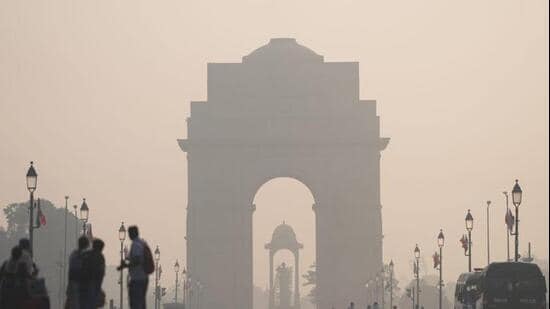
Out of 57 air quality monitoring stations, 19 recorded air quality in the moderate zone while the rest were in the poor category. An AQI between 201 and 300 is classified as poor under the Central Pollution Control Board’s scale.
The air quality reading comes amid the seasonal deterioration in pollution levels amid impending onset of winter and meteorological conditions favouring the accumulation of pollutants.
Deep Dive
Why is Delhi’s air quality still in the poor category?
What measures are being taken under GRAP Stage I to tackle Delhi’s poor air quality?
Has GRAP consistently improved Delhi’s winter air quality?
According to the Air Quality Early Warning System, Delhi’s air quality is likely to remain poor till October 25. The outlook for the following six days also indicates that the city is unlikely to see an immediate improvement.
Also Read:New GRAP actions failed to curb Delhi-NCR pollution in 10 of 12 episodes, reveals study
According to India Meteorological Department (IMD) data, Safdarjung, Delhi’s base weather station, recorded a minimum temperature of 19 degrees Celsius, 1.8 degrees above the seasonal average. The minimum temperature at the Ridge station settled at 19.2 degrees Celsius, 0.7 degrees above normal.
Lodi Road recorded a minimum temperature of 18.6°C, 2.6°C above normal, while Ayanagar registered 19.1°C, 1.9°C above normal. Palam recorded the lowest minimum temperature among the five stations at 18.3°C, 0.5°C above normal.
{{/usCountry}}Lodi Road recorded a minimum temperature of 18.6°C, 2.6°C above normal, while Ayanagar registered 19.1°C, 1.9°C above normal. Palam recorded the lowest minimum temperature among the five stations at 18.3°C, 0.5°C above normal.
{{/usCountry}}Also Read: Himachal to remain dry till Oct 25, mercury set to rise: IMD
The maximum temperature on Thursday was 32.5°C Celsius at Safdarjung, 32.4°C at Lodi Road, 31.7°C at Ayanagar, 31.5°C at the Ridge and 29.9°C at Palam.
No rainfall was recorded at any of the five weather stations in the 24-hour period ending at 8:30am on Friday.
Stubble burning data
According to the Decision Support System for Air Quality Management in Delhi, developed by the Indian Institute of Tropical Meteorology (IITM), Pune, stubble burning contributed an estimated 7.4% to Delhi’s PM2.5 concentration on Thursday. Its contribution rose to 15.9% on Friday.
Satellite monitoring detected 114 paddy residue-burning events across six states on Thursday, including 36 in Punjab, one in Haryana, three in Uttar Pradesh, 56 in Rajasthan, 11 in Uttarakhand and seven in Madhya Pradesh. No fires were detected in Delhi.
Between September 15 and October 22, satellites detected 1,507 crop-residue burning events across the six states and Delhi. Punjab accounted for 510 events, followed by Madhya Pradesh (400), Rajasthan (308), Uttar Pradesh (193), Uttarakhand (83), Haryana (12) and Delhi (one).
Transport remains highest contributor
The transport sector was the largest contributor to Delhi’s pollution, accounting for 17.32% of the estimated concentration, followed by other sources at 17.28%, according to the Decision Support System.