
 E-Paper



Delhi's winter unsuitable for consistent cloud seeding, artificial rain can give temporary respite: IIT Delhi study
The report said that cloud seeding, even if successful, could only provide a temporary respite for 1-3 days.

 Prefer HTon Google


Days after two cloud seeding attempts failed to produce artificial rain in the capital, a new report has said that Delhi's winter atmosphere is climatologically unsuitable for consistent cloud seeding due to lack of sufficient moisture.
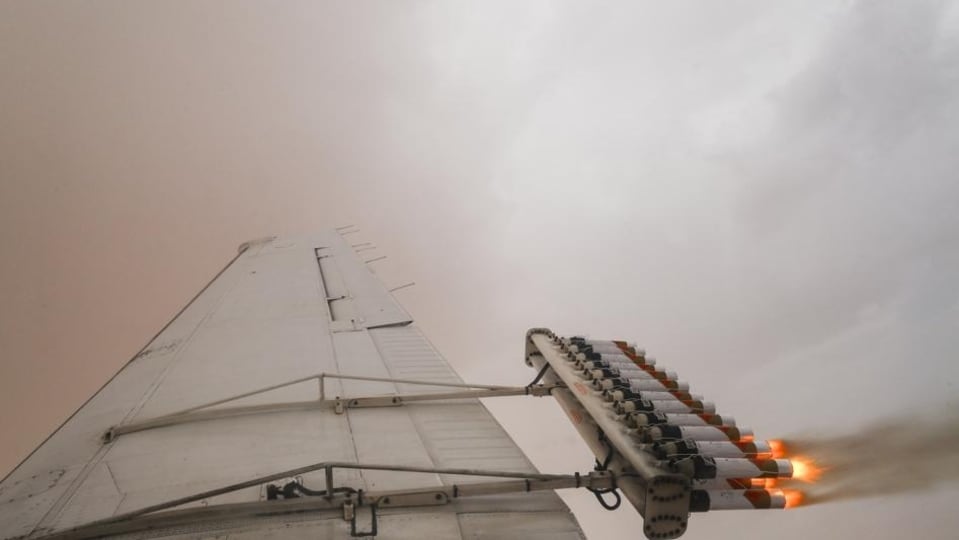
The IIT-Delhi report said that cloud seeding cannot be recommended as a primary measure for Delhi's pollution management, noting that even if successful, it would only provide a temporary respite for 1-3 days, news agency PTI reported.
The report comes days after Delhi conducted two cloud seeding trials on October 28, which largely failed to yield desired results. More such trials scheduled for this week were put on hold due to low moisture content in the clouds.
The study on cloud seeding was based on a comprehensive analysis integrating climatological data (2011-2021) by IIT's Centre for Atmospheric Sciences.
Also Read: 2 sorties, 16 flares: What happened, what didn't & at what cost | Delhi cloud seeding
"While cloud seeding is theoretically feasible under specific atmospheric conditions, during Delhi's winter, its practical utility as a consistent and reliable air-quality intervention is constrained. The necessary atmospheric conditions are rare and frequently coincide with natural rainfall, limiting the potential marginal gain," the report said.
The report said that even if successful, the artificial rain would provide a temporary respite before the pollution levels rebound.
"Even when successful, induced rainfall would likely provide only a brief respite (typically one to three days) before pollution levels rebound. Given the high operational costs, the scientific uncertainties inherent in aerosol-laden environments, and the absence of any impact on underlying emission sources, cloud seeding cannot be recommended as a primary or strategic measure for Delhi's pollution management," it said.
Also Read: Artificial rain in Delhi: Why cloud seeding trials have been put on hold
The report called the cloud seeding measure a "high-cost, tactical intervention" which should be used during "declared air-quality emergencies".
The study noted that an emphasis should be put on sustained emission reduction, which remains the best viable and durable solution to the chronic air pollution crisis in Delhi.
"Given these constraints, cloud seeding cannot be recommended as a primary or reliable strategy for Delhi's winter air pollution management. It should be viewed, at best, as a potential high-cost, emergency short-term measure, contingent on stringent forecasting criteria," the report said.
The Delhi government had planned at least 10 cloud seeding trials in total in collaboration with IIT-Kanpur to induce artificial rain to combat the city's pollution. The state cabinet had approved the cloud seeding project earlier in May, allocating ₹3.21 crore for five trials.


