The Supreme Court’s verdict on Monday reaffirming the Centre’s decision to demonetise ₹500 and ₹1,000 notes in 2016 triggered a war of words with the ruling Bharatiya Janata Party (BJP) calling Congress anti-poor while hitting at it for promoting the informal economy.
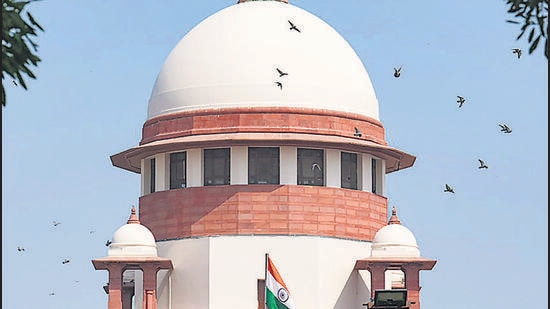
The BJP said the court’s majority decision is a testament that the policy was well intentioned. “The Supreme Court by a majority judgement dismissed all the 58 writ petitions that challenged the historic demonetisation scheme...it said this whole exercise was done for a valid cause to check fake currency, terror funding and black marketing. The court said the government has the right to take such a policy decision and that the RBI [Reserve Bank of India] was consulted,” said BJP leader Ravi Shankar Prasad.
He called the Congress “anti-poor” for criticising the policy, which he said was designed to benefit the poor. “The Congress in its own way promoted and protected informal economy.”
He recalled Congress’s criticism of the policy. “Will [Congress leader] Rahul Gandhi, who went across the country, criticising the Centre’s decision on demonetisation now apologise?”
Prasad said in sum and substance, the court found the whole decision-making process to be fair and reasonable. “The only dissenting judge also said the policy was well intentioned...But the Congress created such a fuss about the policy; Rahul Gandhi during his visits abroad used to take up the issue.”
{{/usCountry}}Prasad said in sum and substance, the court found the whole decision-making process to be fair and reasonable. “The only dissenting judge also said the policy was well intentioned...But the Congress created such a fuss about the policy; Rahul Gandhi during his visits abroad used to take up the issue.”
{{/usCountry}}He said the BJP stressed the policy announced ahead of the 2017 assembly polls in Uttar Pradesh was “designed to subserve the interest of the poor and bring in cleanliness in the economy.”
“After demonetisation, there has been transparency in the system. There has been a growth in digital transactions and in October 2022 alone 703 crore transactions worth ₹12 lakh crore were made. This happened because of digital India.”
He said the policy positively impacted tax collection as well. “In 2017-18, the tax collection was 18% higher than the previous year at ₹10.3 lakh crore. Also, 2.38 lakh shell companies were busted. Property being registered under benami and money laundering was stopped.”
He said the most important factor was that the informal sector’s involvement in the economy has reduced from 52% to 20% and there was a blow to terror funding. “Demonetisation was a great service to the cause of breaking the backbone of terrorism.”
He lashed out at Congress leader P Chidambaram, who called the dissenting judge’s verdict a slap on the government’s wrist. “... You do not focus on the majority judgement. This is unfair, improper, and condemnable.”
The Opposition maintained the court only pronounced whether the RBI Act was correctly applied or not. “The Supreme Court has only pronounced on whether Section 26(2) of RBI Act, 1934, was correctly applied or not before announcing demonetisation on November 8, 2016. Nothing more, nothing less. One Hon’ble Judge in her dissenting opinion has said that Parliament should not have been bypassed,” said Congress leader Jairam Ramesh.
Justice BR Gavai, who read out the majority verdict, said the demonetisation decision did not suffer from any legal or procedural flaws nor was it hit by the doctrine of proportionality.
Justice BV Nagarathna authored the dissenting judgment, calling the decision unlawful. She held it violated legal and procedural norms. Justice Nagarathna said the demonetisation could have been carried out only through legislation and not through an executive decision.
The Congress argued the verdict said nothing on the impact of demonetisation, which was a singularly disastrous decision. “It damaged the growth momentum, crippled MSMEs [ Micro, Small, and Medium Enterprises], finished off the informal sector & destroyed lakhs and lakhs of livelihoods.”
Ramesh said the verdict has nothing to say about whether the stated objectives of demonetisation were met or not. “None of these goals - reducing currency in circulation, moving to the cashless economy, curbing counterfeit currency, ending terrorism & unearthing black money - was achieved in significant measure,” Jairam said. He said the verdict was limited to the issue of the “process” of decision-making.
In a statement, the Communist Party of India (Marxist) said the majority judgment of the Supreme Court exclusively dealt with the legal right of the Centre to take such a decision. “The dissenting opinion of one of the honourable judges maintained that this Section [26(2) of the RBI Act] says that the RBI must recommend to the government to initiate demonetization. In this case, the decision was taken by the Central government which sought the opinion of the RBI. Hence, the approval of the Parliament should have been taken before this decision was executed.”
Communist Party of India’s Rajya Sabha member Binoy Viswam said, “Parliament was kept in dark, for ending black money, terrorism and to go digital.. nothing happened! Industries and shops closed, and crores lost their jobs.”