E-Paper



Dolphin to gharial: Five conservation projects launched
The minister, who was at the Forest Research Institute (FRI) in Dehradun, Uttarakhand, also unveiled four national-level action plans and field guides for species population assessments and monitoring programmes

 Prefer HTon Google


The central government, as part of the National Wildlife Week, has launched five projects for species conservation and conflict management focused on dolphins, sloth bears, gharials and tigers.
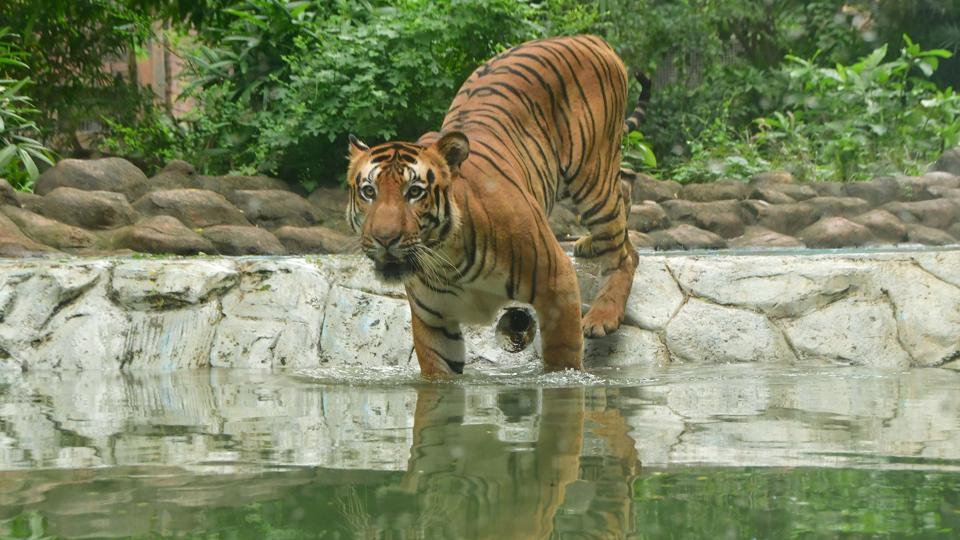
On Monday, Union environment minister Bhupender Yadav announced the launch of Project Dolphin (Phase-II); Project Sloth Bear; Project Gharial; Centre of Excellence for Human–Wildlife Conflict Management (CoE-HWC) at Sálim Ali Centre for Ornithology and Natural History (SACON), and Tigers Outside Tiger Reserves.
The minister, who was at the Forest Research Institute (FRI) in Dehradun, Uttarakhand, also unveiled four national-level action plans and field guides for species population assessments and monitoring programmes. These would cover river dolphins and other cetaceans, tigers, snow leopards, Great Indian Bustard and Lesser Florican.
As he announced the initiatives, Yadav emphasised on the sensitive “balance” between humans and wildlife, especially in an era of rapid development.
“Humans can make anything, any app, infrastructure, innovation etc but we cannot create an animal...So we should know how to live with wildlife,” the minister said. “We are trustees of nature and wildlife.”
But, he acknowledged that “humans also have the power to destroy”. “So we need to be able to do a balancing act and coexist with nature,” Yadav added.
India observes Wildlife Week from October 2 to October 8 every year.
Tigers Outside Tiger Reserve
The plan focuses on controlling human-animal conflicts outside protected areas using a landscape approach, technological interventions, capacity building and community support, according to the environment ministry.
India holds 70% of the wild tiger population — as of 2022, the number of big cats stood at 3,682.
According to the plan, nearly 35-40%, or 1,325, of tigers live outside reserves; the number is expected to go up with the tiger population growing at a rate of 6.1% annually — decades after the then Congress government in 1973 initiated the ambitious Project Tiger to control their dwindling numbers.
While the project has been a success, it has come with its challenges, the plan said. A growing tiger population translates to livestock depredation,conflicts with humans, retaliatory killings, and habitat fragmentation.
“As nearly one-third of tigers now live outside tiger reserves, human-tiger conflicts are becoming more frequent, threatening both people and wildlife,” the plan further states.
Tigers Outside Tiger Reserves will address this problem through its long list of resources. These include trained rapid response teams, rescue equipment, Artificial Intelligence and deployment of drones, camera traps for monitoring, MSTrIPES app, wireless networks, capacity building with adequate staff, vets, trained local volunteers trained, community outreach with “Bagh Mitra” initiatives, school programmes, eco-development activities, and village meetings.
National Tiger Conservation Authority will act as the central coordinating body, while the execution will be done by the states. “Through continuous monitoring and evaluation, the project aims to contribute to long-term conflict management and tiger conservation with modern technology and community participation,” the plan adds.