As many as 1,48,707 people were killed and 4,82,389 were injured in over 4,64,674 accidents on Indian roads in 2015. Those numbers speak volumes about the necessity to amend the Motor Vehicles Act, 1988, which was updated last in 2001.
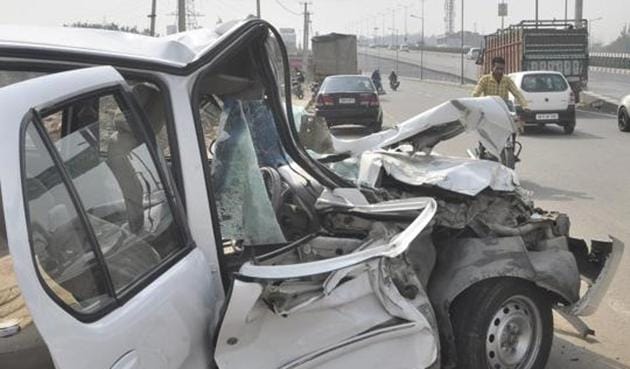
The passage of the Motor Vehicles (Amendment) Bill 2016 in the Lok Sabha on Monday was thus a milestone in road-safety movement in the country. The new bill will enable digitalisation of vehicle and license registration system to end bogus licensing, besides accountability for faulty road design and engineering,and help curb road accidents by enforcing heavier fines.
Here’s how some of the key points of the new traffic rules will matter to you:
1) Pedestrians gets their way
The bill proposes giving state governments the power to regulate the activities of pedestrians and non-motorised road-users in a public place.
How it impacts you: The government has finally recognised pedestrians as a part of road traffic, giving them rights and protection. The bill talks about having separate lanes for bicycles, skaters, push-carts and other non-motorised transport.
2) Strap on, children
{{/usCountry}}2) Strap on, children
{{/usCountry}}The bill proposes increasing the safety of children in/on vehicles by enforcing stricter use of seat belts or a child-restraint system in cars and school-buses. Children older than four and travelling on a motorcycle have to wear a helmet.
How it impacts you: As many as 15,633 people under 18 years of age died on Indian roads in 2015: as much as 10.5% of total road fatalities that year.
3) Who dug up that road!
Contractors, consultants and civic agencies will be accountable for faulty design, construction or poor maintenance of roads leading to accidents. Those found guilty would be penalised up to Rs 1 lakh.
How it impacts you: People and civic agencies will have to face courts for bad roads and potholes. Currently, contractors get away because there is no “accountability framework”, says SaveLife Foundation, an NGO working for road safety.
4) Licensed to drive
People holding multiple or fake driving licences seemed an unsolvable problem till now. All regional transport offices will be computerised to set up a ‘National Register for Driving Licences and all licences will be linked to Aadhaar to solve that problem.
How it impacts you: It’s an open secret that people hire agents to get their driving licences, without going through driving tests at an RTO. Not anymore!
As transport minister Nitin Gadkari said about the new bill: “Even a minister like me cannot get my licence sitting at home.”
Driving licenses will have to be renewed every 10 years after the age of 30, and every 5 years after the age of 55.
5) For insurance claims
The new rules says the liability of third party insurer for road accidents is unlimited. According to a report of PRS India legislative, the maximum liability for third party insurance in case of motor accident has been capped at Rs 10 lakh in case of death and at Rs 5 lakh in case of grievous injury.
The bill provides for a ‘Motor Vehicle Accident Fund’ to provide compulsory insurance cover to road users in India for certain types of accidents.
Also, victims of “hit and run” accident cases will also be compensated from a ‘Solatium Fund’. The compensation has been capped at Rs 25,000 in case of deaths and Rs 12,500 in case of grievous injury.
Special laws
The bill proposes a correction home-like institution for people who violate traffic rules repeatedly. Their names will be put in public domain and they will have to undergo a “driver refresher training course” to get their licences back.
For the first time, the government has proposed rules for cab aggregators like Ola Cabs, Uber and Meru. Any violation of the licence conditions by these companies will lead to a fine of Rs 25,000 to Rs 1,00,000.
The bill also proposes stricter motor recall policy for vehicles which do not meet standards. It also provides for establishing testing agencies for issuing certificates of approval.
Fines
The most important part of the bill are the fines for traffic rule violations which are proposed to multiply heavily. Here’s a table
The fines will increase @ 10% annually every April 1.