E-Paper



Drop ‘irrational standards’ in trade talks, Goyal advises EU
Commerce minister Piyush Goyal on Friday advised the European Union to shun imposing “irrational standards” such as carbon tax, which he said act as trade barriers.

 Prefer HTon Google


Commerce minister Piyush Goyal on Friday advised the European Union to shun imposing “irrational standards” such as carbon tax, which he said act as trade barriers, and forbade it from treating India as a country that would “sign on dotted lines for anything”.
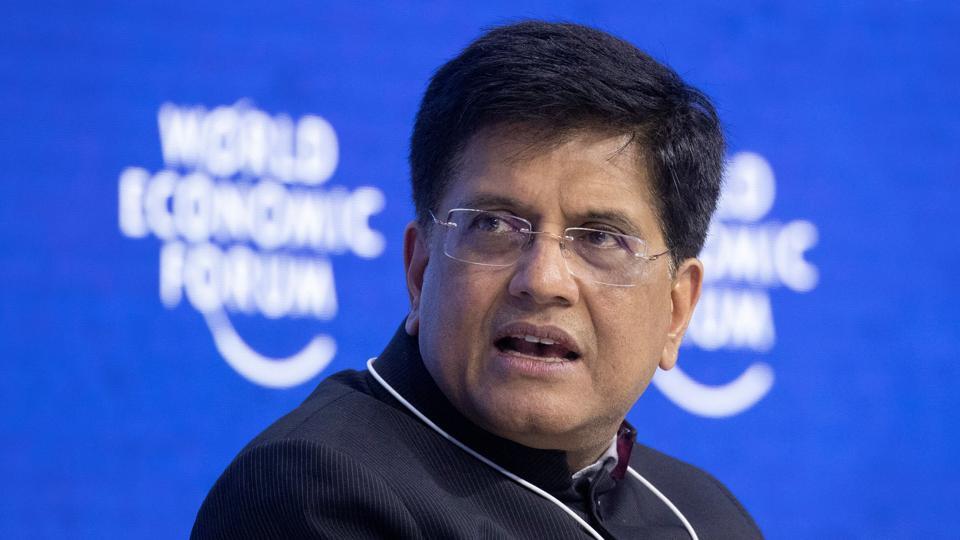
Goyal’s reference is to EU’s move to bring sustainability issues while negotiating the free trade agreement. He made the remarks at the launch of the Federation of European Business in India (FEBI) which was attended by representatives of major European firms and diplomats.
The minister reiterated India’s position that sustainability issues are non-trade matters and are being dealt in other specific multilateral forums. Raising such matters in the ongoing negotiations for an India-EU free trade agreement (FTA) would not be fruitful, the minister said, adding that he has asked India’s chief negotiator “to express to the European side that extraneous items, which have no relevance to trade or business are hurting the interests of trade”.
The ninth round of the FTA talks concluded recently on September 27. The first India-EU FTA negotiation that was launched in 2007 was suspended in 2013 due to similar sensitivities. Interests were renewed after Prime Minister Narendra Modi’s participation in the Leaders’ Meeting on May 8, 2021 at the invitation of European Council’s president Charles Michel.
Negotiations were formally launched again in June 2022 by Goyal and European Commission executive vice-president Valdis Dombrovskis. Goyal on Friday hoped that the new government would take rational and practical stand. “I’m eagerly looking forward to working with the new government in the European Union,” he said.
Goyal said he is willing “to fast-track” the ongoing FTA negotiations like he did with Australia, the United Arab Emirates (UAE) and with the European Free Trade Association (EFTA) while treating each differently because all partners have different economic situations.
All the three agreements were signed during the second-term of the Modi government.
Although India signed two separate FTAs with UAE and Australia in early 2022, the one with UAE became operational in May that year and the pact with Australia became operational in December 2022. FTA with EFTA -- Iceland, Liechtenstein, Norway and Switzerland – was signed in March 2024.
Respecting economic realities Goyal said there is no fixed template for FTAs and each partner should be treated equitably as per its economic situation. In the same breath he said, “Similarly, I think, the European Union needs to understand, I’m not a country in Southeast Asia with which you recently or sometime back did an FTA, where they will… they can sign on the dotted line on anything. Because they are not a democracy. How can you expect a country as large as India, a democracy -- one known to respect international agreements and international bodies, multilateral bodies. I think, you cannot expect to transpose what you got in another FTA in an FTA with India.”
Goyal’s comments came days after Union finance minister Nirmala Sitharaman termed the European Union’s decision to impose a carbon tax on Indian products such as steel and cement “unilateral”, “arbitrary” and a “trade-barrier” aimed at hurting Indian industries, and said the levy is a pretence to convert EU’s own “dirty” steel into green at another’s cost.
“The two cabinet ministers have made India’s position amply clear. India is the fifth largest economy and will soon become the fourth. No developed country or group of developed countries can impose their unjustified terms on us,” one official said requesting anonymity.
The ministers’ remarks came at a time when India-EU free trade agreement talks are on and the European block is pushing sustainability measures such as the Carbon Border Adjustment Mechanism (CBAM) and EU deforestation regulation (EUDR) . India also raised this matter at the ninth round of FTA talks in New Delhi on September 23-27. India believes CBAM is a form of tax that can lead to tariffs of up to 35% on imports of high-carbon goods such as cement, aluminium, fertilisers, chemicals including hydrogen, iron and steel from India. CBAM will be levied on carbon intensive products to offset “carbon leakage”involved in importing high-carbon goods.
Carbon leakage occurs when firms in the EU move carbon-intensive production abroad to countries with less stringent climate policies in place, or when EU products get replaced by more carbon-intensive imports. The tax is being implemented in phases from October 2023 and will become fully effective from January 2026.
EUDR or the regulation on deforestation-free products covers production of commodities such as cattle, wood, cocoa, soy, palm oil, coffee, rubber and some of their derived products such as leather, chocolate, tyres and furniture. This demands certification from importers to prove their products didn’t originate from recently deforested land or contributed to forest degradation. EUDR will start to apply from December 30 this year.
India is committed to environmental protection and sustainability, but it is against making instruments such as EUDR and CBAM part of trade commitments because these are perceived as instruments of protectionism and act as non-tariff barriers (NTBs), the official mentioned above said.