External affairs minister S Jaishankar will visit Japan during October 6-7 to participate in the second ministerial meeting of the Quadrilateral Security Dialogue or Quad and to hold a series of bilateral meetings against the backdrop of the border standoff with China.
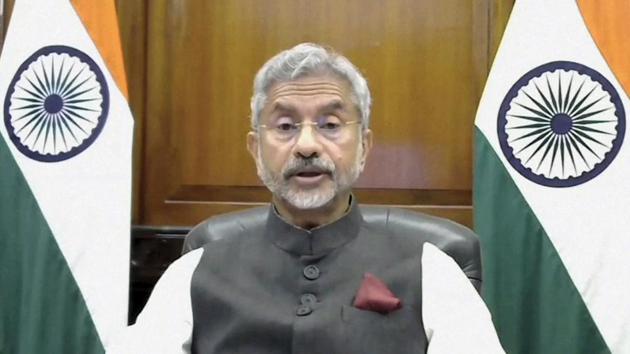
Jaishankar is visiting Tokyo for bilateral consultations with his Japanese counterpart Toshimitsu Motegi and the two ministers are expected to discuss bilateral and regional issues of mutual interest, the external affairs ministry said.
“During the visit, the external affairs minister will also participate in the second India-Australia-Japan-USA ministerial meeting on 6 October, 2020, in which the foreign ministers of the respective countries will participate,” the ministry said in a statement.
Also Read: PM Modi holds virtual bilateral summit with Sri Lankan counterpart Mahinda Rajapaksa
The foreign ministers of the Quad, which was upgraded to the ministerial level in September last year, will discuss the “post-Covid-19 international order and the need for a coordinated response to the various challenges emerging from the pandemic”, according to the statement.
The ministers will also discuss regional issues and “collectively affirm the importance of maintaining a free, open and inclusive Indo-Pacific”.
{{/usCountry}}The ministers will also discuss regional issues and “collectively affirm the importance of maintaining a free, open and inclusive Indo-Pacific”.
{{/usCountry}}Jaishankar will also hold bilateral consultations with Australian foreign minister Marise Payne and US secretary of state Mike Pompeo during the visit.
The Quad meet comes against the backdrop of China’s aggressive actions across the Indo-Pacific.
Also Read: ‘Fist bump’: Senior Afghan leader Dostum meets EAM Jaishankar to discuss peace process
All four members of the grouping have serious differences with China—India is engaged in a border standoff in Ladakh, the Australian government has pledged to halt projects under the Belt and Road Initiative (BRI), Japan is worried about Chinese intrusions near the Senkaku Islands, and the US is engaged in a trade war.
The members of the Quad, especially India, Japan and Australia, have also stepped up work on forging partnerships with like-minded countries in the region, or those with interests in the Indian Ocean, with an eye on China’s increasing assertiveness and aggressiveness.
Jaishankar recently said India and Japan were looking at cooperating on projects in Bangladesh and Myanmar as part of their efforts to work together in third countries.
India, Australia and France held their inaugural senior officials’ trilateral dialogue, with the focus on building convergences in the Indo-Pacific, on September 9, the same day that India and Japan signed the Acquisition and Cross-Servicing Agreement (ACSA), a pact for reciprocal provision of supplies and services between their defence forces.
Ahead of the second ministerial meeting of the Quad, senior officials of the four countries held consultations on September 25 on collective efforts to advance a free, open and inclusive Indo-Pacific region.
The officials also exchanged views on ongoing and proposed practical cooperation in connectivity and infrastructure development and security matters, including counter-terrorism, cyber and maritime security.