Forty-two former judges and retired veterans of constitutional office have expressed concern over what they described as a sustained campaign against the Election Commission of India, the judiciary and other constitutional institutions.
In an open letter, the signatories said they had no political brief and were speaking out because “silence is no longer a neutral choice”. They alleged that constitutional bodies were facing attacks driven by political interests and warned of the consequences of undermining public trust in the country’s democratic institutions. "Our concern is grave. India's constitutional bodies are under sustained attack. The Election Commission of India stands at the centre of this assault," the letter read.
Also read | CEC Gyanesh Kumar’s Z+ security upgraded amid SIR protests, unrest
The former judges questioned allegations of “vote theft” made without supporting evidence and objected to constitutional authorities being publicly described as “thieves”, “puppets” and “compromised”.
“Criticism of institutions is a democratic right. Denigration is not,” the letter states.
{{/usCountry}}“Criticism of institutions is a democratic right. Denigration is not,” the letter states.
{{/usCountry}}They also said election officials had been publicly named and warned of reprisals if there was a change in government, while alleging that no court had found the charges against constitutional authorities to be proven.
Former judges defend SIR
The signatories strongly defended the Special Intensive Revision (SIR) of electoral rolls, describing it as part of the Election Commission’s constitutional mandate to maintain accurate voter lists.
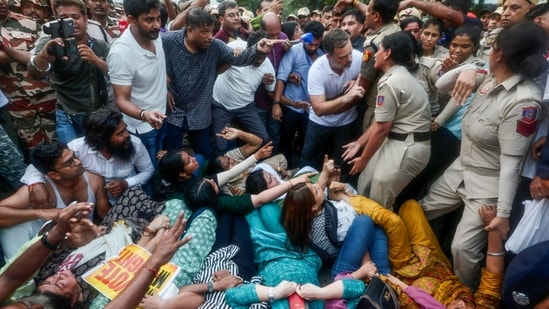
Also read | Oppn protest demanding CEC Gyanesh Kumar's resignation to continue in Delhi after day 2 of detentions
The letter said Section 21(3) of the Representation of the People Act, 1950 empowers the Commission to revise electoral rolls at any time. It also noted that intensive revisions had been conducted repeatedly since the first general elections.
“The Special Intensive Revision (SIR) is part of that very design. Section 21(3) of the Representation of the People Act, 1950 empowers the Commission to revise the rolls at any time. Intensive revisions have been carried out repeatedly since the first general elections. The last SIR was completed about two decades back. No one called those revisions a conspiracy,” the letter read.
According to the former judges, the purpose of the exercise is to remove the names of deceased voters, duplicate entries, and people who have shifted their residence, while adding all eligible citizens to the rolls.
They said decades of migration and urbanisation had made corrections to electoral rolls necessary, adding that “a clean roll protects every genuine vote”.
The letter also referred to the Supreme Court's decision upholding the SIR as lawful and within the Election Commission’s powers. It said the court had found the exercise to have a legitimate purpose and adequate safeguards involving notice, hearing, objection and appeal.
“The campaign of casting suspicion continues unabated, regardless of facts or consequences,” the former judges said.
“The protocols have not changed. The rules were not written in 2025. They were written in 1950. The uproar over SIR appears both sudden and remarkably convenient,” the letter further read.
Warning over erosion of public trust
The signatories said India’s electoral system had repeatedly enabled peaceful transfers of power at the Centre and in the states, with opposition parties accepting election results.
Also read | SC refuses to restrain Gyanesh Kumar, says can't pass order based on news report
“The protocols have not changed. The rules were not written in 2025. They were written in 1950,” the letter states.
They warned that repeatedly telling citizens that their votes do not count could damage faith in the electoral process.
“Trust is the currency of democracy,” the letter states. “When the ballot loses meaning, the street gains it.”
The former judges said political parties, constitutional institutions, the media and citizens all have a role in protecting public confidence in democracy. They called for political grievances to be pursued through evidence and due process.
Appeal to political parties, media and citizens
The former judges urged political parties to contest elections without seeking to delegitimise them and to take complaints to the Election Commission and courts with evidence.
They appealed to the media not to amplify unverified claims, saying: “A headline is not evidence, and repetition does not make an allegation the truth.”
They also called on constitutional bodies to remain transparent, address legitimate concerns and stay above political disputes.
To citizens, they said: “Verify the facts before acting on them. Do not let anyone convince you that your vote is meaningless. Your vote is your voice, and it matters.”
The letter concluded by saying that constitutional institutions belong to the people of India, rather than any government, and called upon citizens to defend institutions that safeguard their democratic rights.
“We remain, in service of the Constitution,” the former judges said.