
Pension fund body Employees’ Provident Fund Organisation (EPFO) has called a meeting on March 30 to consider investing up to 15% of its money in stock market, in a bid to get higher returns for investments.
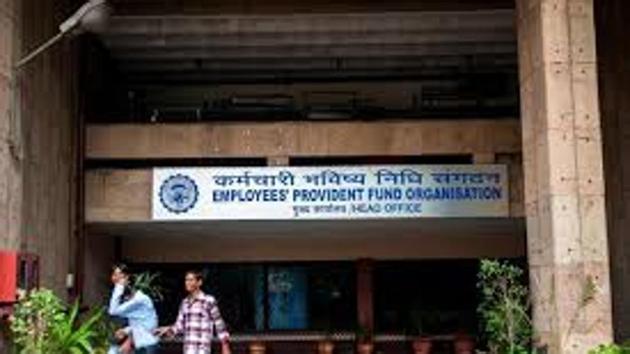
The proposal, fiercely opposed by non-BJP trade unions and Opposition parties, has the Narendra Modi government’s support.
As of now, the EPFO invests 5% of its fund in stock market, in select funds that are considered safe. The pension manager has more than ₹1.35 lakh crore in its kitty.
In 2015, the Centre had allowed 5% of the EPFO fund investment in assets like stocks, commodities and bonds through Exchange Trade Funds (ETF).
The proposal to allow further pumping of funds into the stock market has been lying unattended for many months.
The trade unions and the government are at different poles over further exposure of pension to the volatility of stock markets.
While the unions alleged that in the first 10 months the ETF lost ₹400 crore, labour minister Bandaru Dattatreya claimed that till last year, ETF investment of ₹7,468 crore has the value of ₹8,024 crore — around 7% profit.
The labour ministry also maintained that they adopt a “cautious approach” while investing workers’ hard earned money. It underlines that the money is not put in individual shares.
{{/usCountry}}The labour ministry also maintained that they adopt a “cautious approach” while investing workers’ hard earned money. It underlines that the money is not put in individual shares.
{{/usCountry}}“We are wholeheartedly opposed to the idea. More so, because when the government calculates the annual interest rate, they never consider the ETF returns because they don’t sell those stocks,” says DL Sachdev, EPFO board member and national secretary of AITUC.
Earlier, the Bhartiya Mazdoor Sangh, the trade union wing of the RSS, had also opposed enhanced stock market exposure to the pension funds.
ABOUT THE AUTHOR
Follow the latest breaking news, major developments and agenda-setting stories from India and around the world with the newsdesk at Hindustan Times. Operating round the clock, the desk brings together experienced editors, reporters and correspondents to deliver fast, accurate and contextual reporting across subjects that influence public policy, governance, business, society and international affairs. The HT News Desk covers politics, elections, government policies, the economy, business and markets, science and technology, the environment, law and order, infrastructure, education, climate issues and geopolitics, while closely tracking developments across states, institutions and global capitals. The team also leads coverage of major breaking news events, policy announcements, court proceedings, natural disasters, public emergencies and significant international developments. Reports published by the newsdesk are based on information gathered from reporters on the ground, official statements, government agencies, court records, regulatory filings, recognised institutions and other authoritative sources. Stories undergo editorial scrutiny and verification processes to ensure accuracy, fairness and relevance, and are updated as events evolve and additional information becomes available. Whether covering a key political decision in New Delhi, an economic policy shift affecting millions, a landmark court ruling or a major global event, the HT News Desk aims to provide readers with reliable, fact-based journalism that delivers not only the latest developments but also the context and analysis needed to understand their wider implications.