The fallout of the Israel-Hamas conflict on trade, including disruption of shipping and rerouting of trade flows, has emphasised the need for derisking, external affairs minister S Jaishankar said on Friday.
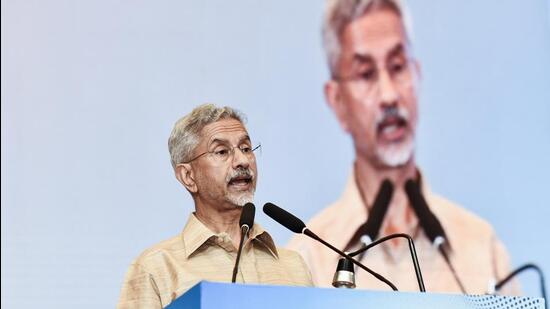
Security and stability have to be an integral part of the calculation in a volatile and uncertain world, he said while addressing the maiden India-Mediterranean Business Conclave organised by the external affairs ministry and the Confederation of Indian Industry (CII).
Jaishankar said the conflict in West Asia has “generated concerns about some of the contemporary initiatives”. He said strengthening defence and security cooperation with Mediterranean nations should “parallel deeper economic links”.
The conflict in West Asia has resulted in disruptions in crucial shipping routes that have “increased shipping costs and necessitated the rerouting of trade flows”, and these developments have “added to our collective worries”, Jaishankar said.
“But if you reflect on these happenings, they only strengthen the case for derisking,” he added.
As the three hubs of India, Europe and the Middle East step up interactions, “connectivity will be more needed, not less”, he pointed out.
{{/usCountry}}As the three hubs of India, Europe and the Middle East step up interactions, “connectivity will be more needed, not less”, he pointed out.
{{/usCountry}}As in the case of other Asian nations, the Israel-Hamas conflict has affected shipping to India. The Indian Navy has deployed several frontline warships in regional waters to protect merchant shipping after a string of attacks by Yemen’s Houthi rebels. India has also urged both sides to return to dialogue and diplomacy and backed a two-state solution.
Jaishankar said the strengthening of defence and security cooperation between India and Mediterranean nations has taken the form of exercises, consultations and exchanges. “But in an era of rapidly emerging technologies and supply chain disruptions, there is a strong case for more industry interaction,” he said.
He also said the announcement of the India-Middle East-Europe Economic Corridor (IMEC) at the G20 Summit in New Delhi last year had opened “promising new perspectives”.
“IMEC aims to become a cornerstone of global connectivity, providing a robust framework for boosting trade and other flows across critical regions. By integrating innovative logistics and sustainable practices, it holds the potential to significantly contribute to both growth and resilience,” he said.
India’s trade with Mediterranean nations reached $77.89 billion in 2023 and the country has promoted investments in critical sectors such as infrastructure, energy and technology. The strategic location of the Mediterranean, with about 600 ports and the region’s role in servicing 25% of global seaborne trade, establishes it as a crucial hub.
India, on the other hand, plays an vital role in the Indo-Pacific. “Given both the location and centrality, and the levels of activity, it makes eminent sense to connect the two for mutual benefit,” Jaishankar said.
He also highlighted new areas for cooperation such as green hydrogen and green ammonia, marine resource management, sustainable fisheries, and shipping.