The Supreme Court’s decision to refer the Ram Janmabhoomi-Babri Masjid dispute to mediation is not the first time out-of-court negotiations have been tried to resolve the deadlock. But attempts in the past have been unsuccessful.
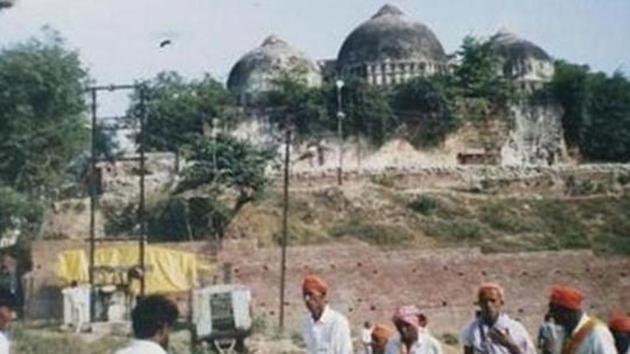
In 1989 soon after he became prime minister, VP Singh formed a three-member panel but the efforts failed as the representatives of the Babri Masjid Action Committee (BMAC) refused to participate in the proceedings.
The next year when Chandra Shehkhar became the prime minister with the support of the Congress, he tried revive the process once again. He set up a committee with 10 members each from BMAC and the Vishwa Hindu Parishad, an affiliate of the Rashtriya Swayamsevak Sangh (RSS), with then home minister Subodh Kant Sahai as its convenor.
To gather evidence to buttress their claims, the VHP and BMAC were asked to form four sub-panels on archaeology, history, law and revenue and religious records with experts of their choice. The panel met four times, but couldn’t reach a consensus.
Former prime minister Rajiv Gandhi tried an out-of-court settlement but didn’t succeed. Former prime ministers PV Narasimha Rao and Atal Bihari Vajpayee also tried to arrange a face-to-face meeting between the Sangh Parivar and some Muslim parties through back channels but failed.
{{/usCountry}}Former prime minister Rajiv Gandhi tried an out-of-court settlement but didn’t succeed. Former prime ministers PV Narasimha Rao and Atal Bihari Vajpayee also tried to arrange a face-to-face meeting between the Sangh Parivar and some Muslim parties through back channels but failed.
{{/usCountry}}In 2002 and again in 2003, the Kanchi Shankaracharya Jayendra Saraswathi attempted to broker a truce. But the Hindus and the Muslim parties couldn’t reach middle ground. The Dalai Lama’s efforts also failed.
Then, in 2017, Art of Living founder and a member of the current mediation panel, Ravi Shankar, listed four options to settle the dispute. But his plan was rejected by a number of Hindu groups, including the Ram Janmabhoomi Nyas, and the All India Muslim Personal Law Board.
To be sure, none of the previous attempts were mandated by the court.
Director of Lucknow-based Centre for Objective Research and Development Athar Hussein said, “The previous efforts failed because there was no legal framework drawn for this process to get executed and it was under too much of media glare but this time the SC has taken precaution on both these counts and given complete legal sanctity to this process.”