NEW DELHI: A G20 summit without a consensus leaders’ declaration would have been a “kind of death” for the grouping and the outcome document continues to pressure Russia to end the war in Ukraine, German ambassador Philipp Ackermann said on Tuesday.
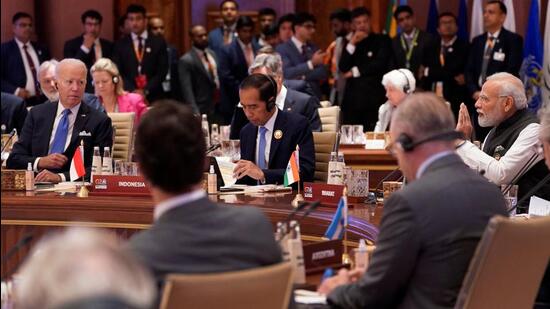
The text used to refer to the Ukraine crisis in the leaders’ declaration adopted at the G20 Summit over the weekend went further than the text in last year’s joint communique and reflected the developments in the Ukraine crisis over the past year, Ackermann told a small group of reporters while explaining the complex negotiations on the document.
Germany, he said, had two priorities with respect to the G20 – ensuring the success of the Indian presidency of the grouping, and a mention of the Ukraine crisis in the way it was done in the leaders’ declaration in Bali in 2022.
“Germany is of the opinion that the G20 is a very important forum. It’s one of the last forums where you have everybody around the table and a summit without a consensus declaration would have been a kind of death to the G20,” he said.
German Chancellor Olaf Scholz, who was in New Delhi for the summit, was “highly satisfied” with the leaders’ declaration, which went further and reflected what has happened in Ukraine over the past year, he said. The declaration reflected a priority for the world community – a comprehensive, just and durable peace – as well as a clear commitment to preventing the use of force to acquire territory and denunciation of nuclear threats, he added.
{{/usCountry}}German Chancellor Olaf Scholz, who was in New Delhi for the summit, was “highly satisfied” with the leaders’ declaration, which went further and reflected what has happened in Ukraine over the past year, he said. The declaration reflected a priority for the world community – a comprehensive, just and durable peace – as well as a clear commitment to preventing the use of force to acquire territory and denunciation of nuclear threats, he added.
{{/usCountry}}“Certainly, Russia has not been mentioned as a country, but I would say [the declaration] has Russia written all over it,” Ackermann said, referring to the eight paragraphs dedicated to the Ukraine crisis.
The envoy brushed aside Russian foreign minister Sergey Lavrov’s contention that countries of the Global South had prevented the West’s efforts to “Ukrainise” the G20’s agenda and said: “I saw some things that Lavrov said and I think they are all not very convincing.”
Providing insights into the protracted negotiations that produced the leaders’ declaration, Ackermann said he was told by the German sherpa, or personal representative of the leader, that India’s Sherpa Amitabh Kant came into the room with the draft text on the Ukraine crisis put together by India, Indonesia, South Africa and Brazil and said: “This is it. If you have problems with it, call Prime Minister [Narendra] Modi.”
Ackermann also said the text was directed only towards two countries because everybody had agreed on the wording.
Another dynamic that emerged early in the negotiations was an “18 versus 2” situation, Ackermann said, referring to the position taken by China and Russia on the Ukraine crisis. He said these two countries apparently didn’t push back on the final text on Ukraine since “India was such a strong, important and, in a sort of figurative sense, a heavy presence”.
The Chinese side also didn’t “want to over-stretch following President Xi Jinping’s decision to skip the G20 Summit and “they agreed at the end”, he added.