In what could pave the way for vertical growth in Indian cities, Union housing and urban affairs minister Hardeep Singh Puri on Saturday called for reviewing the Floor Space Index (FSI) norms in 53 mega cities.
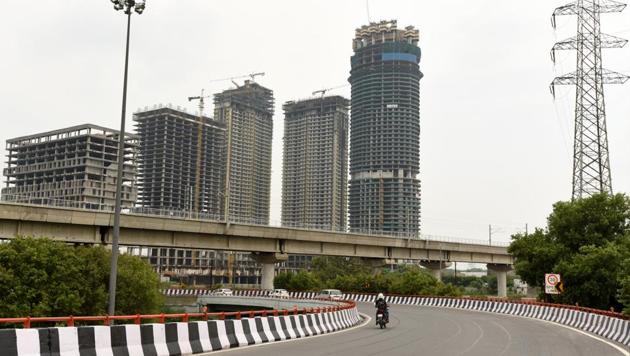
Relaxing the FSI – which is a ratio of a building’s total floor area to the size of the piece of land on which it is built – will allow construction of taller buildings in cities where horizontal space is in short supply on account of growing population.
Currently, the FSI permitted in Indian cities is extremely low – ranging from 1 to 1.5 – unlike cities like Shanghai and Singapore. According to the three-year action agenda that Niti Aayog, the government’s top think tank unveiled recently, the lower FSI in India has resulted in cities such as Mumbai having on an average just 4.50 square meters of space per person. As against this, Shanghai had 34 sq. mt of space per person in 2010 because of its liberal FSI.
Realizing that the scarcity of space that most Indian cities face is because of archaic development control norms, the Aayog has suggested that this can be countered by expanding our cities vertically through the construction of taller buildings.
{{/usCountry}}Realizing that the scarcity of space that most Indian cities face is because of archaic development control norms, the Aayog has suggested that this can be countered by expanding our cities vertically through the construction of taller buildings.
{{/usCountry}}Referring to the Niti Aayog document, Puri directed officials from state government as well as the housing and urban affairs ministry to take up a time bound review of the FSI norms in all the 53 cities with a population of over one million each and examine the extent to which it could be enhanced.
The minister said this while addressing a national workshop on the new metro rail policy. “A review of FSI norms will help in ensuring better utilization of scarce urban land resources. There is very inefficient use of urban land in India,” said an official.
Urban sector experts, however, are not convinced that relaxing FSI norms will address India’s urbanization challenges. “FSI norms can’t be reviewed in isolation. It has to be done in relation to the existing social and physical infrastructure in our cities. The horizontal versus vertical debate is vacuous unless it helps in improving the quality of life,” said Professor KT Ravindran, Dean Emeritus at the RICS School of Built Environment and former chairman, Delhi Urban Arts Commission.
Ravindran said that the need of the hour is to have a comprehensive national urbanization policy. “The last such policy drafted by a committee headed by noted urban planner Charles Correa came up way back in 1988. It had a roadmap on how to tackle growth in small and mid-sized cities. Since then we have not had an urbanization policy at the national level. How are we even expecting to address the challenges that our cities are facing without a policy,” he said.