Taking serious note of the theft of 32 licensed firearms from the storeroom of Sector 8 police station in Faridabad, the Haryana Human Rights Commission (HHRC) directed the director general of police (DGP), Haryana, to conduct a statewide review of security arrangements at police station storerooms to prevent similar incidents.
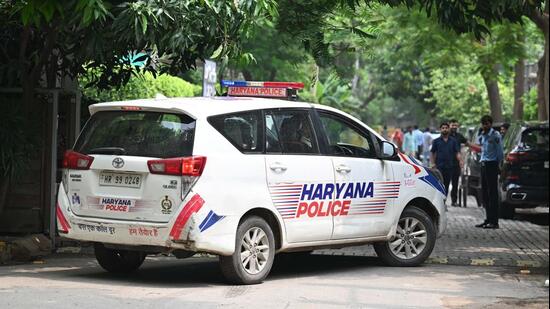
In an order dated November 2, 2026, Commission member Deep Bhatia directed the DGP to examine existing arrangements for the safe custody of licensed firearms, access controls at police storerooms and supervisory mechanisms across the state. The Commission sought a comprehensive action-taken report by January 11, 2027.
The matter came before the Commission following a complaint filed on July 16, 2026, by advocate Gitanjali, a resident of Panchkula. The complaint highlighted that owners of 32 licensed firearms deposited their weapons in January at Sector 8 police station in compliance with the law, trusting the police to ensure their safe custody. However, the theft on May 9 raised serious concerns about security lapses and police supervision.
According to a report submitted by Faridabad deputy commissioner of police (DCP) on October 9, Monu, who was undergoing apprenticeship training at the police station in April, 2026, was maintaining the daily diary and performing duties related to the police storeroom. During this period, he became familiar with the records and articles kept there.
During the investigation, suspicion was raised by enforcement sub-inspector (ESI) Bijender regarding Monu’s involvement. Subsequently, Monu and 28 other accused persons were arrested in April. Police informed the Commission that all 32 missing firearms had been recovered and the challan in the case was presented before the court on August 6, 2026.
{{/usCountry}}During the investigation, suspicion was raised by enforcement sub-inspector (ESI) Bijender regarding Monu’s involvement. Subsequently, Monu and 28 other accused persons were arrested in April. Police informed the Commission that all 32 missing firearms had been recovered and the challan in the case was presented before the court on August 6, 2026.
{{/usCountry}}The Commission observed that allowing an apprentice, who was not a regular police department employee, access to the storeroom raised serious questions about existing security arrangements and supervisory mechanisms.
It further said that the theft of a large number of civilian firearms from a police station, particularly when they are deposited during elections and the enforcement of the Model Code of Conduct, could undermine public confidence in the police and pose a threat to public safety.
The complaint also raised concerns under Article 21 of the Constitution and Article 3 of the Universal Declaration of Human Rights, which recognise the right to life, liberty and security of person. It pointed out that if the stolen weapons were used in criminal activities, their legitimate owners could face mental distress, fear and unnecessary legal complications despite having followed the law.
Directing corrective measures, Bhatia asked the DGP to ensure that apprentices, trainees and other non-regular personnel are not given unauthorised access to licensed firearms belonging to civilians or other sensitive articles kept in police storerooms.
The Commission also directed the police department to issue necessary instructions to all police stations regarding the proper custody of firearms, restricted access, adherence to security protocols and effective supervisory mechanisms.
Dr Puneet Arora, assistant registrar of the Commission, said the DGP had also been asked to examine the incident from the perspective of systemic and supervisory failures and take corrective and preventive measures to ensure that such incidents do not recur.
The DGP will have to submit a detailed action-taken report outlining the statewide review, security measures adopted and instructions issued to police stations.
The matter has been adjourned to January 11, 2027, for further consideration at the Commission’s camp court at the New PWD Rest House (B&R), Gurugram.