E-Paper



‘He’s still judge’: CJI slams lawyer over indecorous reference to Justice Varma
Chief Justice of India (CJI) Bhushan R Gavai reminded the advocate that Justice Yashwant Varma remains a member of a constitutional court

 Prefer HTon Google


Chief Justice of India (CJI) Bhushan R Gavai on Monday rebuked a lawyer in open court for referring to Justice Yashwant Varma, who has been at the centre of controversy since the alleged discovery of charred currency notes at his official residence in Delhi in March this year, without due decorum, reminding the advocate that the judge remains a sitting member of a constitutional court.
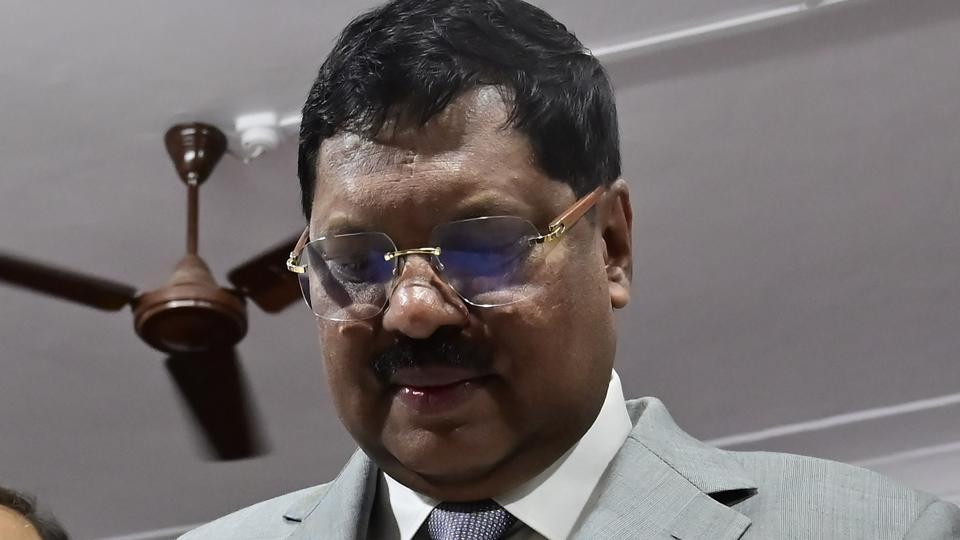
The courtroom exchange occurred when advocate Mathews J Nedumpara mentioned his pending petition seeking registration of a first information report (FIR) in connection with the alleged recovery of a huge cache of charred cash. “Looks like Varma also wants this now… he also moved. There needs to be an FIR,” Nedumpara told the CJI’s bench, requesting an expedited listing of his petition.
CJI Gavai cut him short immediately: “Is he your friend? How are you addressing him? Have some decorum in court. He is still a judge of the constitutional court.” When Nedumpara responded that his petition had to be heard, the CJI added sternly: “Do not dictate to the court.” He called the next case, refusing to hear the matter further.
The courtroom rebuke came just days after Justice Yashwant Varma approached the Supreme Court, seeking to invalidate the findings of the in-house judicial inquiry that held him prima facie liable for serious misconduct. The panel, appointed by then CJI Sanjiv Khanna, found “strong inferential evidence” of Justice Varma’s “covert or active control” over the cash recovered from his residence.
In a detailed writ petition filed last week, Justice Varma contested the committee’s report and the subsequent recommendation sent to the President and Prime Minister on May 8, urging Parliament to initiate impeachment proceedings. Calling the findings “unsustainable” and the process deeply flawed, Justice Varma alleged that the panel acted with a predetermined narrative, reversed the burden of proof, and denied him a full and fair opportunity to defend himself.
While acknowledging that some currency may have been discovered in the outhouse of his official residence, the judge maintained that further investigation was essential to determine ownership and authenticity. Instead, he argued, the panel moved with undue haste and arrived at adverse conclusions without a proper evidentiary foundation.
The in-house committee, comprising Justice Sheel Nagu (then Chief Justice of Punjab & Haryana High Court), Justice GS Sandhawalia (then Chief Justice of Himachal Pradesh High Court), and Justice Anu Sivaraman (Judge, Karnataka High Court), was constituted on March 22 after a preliminary inquiry by the chief justice of the Delhi High Court, who had informed the then CJI of the March 14 fire incident and the alleged cash recovery. The panel submitted its report on May 3, concluding that although there was no direct evidence, the circumstantial material was enough to suggest serious misconduct on Justice Varma’s part.
On May 6, Justice Varma wrote to then CJI Khanna rejecting the committee’s findings and declining his advice to resign or seek voluntary retirement. He described the process as violative of natural justice and said stepping down would imply accepting a fundamentally unjust procedure.
The Supreme Court, in a May 8 press statement, had noted that Justice Varma had denied wrongdoing and termed the entire episode a “conspiracy.” He was subsequently divested of judicial responsibilities and transferred to his parent high court in Allahabad.
Nedumpara has continued to press for criminal proceedings. His most recent petition marks the third time he has moved the top court seeking an FIR, alleging that the Centre and Delhi Police failed in their duty to investigate a cognizable offence despite the in-house panel’s findings criticising police inaction.
Nedumpara cited the alleged recovery of sacks of charred currency by first responders on March 14 as evidence requiring immediate police action. He acknowledged a potential legal roadblock, the 1991 K Veeraswami judgment, which bars registration of FIRs against sitting judges without the CJI’s prior sanction. He has urged the court to review that ruling, arguing that it impedes the criminal law from taking its natural course.
Another Supreme Court bench declined to hear a similar plea by Nedumpara in May, noting that he had not approached the relevant authorities before filing a writ petition. The court also referred to the May 8 press note confirming that the in-house panel’s report and the judge’s response had already been forwarded to the President and Prime Minister, in accordance with the established In-House Procedure.
Even as the legal contest continues, the matter has gained political traction. The Union government is preparing to bring an impeachment motion against Justice Varma in the Monsoon Session of Parliament, which began on Monday.
On Sunday, Parliamentary Affairs Minister Kiren Rijiju confirmed that more than 100 Members of Parliament (MPs) had signed the notice for Justice Varma’s removal, meeting the threshold required to move such a motion in the Lok Sabha.
“The signature [collection] is underway and it has crossed 100 already,” Rijiju said, adding that more MPs were expected to sign the notice to ensure broad political support.
According to officials familiar with the matter, the government may introduce the motion in the first week of the session. They clarified that the internal inquiry report submitted to the Supreme Court will have no direct bearing on the impeachment process in Parliament, which will proceed independently on the strength of the lawmakers’ notice and Parliament’s procedures.
Under Article 124(4) and the Judges (Inquiry) Act, a judge of a High Court or the Supreme Court can be removed only by an order of the President after both Houses of Parliament pass a motion supported by a special majority.
The 64-page report of the in-house inquiry noted that Justice Varma’s actions “belied the trust” reposed in a constitutional court judge. It emphasised that public trust is the bedrock of judicial office, and once the presence of currency at the judge’s premises was established, the burden was on him to explain it, a burden he failed to discharge beyond a blanket denial.