More than 2,000 years ago the king of the Magadha dispatched one of his less favoured sons to quell a people’s revolt in an extremely important city. The revolt was dealt with not through repression but dialogue. This is regarded as India’s first recorded rebellion anywhere in the subcontinent. The prince would later become India’s most celebrated emperor, one who claimed to embrace ahimsa, and emphasised religious tolerance in his rock-edicts throughout his empire. Emperor Ashoka Maurya remains an enigmatic
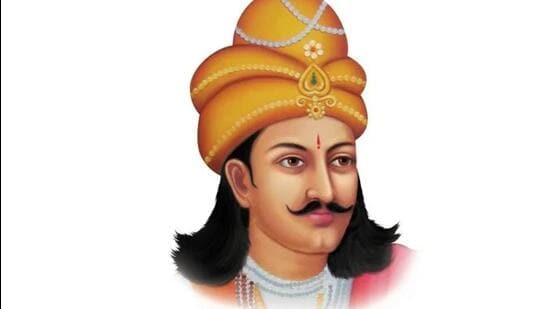
More than 2,000 years ago the king of the Magadha dispatched one of his less favoured sons to quell a people’s revolt in an extremely important city. The revolt was dealt with not through repression but dialogue. This is regarded as India’s first recorded rebellion anywhere in the subcontinent. The prince would later become India’s most celebrated emperor, one who claimed to embrace ahimsa, and emphasised religious tolerance in his rock-edicts throughout his empire. Emperor Ashoka Maurya remains an enigmatic figure in ancient India. He founded the first recorded Indian empire which stretched from Cuttack to Taxila and from Kashmir to deep Karnataka. He is remembered the most for the war and massacre in Kalinga in which tens of thousands of people were killed, and after which, filled with remorse, Ashok embraced Buddhism and non-violence. What followed was a nearly millennium long dominance of Buddhism in the sub-continent, the remnants of which are abundant in the forms of stupas, statues, monasteries, and other monuments.
But, the journey to becoming India’s most celebrated emperor began with a test in Taxila, now part of Pakistan. According to the Ashokavadana, the trouble began when local ministers turned into oppressors trampling upon commoners and elites alike. Bindusara dispatched Ashok who was then a prince and was despised by his brother and heir-to-the throne, Sushima. Till the taking over of the city by the Mauryas of Pataliputra, the city had maintained an independent status. It is believed to have been a ploy to get rid of Ashok because the local ministers in Taxila were known to be brutal and fierce. Romila Thapar writes in Ashoka and the Decline of the Mauryas, “culturally there was a close link with areas to the west and citizens of Iranian descent probably still looked to Iran for deliverance. Furthermore, in the process of centralisation the Mauryas may well have been harsh in their treatment of outlying cities”.
Also Read:HistoriCity: How support for Palestine is likely rooted in Spain’s Islamic past
Thapar writes, “King Bindusara desired to besiege Taxila, which was in rebellion. The king ordered his despised son Asoka to undertake the siege, and yet would not supply him with chariots or the needful munitions of war. Ill-supplied as he was, the prince obediently started to carry out the king’s orders, whereupon the earth opened, and from her bosom supplied all his wants. When Asoka with his army approached Taxila, the citizens came forth to meet him, protesting that their quarrel was only with oppressive ministers, not with the king or the king’s son. Taxila and the kingdom of the Svasas made their submission to the prince, who in due course returned to the capital.” Taxila was a major trade hub on the Uttarapatha that connected the regions east of the Indus to those in the west. It was a rich and powerful city, and was a pre-eminent centre of education till Huns destroyed the city completely in the 5th century. According to Taranath’s account, after successfully defusing the rebellion and winning people’s support by presumably sacking the local minister who had abused power, Ashok captured the kingdom of Khwasa in modern-day south Kashmir.
For Ashok, this was an extremely crucial life lesson, one that he would use in Ujjain, where too he was sent to quell another revolt. He also became adept at negotiations within the Pataliputra court and won over his father Bindusara’s erstwhile confidants who joined his camp and anointed him the de-facto successor superseding emperor’s favourite son Sushima. Buddhist texts like the hagiographical Ashokavadana have portrayed the revolt and its pacification in terms that show Ashok as the noble and wise prince who overcomes both the maliciousness of his father as well as the uprising through sagacity and dialogue. The accounts lack historical basis and have been characterised by scholars as more legend than verifiable history.
Also Read: HistoriCity| Football: A short history of the beautiful game
Despite the legendary nature of the Taxila revolt, we do have fragments of hard evidence in the form of an Aramaic inscription that was discovered at Sirkap in Taxila. Aramaic, Kharoshti and other languages were used by Ashok for his edicts; as a ruler he knew it was important to speak the local language. This inscription engraved on a white marble pillar was found squished in a wall at Sirkap, an important archaeological site in Taxila, in 1915. Dated to the 4th BCE, it has been concluded that the incomplete word “Priyadar…” refers to emperor Ashok.
Thapar writes, ‘The only contributory evidence to the authenticity of this tradition so far known is the Aramaic inscription found embedded in a house at Sirkap at Taxila.’ The text has been read and relates to a high official Romedote, who owed his advancement to Priyadarsi, the viceroy or governor. The reading ‘Priyadarsi’ is uncertain. There is a lacuna after the letters prydr.., which have been interpreted as Priyadarsi…that the inscription is in Aramaic, indicates that the impact of Iranian culture was still felt in this region, which once had had closer ties with Achaemenid Iran”.
One Subscription.
Get 360° coverage—from daily headlines
to 100 year archives.
Archives
HT App & Website