A parliamentary panel has criticised the Union government’s flagship welfare support for traditional fisherfolk, noting that only about 2.1% or 595,000 of the country’s estimated 28 million fishers received financial assistance during the annual fishing ban between 2020 and 2025.
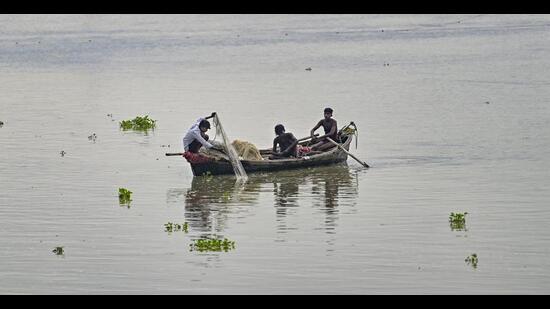
An annual 61-day fishing ban is enforced along India’s coastal waters to protect fish during their peak breeding and spawning seasons. The period differs for the country’s east and west coasts.
The Standing Committee on Agriculture, Animal Husbandry and Food Processing said the performance of the livelihood and nutritional support component under the Pradhan Mantri Matsya Sampada Yojana (PMMSY) was “dismally low”, despite the scheme being intended to cushion income loss during the ban.
Under the current PMMSY design, the Union government provides ₹3,000 annually for each enrolled beneficiary. The beneficiary contributes ₹1,500, taking the total annual assistance to ₹4,500, which is disbursed by the respective states or Union territories.
The committee said it was “very disheartening” that such a small proportion of fisherfolk had benefited despite the scheme being operational for five years. It rejected the argument that low coverage was primarily because many were not registered under the scheme.
The panel cited the current economic parameters and inflation and recommended an increase in the financial assistance during the fishing ban to at least ₹10,000 per fisher per year without any annual contribution from fishermen. It urged immediate measures to significantly expand the reach of the scheme.
{{/usCountry}}The panel cited the current economic parameters and inflation and recommended an increase in the financial assistance during the fishing ban to at least ₹10,000 per fisher per year without any annual contribution from fishermen. It urged immediate measures to significantly expand the reach of the scheme.
{{/usCountry}}In its action taken report, the fisheries department said a proposal to enhance financial assistance had been prepared for implementation from financial year 2025-26. It added that it depended on the availability of fiscal space and approval of the competent authority or the Union Cabinet. The department did not indicate the proposed amount of enhanced assistance.
The panel flagged the slow pace of investment in fisheries infrastructure. It noted that India has 1,547 notified fish landing centres, but only 379 have been selected for development as fishing harbours or fish landing centres since 1964. The panel said just 287 of them had been completed by June 2025.
The panel said existing facilities can accommodate 148,000 fishing vessels, against 238,000 active vessels operating in the country. It called the gap significant, and the panel urged the fisheries department to select more landing centres for modernisation, consider relaxing some selection criteria, and speed up project implementation.