The events of 1992 left an indelible impression on Uttar Pradesh chief minister, Yogi Adityanath, who had just graduated from college at the time. Even today, he closely identifies with the movement to build a Ram temple in Ayodhya.
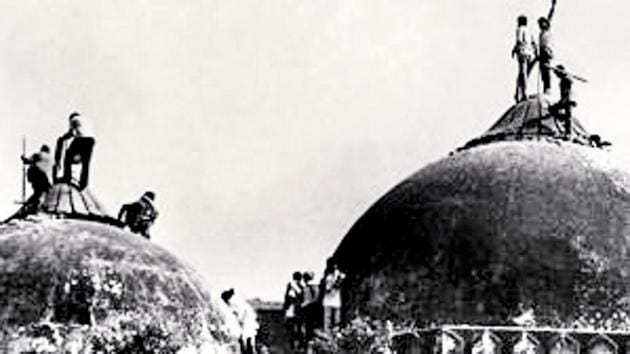
Adityanath graduated with a B.Sc degree from Hemwati Nandan Bahuguna Garhwal University in the summer of 1992, the year thousands of kar sevaks or supporters of the Vishwa Hindu Parishad (VHP) razed the Babri Masjid, which many Hindus believe was built on top of the birthplace of god Ram.
The destruction unleashed some of the deadliest religious riots across India since Independence, killing more than 1,000 people.
It was during that turbulent period that Adityanath visited Gorakhnath Mutt, an influential shrine in Gorakhpur headed by chief priest Mahant Avaidyanath, who went on to become the young man’s mentor, guru and adopted father.
“Mahantji organised a march from Sitamarhi in Bihar to Ayodhya for the Ram temple. He asked people to vote for that party or leader who supported construction of the temple,” said Ram Kumar Tiwari, a schoolteacher in Gorakhpur.
The Mahant called meetings of the Sri Ram Janmabhoomi Mukti Yagya Samiti, an organisation he headed. Leaders of the Vishva Hindu Parishad, Bajrang Dal, Hindu Mahasabha and sadhus of Ayodhya were invited to these conclaves.
{{/usCountry}}The Mahant called meetings of the Sri Ram Janmabhoomi Mukti Yagya Samiti, an organisation he headed. Leaders of the Vishva Hindu Parishad, Bajrang Dal, Hindu Mahasabha and sadhus of Ayodhya were invited to these conclaves.
{{/usCountry}}It was Adityanath’s job to organise these meetings, and he was good at it.
Impressed, the Mahant appointed Aditynath as his successor in 1996. Two years later, the Mahant announced that the Gorakhpur parliamentary seat, which he had represented for four terms, would now be contested by Adityanath.
Adityanath went on to win the seat for five terms.
Through this period, Adityanath kept the cause (of the temple) alive, organising a Virat Hindu Mahasammelan (in 2006), and similar gatherings. All told, representatives of 970 Hindu organisations and 10,000 sadhus were invited to these meetings, said Kamalnath, a priest at Gorakhnath Mutt.
These meetings were aimed at mobilising Hindus. Adityanath also spoke about the Ram temple in Parliament . He revived the defunct Hindu Mahasabha in eastern UP and launched the Hindu Yuva Vahini to galvanise young people to the movement.
The saffron-clad, priest-politician established himself as a firebrand Hindu leader. He championed for the temple, a uniform civil code in India, and a blanket ban on cow slaughter.
Earlier this year, he was his party’s surprise-choice to head the BJP-led government in Uttar Pradesh, India’s most populous and politically crucial state.
In May, he became the first Uttar Pradesh chief minister to visit Ayodhya in 15 years. He has visited the town four times since, offering prayers at the makeshift temple of Ram Lalla (Lord Ram as an infant) at the disputed 2.7-acre site; declared Ayodhya a municipal corporation; and organised a grand Diwali festival there.
The state’s BJP government also announced plans to build a 100-feet-tall statue of Ram on the Saryu riverbank.
Adityanath said at the Hindustan Times Leadership Summit on 1 December that while everyone should wait for the court ‘s verdict on the Ayodhya dispute, he would like to see things settled through consensus, and, indeed, would be happy to help if all parties involved in the dispute “reach a consensus”.
It would be interesting if that were to happen. When public support for the Ram temple was waning in 1997-98, the Mahant had told a gathering of sadhus: “my disciple will give impetus to the movement and fulfil my dream”.