Chinese authorities have used “extreme forms of pressure” to relocate 500 villages in the Tibet Autonomous Region with more than 140,000 residents since 2016, amounting to a widespread violation of international law, Human Rights Watch (HRW) said in a report on Tuesday.
China sanctions US firms over arms sales to Taiwan
HRW cited official statistics gleaned from more than 1,000 reports in China’s state-run media which suggested Chinese authorities will have relocated more than 930,000 rural Tibetans between 2000 and 2025. Most of these relocations – more than 709,000 people or 76% of the relocations – occurred since 2016, the report said.
The 70-page report, titled “Educate the Masses to Change Their Minds: China’s coercive relocation of rural Tibetans”, states Chinese officials “misleadingly claim that relocation will lead to improved employment and higher incomes” and “protect the ecological environment”.
“In both whole-village and individual-household relocations, Chinese law requires those who have been relocated to demolish their former homes to deter them from returning,” it said.
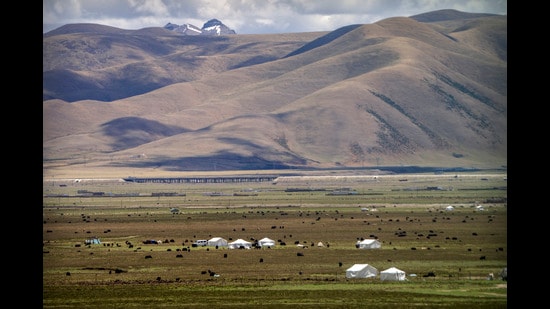
Among the 709,000 people who were relocated, 140,000 were moved as part of whole village relocation drives and 567,000 as part of individual household relocations. Entire villages were moved to locations hundreds of kilometers away and the relocation of rural villagers and herders has been “dramatically accelerated” since 2016.
{{/usCountry}}Among the 709,000 people who were relocated, 140,000 were moved as part of whole village relocation drives and 567,000 as part of individual household relocations. Entire villages were moved to locations hundreds of kilometers away and the relocation of rural villagers and herders has been “dramatically accelerated” since 2016.
{{/usCountry}}Chinese authorities have been accused by rights groups and the Central Tibetan Administration, or the government in exile based in Dharamsala, of a range of repressive measures, including forcible separation of children from parents and admission into boarding schools, widespread surveillance and monitoring, and trans-national harassment of Tibetan activists.
HRW contended that the “whole-village relocation” programmes in Tibet amounts to forced eviction that violates international law. The government prevents relocated people from returning to their former homes by requiring the demolition of these houses within a year of relocating.
Between 2000 and 2025, a total of 3.36 million rural Tibetans were affected by other programmes requiring them to rebuild homes and adopt a sedentary way of life if they are nomads, without necessarily being relocated, the report said.
“The Chinese government says the relocation of Tibetan villages is voluntary, but official media reports contradict this claim,” said Maya Wang, acting China director at HRW. The reports make it clear that when a village is targeted for relocation, it is impossible for residents to refuse to move without facing “serious repercussions”.
The report drew on more than 1,000 articles in China’s state-run media published between 2016 and 2023. HRW said the proliferation of digital news media within China has led to an increase in news reports in recent years, particularly from counties and townships. Though these reports follow “strict propaganda guidelines” and contain only information praising or endorsing policies of the Chinese Communist Party, they make it possible to follow the aims and practices of local officials in-charge of relocation programmes.
The report recommended the Chinese government should stop relocations in Tibet until an independent, expert review of policies and practices determines their compliance with Chinese laws and international law on forced evictions. Chinese authorities should ensure that all relocations are in line with international human rights standards, including exploring all feasible alternatives before eviction, paying compensation, and providing legal remedies to those affected.
Authorities should stop coercing or improperly pressuring people to consent to government plans for relocation and they should also end all quotas, deadlines or targets for officials to persuade people to relocate, the report said.
Chinese government policy states every household has to consent to relocation but HRW found “multiple references to initial reluctance” among Tibetans whose villages were scheduled for relocation. In one case, 200 of 262 households in a village in Nagchu municipality initially didn’t want to relocate to a site nearly 1,000 km away.
Ebrahim Raisi, a hardline cleric who brought Iran closer to Russia, China
Officials make “intrusive home visits” to gain consent, or tell residents that essential services will be cut if they do not move. “They openly threaten villagers who voiced disagreements about the relocations, accusing them of ‘spreading rumors’ and ordering officials to crack down on such actions ‘swiftly and resolutely’, implying administrative and criminal penalties,” the report said.
Together with Chinese programmes to assimilate Tibetan schooling, culture and religion into those of the “Chinese nation”, the relocation of rural communities “erode or cause major damage to Tibetan culture and ways of life”, the report added.