Since the outbreak of the Covid-19 pandemic, a considerable commentary has ensued on its impact on geopolitics, on economics and the role of technology. But these impacts are intertwined with how nations and societies are coping with the pandemic. It will soon be a year since the pandemic erupted. The record of countries and different political systems in dealing with its aftermath is now reasonably clear. We can make certain broad assessments on how the pandemic is changing and will change politics in countries around the world, and the Indian case is of special interest.
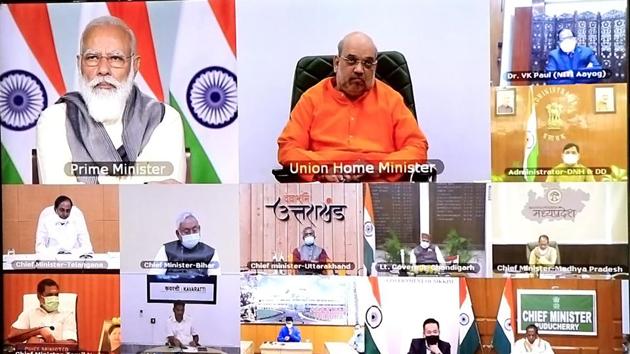
All across the world, the pandemic has significantly enhanced the power of the state vis-a-vis its citizens. Big government is back with a vengeance and this is unlikely to change even as the pandemic recedes. More state intervention will be required, for instance, in the distribution of vaccines. The phase of economic recovery, too, will demand greater state intervention and this is apparent already in economic stimulus packages unveiled in many states including India. Prime Minister Narendra Modi’s pledge of “minimum government and maximum governance” has had a short shelf life. But while expanding government is a reality, governance is still far from “maximum”. The record in this respect remains patchy.
The pandemic has altered the relationship between the Centre and states and other constituent units, greatly enhancing the authority of the Centre at the expense of the latter even in federal dispensations. In India, the pandemic enabled the central government to take several steps beyond its strictly constitutional limits. The crisis nature of the pandemic muted resistance even from states ruled by non-BJP parties. The huge impact on revenue streams available to states and the reluctance of the Centre to deliver on its commitments to make up for losses incurred in GST collections have altered the power balance between the Centre and the states, greatly increasing the latter’s dependence on the Centre for sustaining financial viability. The Union government has utilised its enhanced authority to push through some major reforms in agriculture, education and health, which are normally state subjects and encountered only limited and sporadic opposition. Post-pandemic India will likely remain a more unitary state in practice irrespective of constitutional proprieties. But this also sows the seeds of future Centre-state tensions and incipient “fissiparous tendencies”, a term that one used to hear in the early days of our republic.
There has been a weakening of democratic polities across the world even before the pandemic, driven by rising inequalities, technological change and the spread of nationalist and populist sentiments. Globalisation led to a significant rise in wealth and incomes across the world, but in the absence of appropriate public policies to ensure equitable distribution created a small band of winners and a much larger number of those left behind. This undermined popular stake in democracy and left the door open for populist leaders to preach de-globalisation and populist policies. The success of authoritarian dispensations, in particular China, to deliver rapid growth and higher standards of living, posited another model for socio-economic development. The ability of China to stamp out the pandemic and ensure early economic recovery has further boosted the authoritarian brand. This weakening of democracy as we have known it, the preference for strong and decisive authoritarian leadership figures, despite their failings, is likely to linger. Liberal democracy has lost its brand value with Donald Trump in the US damaging it perhaps irrevocably. Joe Biden will have a tough time restoring its sheen. There is pessimism about democracy and more so in democratic countries. In India, too, there is impatience with the more measured and relatively gentle ways of a constitutional democracy and consensus politics. There is greater acceptance of coercive politics as a means of overcoming resistance to change. But I believe that India’s immense diversity and ingrained individuality of spirit will ultimately frustrate the politics of centralisation and enforced uniformity. This is a country which cannot be governed through a monochromatic frame.
{{/usCountry}}There has been a weakening of democratic polities across the world even before the pandemic, driven by rising inequalities, technological change and the spread of nationalist and populist sentiments. Globalisation led to a significant rise in wealth and incomes across the world, but in the absence of appropriate public policies to ensure equitable distribution created a small band of winners and a much larger number of those left behind. This undermined popular stake in democracy and left the door open for populist leaders to preach de-globalisation and populist policies. The success of authoritarian dispensations, in particular China, to deliver rapid growth and higher standards of living, posited another model for socio-economic development. The ability of China to stamp out the pandemic and ensure early economic recovery has further boosted the authoritarian brand. This weakening of democracy as we have known it, the preference for strong and decisive authoritarian leadership figures, despite their failings, is likely to linger. Liberal democracy has lost its brand value with Donald Trump in the US damaging it perhaps irrevocably. Joe Biden will have a tough time restoring its sheen. There is pessimism about democracy and more so in democratic countries. In India, too, there is impatience with the more measured and relatively gentle ways of a constitutional democracy and consensus politics. There is greater acceptance of coercive politics as a means of overcoming resistance to change. But I believe that India’s immense diversity and ingrained individuality of spirit will ultimately frustrate the politics of centralisation and enforced uniformity. This is a country which cannot be governed through a monochromatic frame.
{{/usCountry}}The peculiar nature of the pandemic which puts a premium on social distancing and remote work has greatly accelerated the adoption of digital technologies. This is impacting the way in which economies of the future will be structured and change the ways of living and working but in what manner and to what degree remains uncertain and unpredictable. This will change politics as well. It is clear that states are already adopting these new technologies for more intrusive surveillance of their citizens’ lives while resisting scrutiny of their own conduct. But theoretically, I see the same technologies giving citizens the tools for compelling transparency and accountability in state action, though this may happen with a time lag or perhaps never at all. The state will resist this and citation of national security has already become a convenient argument to stay opaque. In India, too, security trumps almost every attempt at scrutiny of state action and ensuring democratic accountability.
Enhanced state authority can create a caring state, which is more responsive to the interests of its citizens. It can deploy its augmented powers to undertake long pending economic and social reforms, treating crisis as an opportunity. Perhaps, we will succeed in creating a more congenial setting for sustainable democracy eventually. One must remain hopeful.
Shyam Saran is a former Foreign Secretary and a Senior Fellow CPR