Helicopters of the Indian Air Force (IAF) successfully evacuated 19 persons stranded on an island in the swelling Siang river in Arunachal Pradesh early on Friday.
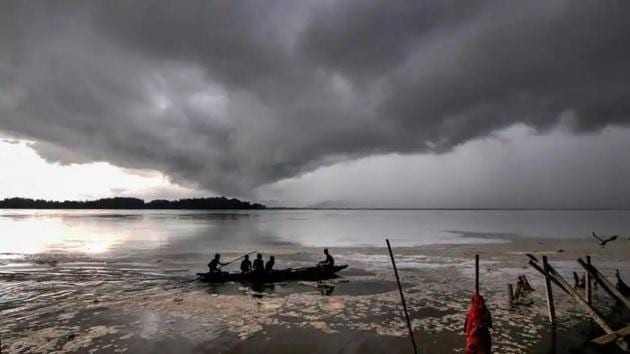
An alert had been issued by the state’s East Siang district administration on Wednesday following massive discharge in China’s Tsangpo river due to heavy rainfall. The Tsangpo is called Siang once it enters Arunachal Pradesh and becomes Brahmaputra after combining with two other rivers downstream.
“The rescue mission started at 4:30 am and was over in an hour. A total of 19 persons stranded in the island were air lifted by the IAF helicopters. Four youths and an elderly man chose to stay behind,” said Tamiyo Tatak, deputy commissioner of East Siang.
The stranded persons, engaged in dairy farming, had got trapped on the small island located in Sille-Oyan circle and due to rising water level and turbulence in the Siang, it was not possible to send rescue boats, he added. On Thursday, Tatak had sent a request to the IAF base in Mohanbari in Assam to airlift the stranded persons as it was not possible to land civilian helicopters on the small island.
On the present situation, Tatak said: “Water level in the Siang has risen a bit since Thursday, but there is no cause for panic. We are monitoring the situation constantly.”
He said that some erosion has taken place on the banks of the Siang due to turbulence and waves and over a dozen houses on the banks have been washed away.
{{/usCountry}}He said that some erosion has taken place on the banks of the Siang due to turbulence and waves and over a dozen houses on the banks have been washed away.
{{/usCountry}}Residents on both banks of the river have also been asked to stay alert but not panic.
Officials in Dibrugarh district of neighbouring Assam are on also on the alert and keeping tab on the water level in the Brahmaputra, which is still below the danger mark. “There is a gradual rise in the water levels of the Brahmaputra, but it is not flowing over the danger mark in Dibrugarh. There is no cause to panic yet,” Dibrugarh deputy commissioner Laya Madduri had said on Thursday.
Following a flood alert sent by China to India, the East Siang administration has asked people to refrain from venturing into the river for swimming, fishing and other activities. The observed discharge in the Tsangpo was 9020 cumec at 8 am on Wednesday, or the equivalent of 9.02 million litres of water flowing per second - the highest discharge in the river in 50 years.
Last week, district officials had issued an advisory asking people to refrain from entering the Siang as “unusual waves” had been causing a fluctuation in the flow of the river over the past fortnight. “Such big waves have never been seen in the Siang. The volume of water flow is the same, but the river has become turbulent. Maybe it’s the result of heavy landslides in China affecting the flow of the river or an impact of some major construction activity,” Tatak had said.
However, a study released in December by two Indian researchers, Chintan Seth and Anirban Datta Roy, had suggested that landslides caused by a series of earthquakes in Tibet could have been the reason for the darkening of the Siang.