Security at the Indian Embassy in Kabul and consulates in Jalalabad and Kandahar has been put on highest alert with Indian and western intelligence confirming that Haqqani network and Lashkar-e-Tayyeba (LeT) terrorists chose to hit Guru Har Rai Gurdwara at Shor Bazaar due to heavy troop deployment at the Indian mission.
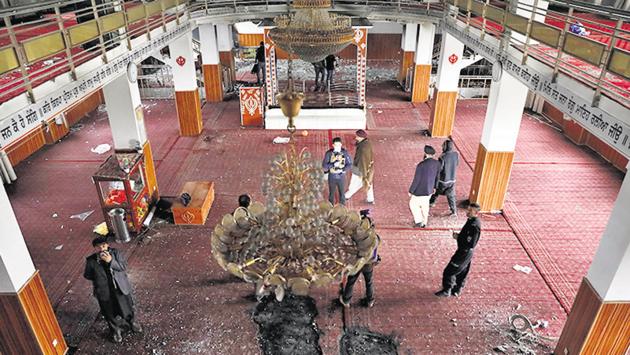
As many as 28 Sikh worshippers have been killed, eight are injured and another 85 were rescued during the shoot-out at the gurdwara, three kilometres away from the Indian mission.
According to information reaching Delhi from Afghan and western security agencies, the strike was ordered by Quetta Shura of Taliban at the behest of Pakistani deep state with the larger motive of driving out India from Afghanistan.
The entire operation was code-named Blackstar by the Pakistan intelligence, which used the Haqqani network led by Taliban’s deputy commander Sirajuddin Haqqani and elements of LeT.
Also Watch l ‘Saddened to hear about terror attack on gurudwara in Kabul’: PM Modi
As many as 4 attackers armed with AK-47 rifles were part of the strike team of terrorists who struck at the Gurdwara. The Afghan security forces managed to kill one of the terrorists; the rest escaped.
{{/usCountry}}As many as 4 attackers armed with AK-47 rifles were part of the strike team of terrorists who struck at the Gurdwara. The Afghan security forces managed to kill one of the terrorists; the rest escaped.
{{/usCountry}}A senior official in the Indian security establishment said there was recognition in New Delhi that the terrorists probably attacked the gurdwara because it was a soft target. There have been alerts about a terror attack on the Indian embassy in Kabul and the consulate at Jalalabad for quite some time. It wouldn’t have been an easy target since the security had been beefed up and more troop firewalls deployed.
Even while the grieving Afghan Sikhs were cremating the victims on Thursday afternoon, a bomb exploded nearby creating further scare in the area.
Since the US announced a deal with the Taliban on February 29, there has been a spurt in violence in Afghanistan with resurgence of the Haqqani network and relocation of terror camps of both LeT and Jaish-e-Mohammed from Pakistan.
According to counter-terror analysts, the Haqqani network comprises mainly of Zardan tribe based in Nangarhar, Khost, Nuristan and Kunar provinces, which is in direct conflict with the miniscule Sikh community over land in Jalalabad and trade in Kabul.
On July 1, 2019, the Haqqani network targeted the Sikh community in Jalalabad as they came to meet President Ashraf Ghani during his visit to Nangarhar province. In both cases, the Islamic State was allowed to take credit for the attack.
However, the play is much deeper with Pakistan setting sights on forcing India out of Afghanistan post withdrawal of the US forces from Afghanistan. With Taliban, Haqqani network, LeT and JeM all under control of the Pakistani deep state, Afghanistan again will provide strategic space to its terrorist arm for controlling Kabul and hitting at Kashmir.
Already there are inputs from western agencies about JeM and LeT moving their training camps to eastern borders of Afghanistan with Kashmir in the crosshairs. The Taliban, with their sword arm Haqqani network, will handle Afghanistan while the Islamic State and Al Qaeda would be their digital fronts in the social media space.
After the Gurudwara attack, the Indian security agencies fear that Indian consulates in Jalalabad and Kandahar will be targeted by the Haqqani network and associates in coming days.
“While the world is grappling with the Covid-19 virus, the Pakistani deep state continues to push jihad against minorities in Afghanistan,” said a senior official.