The Supreme Court on Thursday held that regardless of the stringency of penal statutes, indefinite refusal of bail is unacceptable, as it underscored the paramount importance of Article 21 of the Indian Constitution that safeguards the right to life and liberty and enshrines the right to a speedy trial.
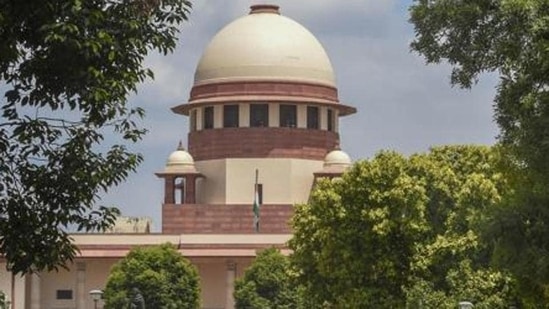
“In the case of interpretation of a penal statute, howsoever stringent it may be, a constitutional court has to lean in favour of constitutionalism and the rule of law of which liberty is an intrinsic part. In a particular case, a constitutional court may decline to grant bail. But it would be very wrong to say that under a particular statute, bail cannot be granted. It would run counter to the very grain of our constitutional jurisprudence,” said a bench comprising Justices JB Pardiwala and Ujjal Bhuyan.
Highlighting that the right to life and personal liberty enshrined under Article 21 of the Constitution is “overarching and sacrosanct”, the bench noted that a constitutional court cannot be restrained from granting bail to an accused on account of restrictive statutory provisions in a penal statute if it finds that the right of the accused under Article 21 has been infringed.
{{/usCountry}}Highlighting that the right to life and personal liberty enshrined under Article 21 of the Constitution is “overarching and sacrosanct”, the bench noted that a constitutional court cannot be restrained from granting bail to an accused on account of restrictive statutory provisions in a penal statute if it finds that the right of the accused under Article 21 has been infringed.
{{/usCountry}}The court’s ruling came as it granted bail to Sheikh Javed Iqbal, who had been languishing in jail for nine years on charges of possessing counterfeit currency after getting booked under the provisions of the Indian Penal Code and Unlawful Activities (Prevention) Act. Notably, section 43D(5) of UAPA sets a high bar for granting bail, making it challenging for the accused to secure release. The provision stipulates that an accused person shall not be granted bail if the court, after perusing the case diary or the charge sheet, is of the opinion that there are reasonable grounds for believing that the accusations against such person are prima facie true.
ALSO READ- Letter to Supreme Court flags rampant sand mining in Karbi Anglong area
Referring to a body of Supreme Court judgments, the top court particularly relied on the 2012 verdict in the KA Najeeb case, which similarly addressed the issue of prolonged detention without trial. In the 2012 verdict, the top court held that Section 43D(5) of the UAPA does not affect the ability of the constitutional courts to grant bail on grounds of violation of fundamental rights, adding that long incarceration with the unlikelihood of the trial being completed in the near future is a good ground to grant bail.
“If the alleged offence is a serious one, it is all the more necessary for the prosecution to ensure that the trial is concluded expeditiously. When a trial gets prolonged, it is not open to the prosecution to oppose bail of the accused-undertrial on the ground that the charges are very serious. Bail cannot be denied only on the ground that the charges are very serious though there is no end in sight for the trial to conclude,” held the court on Thursday.
This decision reinforces the principle that, regardless of the stringency of penal statutes, indefinite refusal of bail is unacceptable.
The bench emphasised the fundamental importance of liberty and the necessity of a speedy trial while ordering the release of Iqbal who has been incarcerated in a jail in Uttar Pradesh since February 23, 2015. By an order on April 4, the Allahabad high court refused bail to Iqbal, noting that “the charges levelled against him are grave and a serious threat to the society and to the extent that it may topple the economy of the country.” It also highlighted that Iqbal is a citizen of Nepal and that he has no permanent address in India, making it impossible for the prosecution to get his presence during the trial if he were to be released on bail.
ALSO READ- Supreme Court welcomes two new judges, marks historic first for Manipur
In its judgment on Thursday, the bench noted that Iqbal’s trial proceeded “at a snail’s pace” and only two witnesses had been examined till date. “Thus, it is evident that the trial would not be concluded in the near future,” said the bench, ordering Iqbal’s release on bail on the condition that his passport shall remain in the custody of the trial court and that he would appear during the trial.
Amid concerns over prolonged pre-trial detention in violation of an individual’s constitutional rights, the Supreme Court made a significant intervention on Thursday by asserting that the denial of bail for all times, irrespective of the severity of the alleged crime, cannot be justified when it results in the indefinite deprivation of an individual’s liberty. The judgment reinforces the principle that a balance must be struck between the enforcement of penal statutes and the protection of fundamental rights while calling for urgent reforms to address delays in the judicial process.