Justices N Kotiswar Singh and R Mahadevan were on Thursday morning sworn in as judges of the Supreme Court of India. The oath of office was administered by Chief Justice of India (CJI) Dhananjaya Y Chandrachud, marking a momentous occasion for the judiciary as justice Singh becomes the first judge from Manipur to be appointed to the apex court, over 70 years after India’s independence.
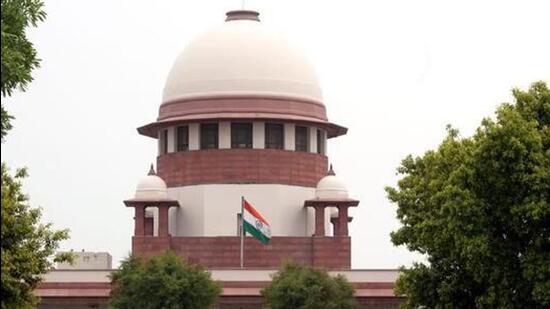
The central government had previously cleared their appointments on July 16, following the recommendations of the Supreme Court collegium. This move brings the Supreme Court to its full sanctioned strength of 34 judges, including the CJI.
The collegium, led by CJI Chandrachud, recommended their names on July 11, considering factors such as seniority, merit and judicial integrity.
Other members of the collegium included justices Sanjiv Khanna, Bhushan R Gavai, Surya Kant and Hrishikesh Roy.
Justice Kotiswar Singh’s elevation is a landmark achievement, providing representation to the North-East region and fulfilling a long-standing gap in the Supreme Court’s composition.
The collegium, in its resolution, highlighted that justice Singh’s appointment would be the first from the state of Manipur, adding to the diversity of the bench.
Justice Singh began his judicial career as an additional judge of the Gauhati High Court in October 2011 and was appointed as the chief justice of the Jammu & Kashmir and Ladakh high court in February 2023.
{{/usCountry}}Justice Singh began his judicial career as an additional judge of the Gauhati High Court in October 2011 and was appointed as the chief justice of the Jammu & Kashmir and Ladakh high court in February 2023.
{{/usCountry}}The collegium praised his impeccable record in both judicial and administrative capacities in its resolution recommending his elevation. The resolution stated that justice Singh has “an impeccable record, both in judicial capacity and in terms of the work which has been rendered by him on the administrative side”.
Justice R Mahadevan, appointed to the Madras high court in October 2013, also brings significant diversity to the Supreme Court. Hailing from a backward community in Tamil Nadu, his appointment underscores the collegium’s commitment to inclusive representation.
The collegium’s July 11 resolution emphasised that justice Mahadevan’s appointment would provide valuable representation to the backward community, reflecting the judiciary’s dedication to social equity. The resolution explained why justice Mahadevan was preferred over two senior Madras high court judges: “The collegium has given precedence to the candidature of Mr Justice R Mahadevan in order to give representation to the backward community.”
Also Read: Supreme Court gets 2 new judges, its first from Manipur
The appointments of justices Singh and Mahadevan come at a critical time, as the Supreme Court had been operating with 32 judges, two short of its sanctioned strength, following recent retirements.
The urgency of these appointments was further amplified by the impending retirement of justice Hima Kohli on September 1. The collegium’s timely recommendations and the central government’s swift approval have ensured the Supreme Court is now at full strength.
Justice PB Varale was the last appointment to the Supreme Court in January 2024, marking the first time the court had three judges from the Scheduled Caste category.
In April 2023, CJI Chandrachud announced the involvement of the Centre of Research and Planning (CRP), the court’s in-house think tank, in preparing a list of potential future appointments to the top court. The CRP assists the permanent secretariat in the Supreme Court, which deals with various aspects of judicial appointments, including the collection of information, preparation of records and presentation to the collegium.
On July 11, the collegium also recommended the appointment of new full-time chief justices to eight high courts, namely high courts of Delhi, Himachal Pradesh, Jammu & Kashmir and Ladakh, Jharkhand, Madhya Pradesh, Kerala, Madras and Meghalaya. However, their appointments are yet to be cleared by the Centre.
The Supreme Court collegium puts out some basic reasons which serve as a rationale for the appointments or transfers that they recommend, but the memorandum of procedure (MoP) – a guidebook of understanding between the Supreme Court collegium and the central government in these matters, does not bind the central government to a timeline to respond -- it can simply sit on the collegium’s recommendations.