India has outpaced Japan in solar energy generation, producing 1,08,494 GWh, making it the world’s third-largest after China and the US, Union new and renewable energy minister Pralhad Joshi said on Thursday.
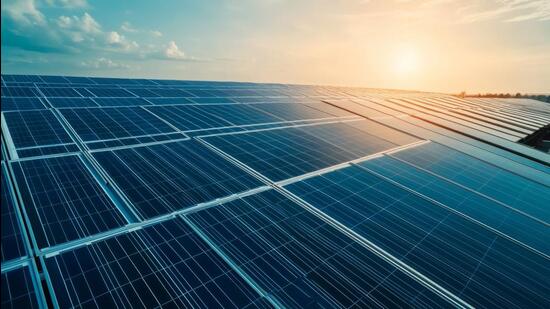
“India has outpaced Japan in solar energy generation — producing 1,08,494 GWh compared to Japan’s 96,459 GWh — and is now the world’s third-largest solar power producer. Thanks to the visionary leadership of Hon’ble PM Shri @narendramodi ji, India is leading the way in the global clean energy revolution,” Joshi said on X.
According to the International Energy Agency’s 2024 data, China led in solar PV capacity additions. It added 260 GW in 2023, close to triple the previous year. China’s 14th Five-Year Plan for Renewable Energy in 2022 set ambitious targets for deployment, which are expected to drive further capacity growth.
The US included generous new funding for solar PV in the Inflation Reduction Act (IRA) in 2022. PV additions in the US increased in 2023 by 70%, reaching a record 32 GW.
India installed 12 GW of solar PV in 2023, one-third below the 2022 growth. Deployment is expected to ramp up significantly in 2024 as supply-chain challenges ease and expanded auction volumes translate into a project pipeline. Brazil added 15 GW of solar PV capacity in 2023, close to 30% more than in the previous year.
{{/usCountry}}India installed 12 GW of solar PV in 2023, one-third below the 2022 growth. Deployment is expected to ramp up significantly in 2024 as supply-chain challenges ease and expanded auction volumes translate into a project pipeline. Brazil added 15 GW of solar PV capacity in 2023, close to 30% more than in the previous year.
{{/usCountry}}India, which achieved one of its nationally determined contributions (NDCs) under the Paris Agreement five years in advance, has crossed its target of installing 50% of its power capacity from non-fossil sources. India’s updated NDCs under the agreement submitted in August 2022 said the country aims to reduce the emissions intensity of its GDP to 45% by 2030 from the 2005 level. India seeks to increase the share of non-fossil fuel-based energy resources to 50% of its installed power generation capacity by 2030 and create an additional carbon sink of 2.5 to 3 billion tonnes of CO2 equivalent through additional forest and tree cover by 2030.
As of June 30, India’s total energy capacity was 484.8 GW, with 242.04 GW (49.92%) from thermal/coal, 8.78 GW (1.81%) from nuclear, and 234.00 GW (48.27%) from renewable sources.
India was on track to fulfil its commitments at COP26 in Glasgow. At COP26, Prime Minister Narendra Modi said India will increase its non-fossil fuel energy capacity to 500 GW by 2030 and fulfil 50% of its energy requirements from renewable energy sources by 2030.
Modi spoke about reducing India’s total projected carbon emissions by one billion tonnes, reducing the carbon intensity of its economy by 45% by 2030, and achieving the target of net zero emissions by 2070.