E-Paper



Covid-19 infected 33.2 people per million in India, says ICMR
This is considerably lower than the attack rates in other countries; in the US it is 0.2523%, in France 0.3364%, in the UK 0.1962% and in Canada 0.0899%, according to the US National Library of Medicine.

 Prefer HTon Google


The attack rate of the coronavirus disease (Covid-19) in India is 0.00332%, which means that only 33.2 people per million population are infected, according to an analysis of laboratory-surveillance data by the Indian Council of Medical Research (ICMR).
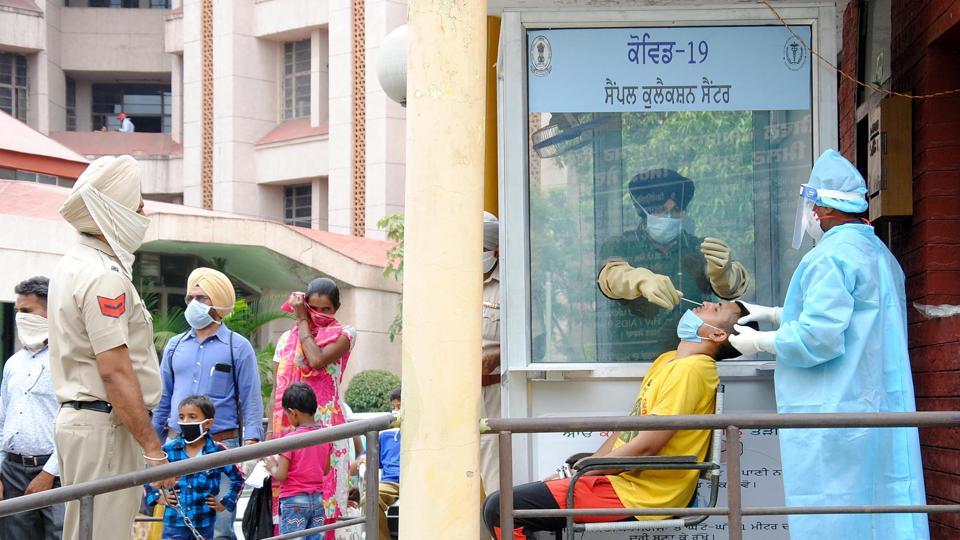
This is considerably lower than the attack rates in other countries; in the US it is 0.2523%, in France 0.3364%, in the UK 0.1962% and in Canada 0.0899%, according to the US National Library of Medicine.
ICMR-National Institute of Epidemiology scientist Dr Tarun Bhatnagar said the analysis is based on data from various ICMR laboratories and is comprehensive.
“...we assessed that by dividing the number of positive cases by the total population, where it is assumed that everyone is at risk. ...we have used data from more than a million samples that were tested between a particular period in various ICMR labs, making it the most comprehensive surveillance data so far,” added Bhatnagar, who is the lead author of the study to be published in the second edition of speical Covid issue of the Indian Journal of Medical Research.
Bhatnagar said the actual numbers may still vary as more testing data emerges, “but because of its sheer sample size, this by far is the most comprehensive projection.”
India tested over 1.02 million people between January 22 and April 30, said the pre-print study.
The study found the attack rate to be the highest, 63.3 (per million) among those aged between 50 and 69 years and the lowest, 6.1 (per million), among those under the age of 10 years. The attack rate was higher among men (41.6 per million) than women (24.3 per million).
India reported 10.7 cases per 100,000 population till May 26, according to Union health ministry data, compared to 486 in the US, 504 in the UK, 499 in Belgium, and 52.2 in Mexico.
ICMR formulated and established laboratory surveillance protocol for Covid-19 in January. The first sample was tested on January 22. India reported its first case on January 30. Cases of the viral disease have since been reported from 523 of India’s 736 districts .
The proportion of positive cases has been at least twofold or threefold higher among symptomatic and asymptomatic contacts, than among those with severe acute respiratory infection (SARI), or with an international travel history or healthcare workers, according to the study.
Of the total tested, for whom data was available, 19.6% were asymptomatic family contacts of laboratory-confirmed cases, 6.8% were patients of SARI and 4.8% were asymptomatic health care workers suspected to have come in contact with laboratory-confirmed cases, the study said. Of the 40,184 positives, 25.3% were asymptomatic family contacts, 10.6% symptomatic contacts and 10.5% SARI patients.
Among the 12,810 cases with reported symptoms at the time of specimen collection, cough and fever were the most commonly reported symptoms (64.5% and 60%), according to the study. Around one-third of cases reported sore throat and breathlessness. Gastrointestinal symptoms such as abdominal pain, nausea, vomiting and diarrhoea were reported by less than 5%.
At the national level, the average number of contacts tested per laboratory-confirmed case was 6. At the state level, the average number of contacts tested per positive case ranged from 1.3 in Jharkhand to 328 in Tripura.
Dr T Jacob John, a former virology head at Vellore’s Christian Medical College, said: “It is nothing to be surprised about as if we look at the R0 of Sars-CoV-2 [the virus that causes Covid-19]. It is about 1.7, which means one positive case on an average will infect 1.7 persons. Since in a large number of positive cases there hardly are any symptoms, the disease gets transmitted faster to close contacts.” R0 or R-naught is a measure of the number of people infected by one infected person.
The testing increased from about 250 daily in early March to 50,000 specimens by April end. Overall, 40,184 (3.9%) tests were reported positive. “This study data, especially on attack rate, is useful to know within the population who is driving the epidemic; whether it is the men or women, which area or age group is more vulnerable, so that interventions are planned accordingly,” said Bhatnagar.
India is currently testing in excess of one lakh samples a day, on an average.