With the induction of at least two regiments of S-400 air defence systems on north and east borders of India beginning 2022, the Modi government will finally balance the tactical disadvantage faced by the military after PLA’s surprise May 2020 transgressions on 1,597-km Ladakh Line of Control (LAC).
According to diplomats based in Moscow, the advance elements of S-400 systems have already started arriving in India with deep penetration radars of the two systems (in sequence) in place next month. The two S-400 systems will be operational by early 2022 to match the Chinese deployment of the same Russian system across the Ladakh and Arunachal LAC. Two Indian military teams, trained in Russia, are ready to operate the S-400 system, which has a reach of nearly 400 km into enemy territory.
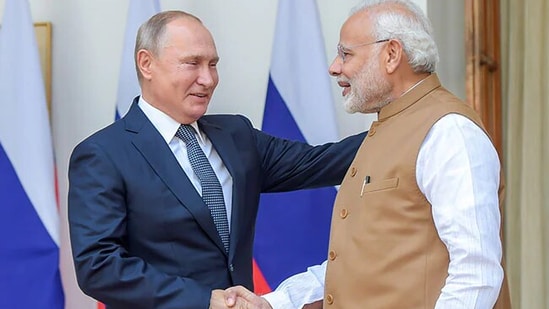
That India has been able to get two S-400 complexes in a short time is due to very close relationship between Russian President Vladimir Putin and Prime Minister Narendra Modi. It is for this reason that President Vladimir Putin is making second exception this year to step out of his country to meet Prime Minister Narendra Modi on December 6. While President Putin has received guests at Black Sea resort of Sochi, the only time he stepped out of Russia was to meet US President Joe Biden on June 16 at Geneva. He has only held virtual summit with Chinese President Xi Jinping in June this year and will not travel to Beijing despite the two countries having an annual summit format on lines with India. Despite raging Covid conditions, Russia allowed Indian S-400 teams to train and opened manufacturing facilities shut down during spread of coronavirus pandemic in the past two years.
When the PLA caught the Indian Army by surprise on north banks of Pangong Tso, Galwan and Gogra-Hot Springs on May 2020, it was quite evident that the Chinese had plans to unilaterally change the LAC by imposing an already rejected 1959 line on Ladakh. The Indian military was pushed on the back foot with the PLA retaining with troops and weapon systems who had come for annual exercises across the Ladakh LAC in 2020 spring.
{{/usCountry}}When the PLA caught the Indian Army by surprise on north banks of Pangong Tso, Galwan and Gogra-Hot Springs on May 2020, it was quite evident that the Chinese had plans to unilaterally change the LAC by imposing an already rejected 1959 line on Ladakh. The Indian military was pushed on the back foot with the PLA retaining with troops and weapon systems who had come for annual exercises across the Ladakh LAC in 2020 spring.
{{/usCountry}}With men of 16 Bihar under Col Santosh Babu showing raw courage against marauding PLA troops at Galwan on June 15, the Modi government moved to correct the disadvantage that the army found itself on Ladakh LAC. First was the induction of T-90 tanks using Chinook helicopters on Ladakh LAC all the way up to Daulet Beg Oldi (DBO) sector along with deployment of troops. Second step was the induction of omni-role nuclear capable Rafale fighters into the theatre with long-range air-to-air missiles to give air superiority and land attack cruise missiles. Third step, the most important one, was the brilliantly planned military operation that led to Indian Army occupying heights on south banks of Pangong Tso on August 29-31. With PLA’s Moldo garrison being threatened by Indian Army, the Chinese got the message and the two sides sagaciously decided to dis-engage from both banks of the saltwater lake. However, there was still a tactical mismatch with the Chinese threatening the Indian Air Force with deployed S-400 systems at Ngari Gar Gunsa and Nyingchi air bases in occupied Aksai Chin and across Arunachal Pradesh.
With the induction of S-400 systems on Indian soil, the Modi government has a reply to Chinese missiles and air force in case of a worst case scenario. As one system will be deployed in north, it will take care of two fronts in Ladakh as the deep penetration radars of S-400 will be able to pick up any fighter or missile targeting India.
While the Chinese and the Indian sides only reiterating their respective positions during the last round of WMCC this month, the Indian S-400 capability will make Beijing realise the futility of keeping forward deployments on the Ladakh and Arunachal LAC. Ensuring peaceful and tranquil LAC is the only way out for both the Asian giants.